
Quick answer: This overnight oats recipe has 31 grams of protein and 11 grams of fiber per serving, and takes about 10 minutes to assemble plus overnight in the fridge. Greek yogurt and chia seeds carry the protein — no powder. Serves 1. It’s the highest-fiber recipe in the collection.
Most overnight oats recipes lean on oats and milk, which tops out around 10 to 12 grams of protein. That’s a reasonable snack number and not much of a breakfast number.
Greek yogurt changes the arithmetic. At roughly 10 grams of protein per 100 grams, 170 grams of it does more work than the oats themselves. Add chia seeds for fiber and texture, and the same jar reaches 31 grams without any protein powder or add-in beyond food that’s already in most kitchens.
Why This Recipe Has 31 Grams of Protein
| Source | Per serving |
|---|---|
| Greek yogurt (170g) | 16.9 g |
| Milk, 2% (150g) | 5.0 g |
| Oats (45g) | 5.9 g |
| Chia seeds (15g) | 2.5 g |
| Everything else | 0.4 g |
| Total | 30.7 g |
Greek yogurt carries 55% of the protein, more than the oats and milk combined. That’s the main lever in this recipe, and it’s what separates it from a standard overnight oats jar.
Eleven grams of fiber, the highest in the high protein breakfast collection. Oats contribute 4.5 grams, chia another 5.2. Together they’re most of the reason this jar keeps people full past mid-morning.
The Ratio That Actually Works
The standard overnight oats rule is roughly equal parts oats and liquid — say, ½ cup of oats to ½ cup of milk. That rule assumes plain oats and milk. It doesn’t account for what chia and Greek yogurt do to the mixture.
Chia seeds absorb close to ten times their own weight in liquid. Fifteen grams of chia alone can thicken a significant amount of liquid on its own. Add a thick base like Greek yogurt on top of that, and a standard oats-to-milk ratio produces something close to a paste by morning rather than a spoonable, creamy jar.
This recipe uses 150 grams of milk — noticeably more than a standard oat-to-milk recipe would call for — specifically to offset how much the oats, chia and yogurt together want to absorb overnight. Skimp on the liquid here and you’ll wake up to something you need a knife for, not a spoon.
What You Need
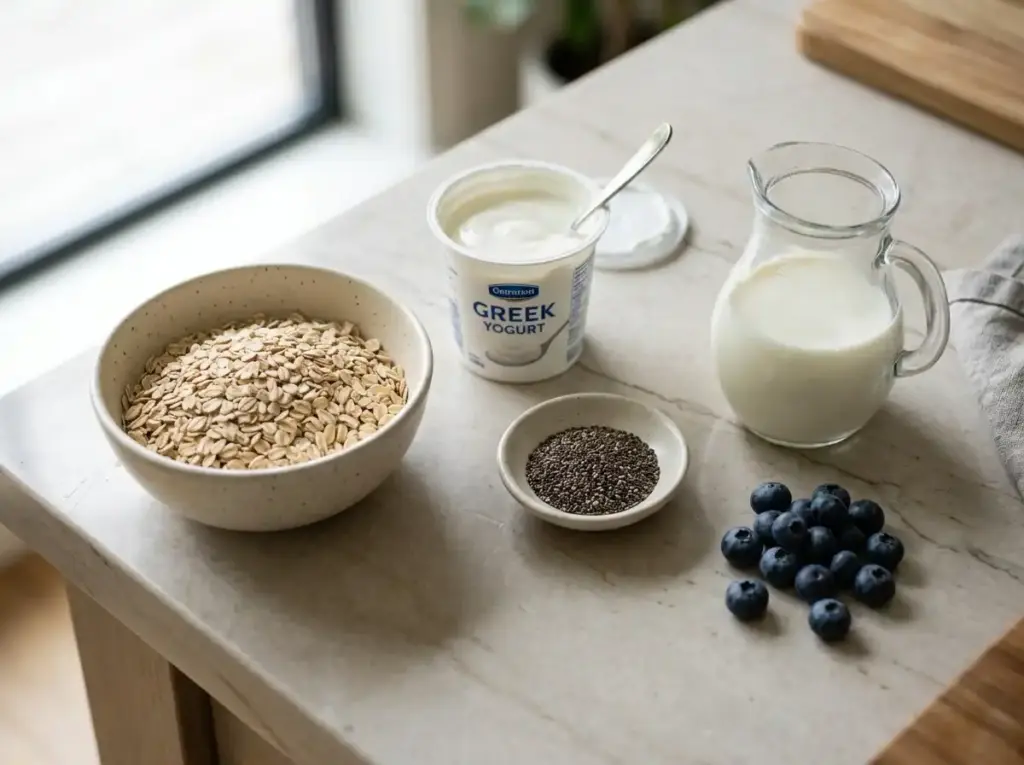
- ½ cup rolled oats (45g)
- ¾ cup + 2 tablespoons plain Greek yogurt, 2% (170g)
- 1 tablespoon chia seeds (15g)
- ½ cup + 2 tablespoons milk, 2% (150g)
- ½ cup blueberries (60g)
- 2 teaspoons maple syrup (10g)
- ½ teaspoon vanilla extract (2g)
Notes on the ones that matter:
Rolled oats, not instant. Instant oats have already been partially cooked and cut smaller, so they turn gluey rather than tender when soaked overnight in this much liquid.
Plain Greek yogurt, not flavoured. Flavoured versions add 10 to 15 grams of sugar and carry slightly less protein, since fruit purée displaces yogurt.
Don’t reduce the milk. It’s tempting to cut it back for a thicker result, but the amount here already accounts for how much the oats and chia will pull in overnight — less liquid means a much firmer result than intended.
How to Make It
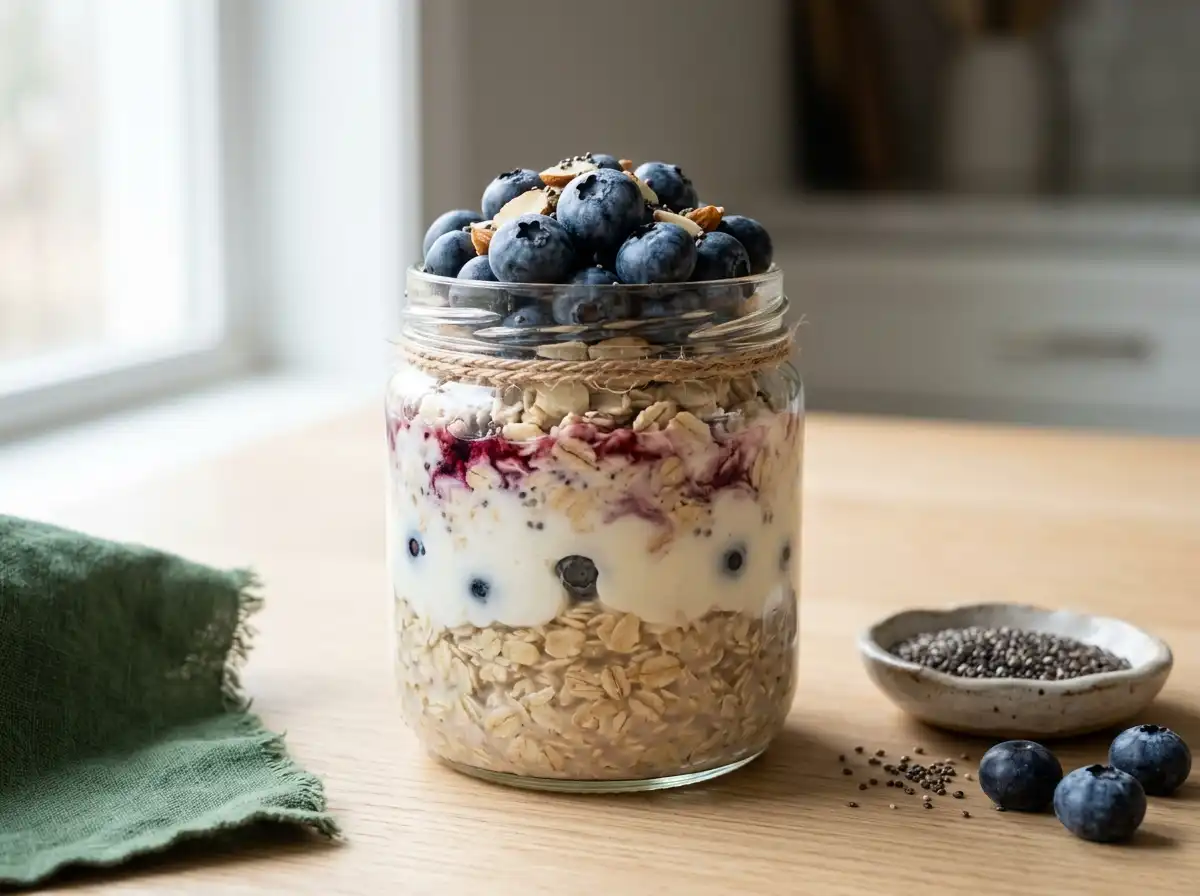
- Whisk the Greek yogurt, milk, maple syrup and vanilla together in a jar or container until smooth.
- Stir in the oats and chia seeds, mixing thoroughly so nothing settles into a dry pocket.
- Cover and refrigerate at least 6 hours, ideally overnight.
- Stir before eating — the mixture settles slightly as it sits.
- Top with the blueberries just before eating.
Ten minutes of assembly, the rest is waiting.
Tips
Stir thoroughly before you refrigerate it, not just once. Chia seeds especially tend to clump if the mixture isn’t fully combined at the start, and dry pockets of chia don’t hydrate evenly overnight.
Six hours is the floor, not the target. The oats are edible at six hours but noticeably better at twelve, once they’ve fully softened and the chia has finished thickening the mixture.
Add fruit at serving, not during prep. Blueberries release water into the jar overnight and go slightly mushy. Adding them fresh each morning keeps the texture and the colour intact.
If it’s too thick in the morning, add milk a tablespoon at a time. This is the easiest fix in the recipe and far simpler than trying to thin an overly thick jar all at once.
Substitutions
Every figure below is per serving, calculated from the same USDA data as the main recipe.
| Swap | Protein | Calories | Notes |
|---|---|---|---|
| Add 15g hemp seeds | +4.7 g | +83 | Takes this past 35g. Mild flavour change. |
| Greek yogurt → blended cottage cheese, same weight | +2.0 g | +42 | Blend the cottage cheese smooth first, or the texture turns grainy. |
| Oats 45g → 55g | +1.3 g | +38 | Thicker, more traditional oatmeal texture. |
| Blueberries → raspberries | +0.3 g | −3 | Also raises fiber slightly — raspberries carry more per gram than blueberries. |
| Skip the maple syrup | 0 g | −26 | The blueberries and vanilla carry more sweetness than expected. |
On plant milks: unsweetened almond milk works in place of dairy milk but carries under 1 gram of protein per 100 grams, which costs roughly 4 grams across this recipe’s 150-gram portion. Soy milk is the closest plant substitute, at around 3 grams per 100 grams.
Storage
Three days refrigerated, in a sealed jar. Beyond that, the oats continue softening past the point most people find pleasant, and the texture goes slack.
Don’t freeze it. Both the yogurt and the chia gel separate on thawing.
Making several at once: three jars is the practical limit given the 3-day window. Mix the full batch of yogurt, milk, syrup and vanilla together first, then divide before adding oats and chia to each jar individually — this keeps the ratio consistent across jars, since eyeballing three separate whisked mixtures tends to produce uneven results.

High Protein Overnight Oats
Ingredients
Method
- Whisk the Greek yogurt, milk, maple syrup and vanilla together in a jar or container until smooth.
- Stir in the oats and chia seeds, mixing thoroughly so nothing settles into a dry pocket.
- Cover and refrigerate at least 6 hours, ideally overnight.
- Stir before eating — the mixture settles slightly as it sits.
- Top with the blueberries just before eating.
Nutrition
Per serving (recipe makes 1):
| Calories | 509 |
| Protein | 31 g |
| Carbohydrates | 66 g |
| Fiber | 11 g |
| Fat | 14 g |
| Sodium | 135 mg |
These figures are calculated ingredient by ingredient from a USDA-sourced nutrition database and divided by the serving count. They’re calculated values rather than laboratory-tested ones, and they’ll shift with your brands. Carbohydrates include fiber, following the US convention, so net carbs are about 55 grams per serving.
At 11 grams, this is the highest-fiber recipe in the entire collection, and one of the two lowest in sodium alongside the Greek yogurt breakfast bowl.
Frequently Asked Questions
How much protein is in overnight oats?
A standard version made with just oats and milk carries roughly 10 to 12 grams. This recipe reaches 31 grams by building the base around Greek yogurt rather than milk alone — 170 grams of yogurt contributes nearly 17 grams on its own, more than half the total.
Can you make overnight oats without protein powder?
Yes, and this recipe does it entirely with Greek yogurt and chia seeds. Greek yogurt carries about 10 grams of protein per 100 grams, which is where most of the protein in this jar comes from. Chia adds a smaller amount along with most of the fiber.
How long do overnight oats last in the fridge?
Three days in a sealed jar. Beyond that point the oats continue softening past a pleasant texture. Keep any fresh fruit toppings separate and add them just before eating, since berries release water into the jar overnight and go slightly mushy.
What is the right oats to liquid ratio?
For plain oats and milk, roughly equal parts by volume is standard. This recipe uses more liquid than that rule would suggest, because chia seeds absorb close to ten times their own weight and Greek yogurt is already thick — together they pull in far more liquid overnight than oats alone would. This recipe uses 150 grams of milk specifically to account for that; using a standard oats-only ratio here would produce something closer to a paste by morning.
Do overnight oats have to sit overnight?
No — six hours is enough for the oats and chia to soften and the mixture to thicken properly, which makes this workable as a same-morning breakfast if you start it early enough. That said, twelve hours produces a noticeably better texture, since the chia continues absorbing liquid well past the six-hour mark.
More High Protein Breakfasts
This is one of fifteen recipes in the high protein breakfast collection, grouped by savory, sweet and make-ahead, with protein, calories and sodium compared across all fifteen.
For the same make-ahead logic without the oats, high protein chia pudding uses a similar ratio principle and keeps four days instead of three.
If you’d rather eat it fresh instead of waiting overnight, the Greek yogurt breakfast bowl reaches a similar protein number in five minutes.
Made this? Leave a rating and tell me your ratio — overnight oats is one of those recipes where everyone’s kitchen scale tells a slightly different story.