
Quick answer: These scrambled eggs have 30 grams of protein and 351 calories per serving, and take about 10 minutes. Three eggs and 100g of cottage cheese, blended together before they hit the pan, no protein powder. Serves 1. It’s the fastest hot breakfast in the collection that reaches 30 grams.
Scrambled eggs on their own carry about 19 grams of protein for three eggs. Good, but not the number this recipe is built around. Cottage cheese adds the rest — 11.1 grams of protein per 100 grams — and the way it’s added is the entire technique.
Most versions of this recipe fold cottage cheese into eggs that are already cooked or nearly done. That produces cold curds sitting in warm eggs, which is where most people’s objection to this combination comes from. Blend the cottage cheese into the eggs before they go anywhere near heat, and the result is a completely different dish.
Why This Recipe Has 30 Grams of Protein
| Source | Per serving |
|---|---|
| Eggs (150g, 3 large) | 18.9 g |
| Cottage cheese, 4% (100g) | 11.1 g |
| Everything else | 0.2 g |
| Total | 30.2 g |
Two ingredients, no supplement, ten minutes. This is the simplest arithmetic in the entire collection — no fruit, no seeds, no third protein source needed. Three eggs plus one measured scoop of cottage cheese does the whole job.
Why Blending Beats Folding
Cottage cheese is held together by casein protein in a curd structure. Added to eggs after they’re cooked, that structure stays intact — you get identifiable lumps of cool, slightly grainy cheese sitting in warm scrambled egg, which is exactly the texture combination most people find off-putting.
Blended into the raw eggs before cooking, the curds break down completely. The mixture becomes one uniform pale liquid, and as it cooks, the extra moisture and protein from the cottage cheese produce a softer, almost custardy curd than eggs alone would give you. The texture ends up closer to French-style soft scrambled eggs than anything resembling cottage cheese.
This is the same principle behind the cottage cheese egg bites elsewhere in this collection — blending first, not folding in later, is what makes cottage cheese disappear into an egg dish rather than sitting apart from it.
What You Need
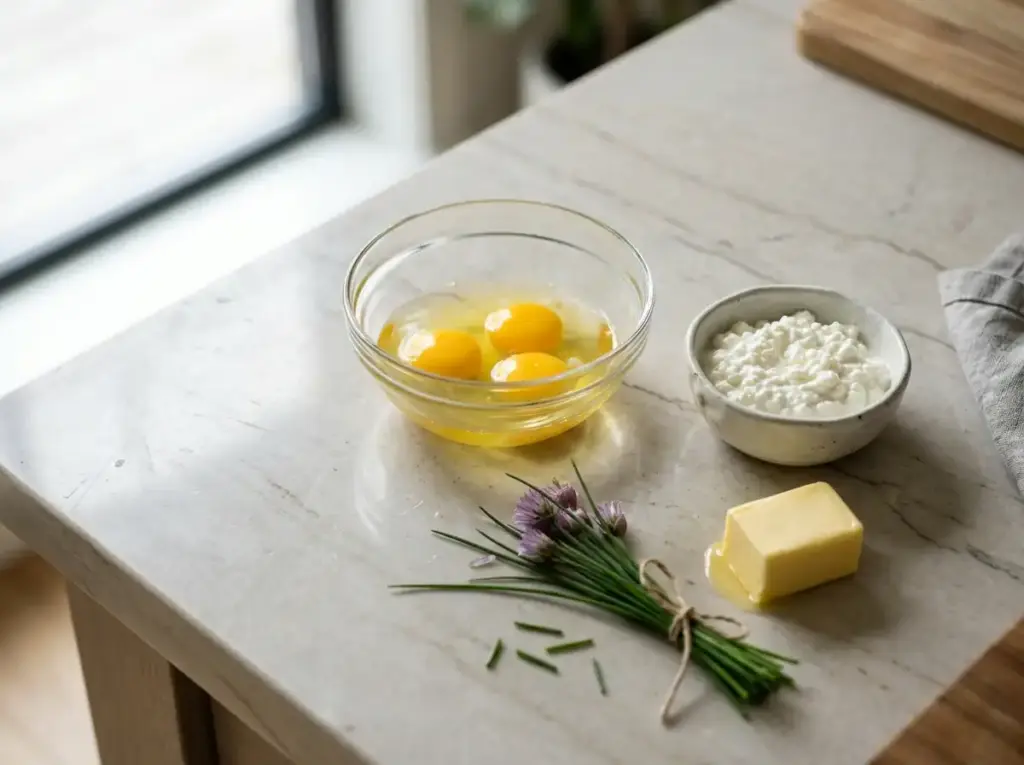
- 3 large eggs (150g)
- ⅓ cup + 1 tablespoon cottage cheese, 4% (100g)
- 1 teaspoon unsalted butter (5g)
- 1 tablespoon fresh chives, chopped (3g)
- Pinch of salt (0.5g)
- Pinch of black pepper (0.5g)
Notes on the ones that matter:
A blender, immersion blender, or even a fork works, provided you whisk thoroughly. The goal is no visible curds in the raw mixture, not necessarily a machine-smooth purée.
4% cottage cheese, not low-fat. Low-fat versions carry more water, which can make the finished eggs slightly looser rather than custardy.
How to Make It
- Blend the eggs and cottage cheese together for 20 to 30 seconds, until completely smooth with no visible curds.
- Melt the butter in a nonstick pan over low heat.
- Pour in the egg mixture and let it sit undisturbed for 20 seconds before the first stir.
- Cook low, folding gently every 20 to 30 seconds, pulling the pan off the heat while the eggs still look slightly underdone.
- Stir in the chives, salt and pepper off the heat — the residual warmth finishes the cooking.
Ten minutes, most of it at low heat.
Tips
Low heat, always. This mixture has more moisture and more protein than plain scrambled eggs, both of which mean it can go from creamy to rubbery faster on high heat. Low and patient is the only way to keep the custardy texture the blending is meant to produce.
Pull the pan off before it looks done. Eggs continue cooking from residual heat for another 20 to 30 seconds after leaving the burner. Waiting until they look fully set in the pan means they’ll be overcooked on the plate.
Season after blending, not before. Salt draws moisture out of eggs if it sits too long before cooking, which can thin the mixture. Adding it at the end avoids that entirely.
Taste before adding more salt. Cottage cheese carries real sodium on its own — see the note below — so this recipe uses less added salt than a standard scramble.
Substitutions
Every figure below is per serving, calculated from the same USDA data as the main recipe.
| Swap | Protein | Calories | Sodium | Notes |
|---|---|---|---|---|
| Cottage cheese 100g → 150g | +5.5 g | +49 | +182mg | Takes this past 35g. Slightly softer texture. |
| Add 30g crumbled feta | +4.3 g | +79 | +335mg | Adds a sharper flavour along with the protein. Large sodium cost. |
| 3 whole eggs → 2 eggs + 100g egg whites | +4.6 g | −20 | +95mg | Lighter, slightly less rich. |
| Butter → olive oil | −0.0 g | +8 | 0 | Works fine; loses a little richness. |
What not to substitute: don’t skip the blending step and just stir cottage cheese in at the end, even if you’re short on time. That produces the exact texture combination this recipe is built to avoid.
Storage
This is a cook-and-eat recipe. Scrambled eggs don’t reheat well regardless of what’s in them — the texture turns rubbery and slightly watery.
If you must store leftovers: 1 day refrigerated, reheated gently in a pan over low heat rather than the microwave, which overcooks egg protein quickly.
What does work ahead of time: blend the eggs and cottage cheese together the night before and keep the mixture covered in the fridge. Cooking still takes the same 5 minutes, but the prep is done.
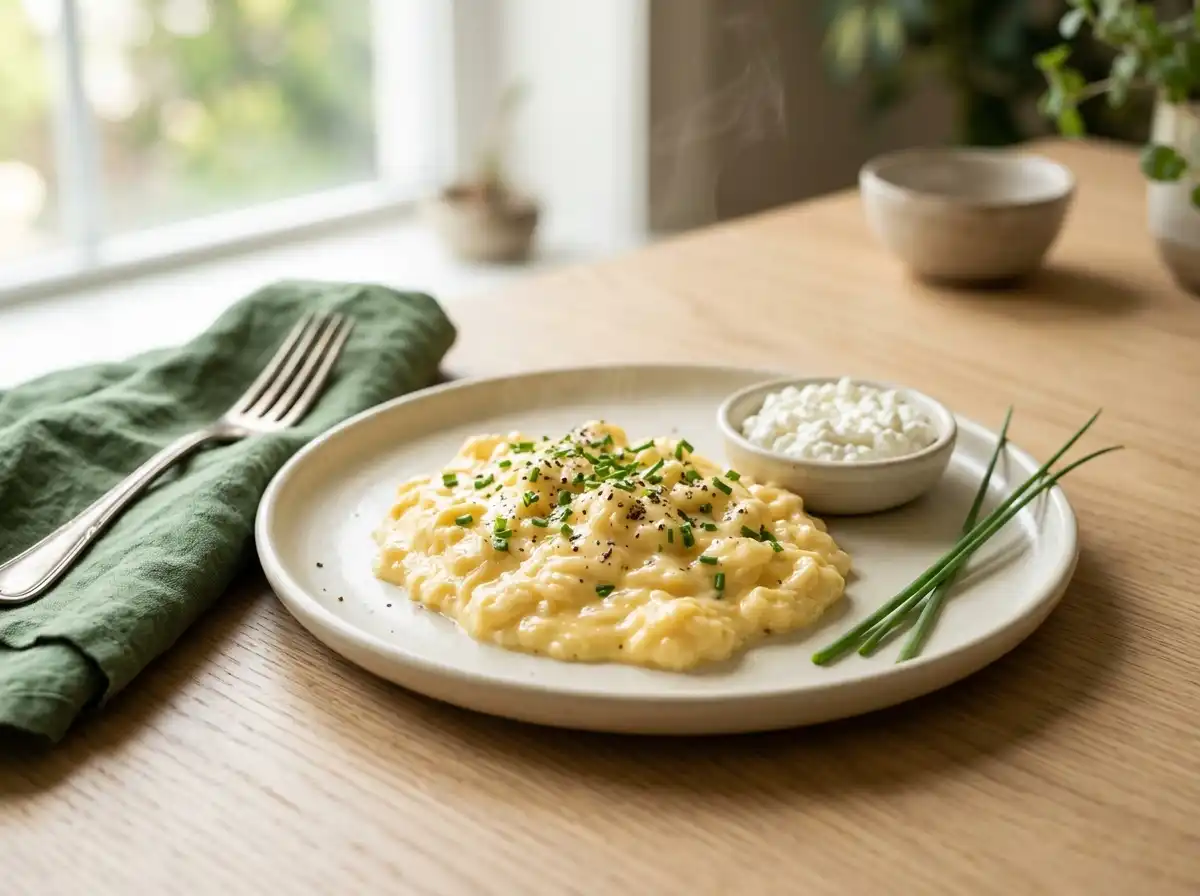

Scrambled Eggs with Cottage Cheese
Ingredients
Method
- Blend the eggs and cottage cheese together for 20 to 30 seconds, until completely smooth with no visible curds.
- Melt the butter in a nonstick pan over low heat.
- Pour in the egg mixture and let it sit undisturbed for 20 seconds before the first stir.
- Cook low, folding gently every 20 to 30 seconds, pulling the pan off the heat while the eggs still look slightly underdone.
- Stir in the chives, salt and pepper off the heat — the residual warmth finishes the cooking.
Nutrition
Per serving (recipe makes 1):
| Calories | 351 |
| Protein | 30 g |
| Carbohydrates | 5 g |
| Fiber | 0 g |
| Fat | 23 g |
| Sodium | 772 mg |
These figures are calculated ingredient by ingredient from a USDA-sourced nutrition database and divided by the serving count. They’re calculated values rather than laboratory-tested ones, and they’ll shift with your brands. Carbohydrates include fiber, following the US convention, so net carbs are about 5 grams per serving.
On the sodium: cottage cheese contributes 364mg and the added salt contributes another 194mg, together accounting for the majority of the total. Cottage cheese sodium varies noticeably between brands, so it’s worth checking the label if you’re tracking this closely — it’s the one ingredient in this recipe where the number can move meaningfully.
Frequently Asked Questions
Does cottage cheese make scrambled eggs fluffier?
It changes the texture rather than making it fluffier in the traditional sense — the result is softer and more custardy than a typical fluffy scramble. The extra moisture and protein from the cottage cheese slow down how quickly the eggs set, which produces larger, softer curds if cooked on low heat.
When do you add cottage cheese to scrambled eggs?
Before cooking, blended into the raw eggs, rather than folded in afterward. Added after cooking, the cottage cheese curds stay intact and sit as cool lumps in the warm eggs — which is the texture combination most people who dislike this dish are actually objecting to. Blended in first, the curds break down completely and disappear into the eggs.
How much protein is in cottage cheese scrambled eggs?
This recipe reaches 30.2 grams: 18.9 from three eggs and 11.1 from 100 grams of cottage cheese. That’s about 11 grams more than three eggs alone would provide, from a single measured addition with no other changes to the method.
Can you taste the cottage cheese in the eggs?
Barely, once blended in. The flavour is mild enough that it mostly registers as extra richness rather than as cottage cheese specifically — most people who try this without knowing the ingredients guess cream or extra butter before they guess cottage cheese.
More High Protein Breakfasts
This is one of fifteen recipes in the high protein breakfast collection, grouped by savory, sweet and make-ahead, with protein, calories and sodium compared across all fifteen.
For the same blending technique baked into individual portions, cottage cheese egg bites make twelve at a time and freeze well.
If you have more time and want to feed six people at once, the high protein breakfast casserole uses the same core idea in a bake.
Made this? Leave a rating and tell me if the texture surprised you — most people expect curds and get something closer to French scrambled eggs.