
Quick answer: This whipped cottage cheese bowl has 29 grams of protein and 371 calories per serving, and takes about 5 minutes with no cooking at all. Blending the cottage cheese for about a minute is what changes it from lumpy curds into something closer to thick yogurt — that’s the whole trick. Serves 1.
Most objections to cottage cheese are about texture, not flavour. The curds, the wateriness, the way it sits apart from whatever it’s mixed with — none of that is actually inherent to the ingredient. It’s what cottage cheese does when it isn’t blended.
Run it through a blender for about sixty seconds and it turns into something closer to crème fraîche or thick Greek yogurt: smooth, spreadable, and genuinely pleasant on its own. This recipe is built around that single step.
Why This Bowl Has 29 Grams of Protein
| Source | Per serving |
|---|---|
| Cottage cheese, 4% (200g) | 22.2 g |
| Hemp seeds (20g) | 6.3 g |
| Berries and honey | 0.7 g |
| Total | 29.2 g |
Cottage cheese carries 76% of the protein on its own. Two hundred grams is a generous but not extreme portion — a bit under a cup — and it’s what makes this the fastest high-protein breakfast in the collection that still clears 25 grams without any preparation beyond blending and topping.
Hemp seeds do almost all the rest. At 6.3 grams for 20 grams of seeds, they’re the most protein-dense topping used anywhere in this collection — see the comparison in the Greek yogurt bowl if you want the fuller topping breakdown.
Why Blending Changes Everything
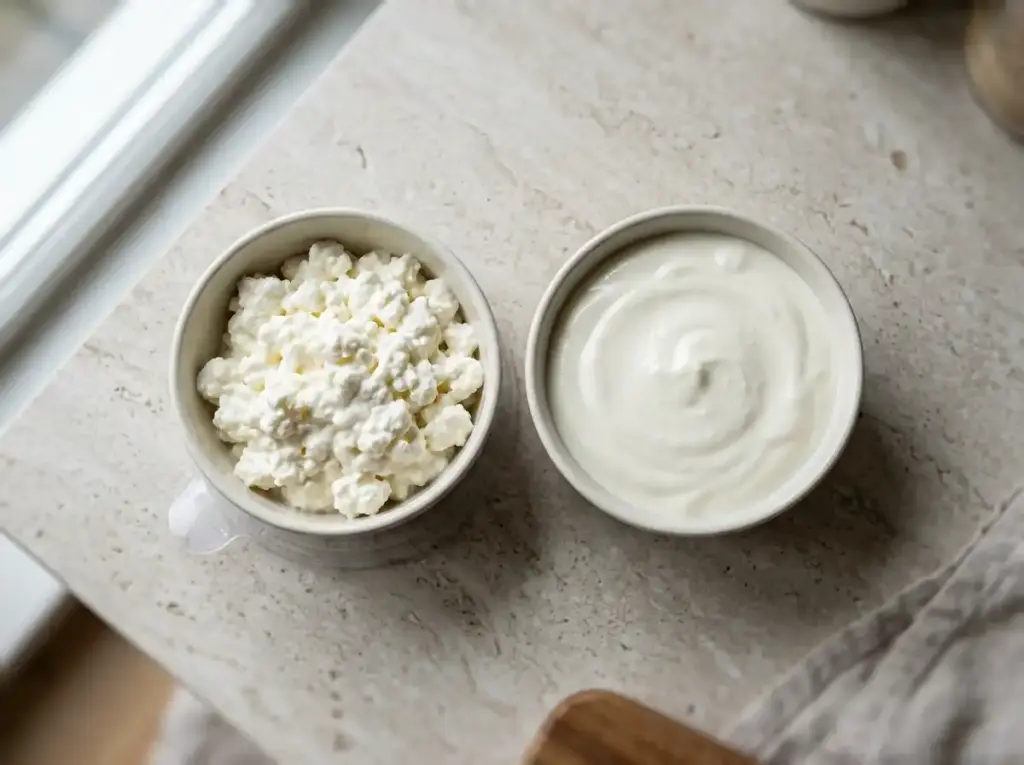
Cottage cheese curds are held together by casein protein that hasn’t been broken down. Left whole, they release liquid when disturbed — the watery pool you see if you leave a spoon sitting in the container — and they read as lumpy against smooth ingredients like berries or honey.
Blending for about sixty seconds breaks the curd structure down completely. The protein doesn’t disappear; it’s just no longer holding water in visible pockets. What comes out is smoother, thicker, and doesn’t separate the way unblended cottage cheese does when it sits.
This is the single change that makes people who dislike cottage cheese enjoy this bowl. The objection is almost always about the curds, and blending removes them entirely.
What You Need
- ¾ cup + 2 tablespoons cottage cheese, 4% (200g)
- 1 tablespoon hemp seeds, hulled (20g)
- ⅓ cup raspberries (60g)
- 1½ teaspoons honey (10g)
- ¼ teaspoon ground cinnamon (1g)
Notes on the ones that matter:
4% cottage cheese, not low-fat. The fat carries flavour that low-fat versions don’t have, and the protein difference across 200 grams is under a gram. Once blended, the difference in richness is noticeable.
A blender or food processor, not a whisk. A whisk breaks up some curds but leaves the mixture visibly grainy. A full minute in a blender is what gets it fully smooth.
How to Make It
- Blend the cottage cheese alone for 60 seconds, scraping down once halfway through, until completely smooth with no visible curds.
- Stir in the honey and cinnamon by hand.
- Top with the raspberries and hemp seeds.
Five minutes, most of it the blending.
Tips
Sixty seconds, not thirty. This is the step people rush, and it’s the one that determines whether the texture works. Thirty seconds usually leaves small curd flecks that are noticeable on the tongue even if they’re not visible.
Scrape down halfway through. A blender can leave a layer at the bottom that never fully incorporates if you run it in one continuous burst.
Stir the honey in after blending, not before. Blending it in doesn’t change anything meaningfully, but adding it separately means you can taste and adjust before committing to the full amount.
Add hemp seeds last. They’re the one topping in this bowl that benefits from staying dry and separate rather than being folded through.
Substitutions
Every figure below is per serving, calculated from the same USDA data as the main recipe.
| Swap | Protein | Calories | Notes |
|---|---|---|---|
| Double the hemp seeds to 40g | +6.3 g | +111 | Takes this past 35g. Nuttier flavour becomes more prominent. |
| Add 15g almonds | +3.2 g | +87 | Adds crunch, which this bowl otherwise lacks entirely. |
| Cottage cheese → Greek yogurt, same weight | −2.3 g | −50 | Works, but you lose the point of this recipe — see note below. |
| Raspberries → blueberries | +0.3 g | −3 | Minimal difference either way. |
| Skip the honey | 0 g | −30 | The raspberries carry real tartness without it; worth trying plain first. |
On the yogurt swap: it works, and it’s a fine bowl, but it’s a different recipe — the Greek yogurt breakfast bowl is built around that base with its own topping ratios. This recipe exists specifically to make cottage cheese work on its own terms rather than substitute it away.
Storage
This is a five-minute recipe, best made fresh. Blended cottage cheese holds about 2 days refrigerated, but the texture firms up slightly and the raspberries release water within a few hours.
What works for meal prep: blend a larger batch of cottage cheese alone — without the toppings — and keep it in a sealed container for up to 3 days. Add the honey, cinnamon and fresh toppings each morning. This keeps the blended base ready without any of it going watery before you eat it.
Don’t freeze it. Blended cottage cheese separates on thawing, the same way regular cottage cheese does.

Whipped Cottage Cheese Bowl
Ingredients
Method
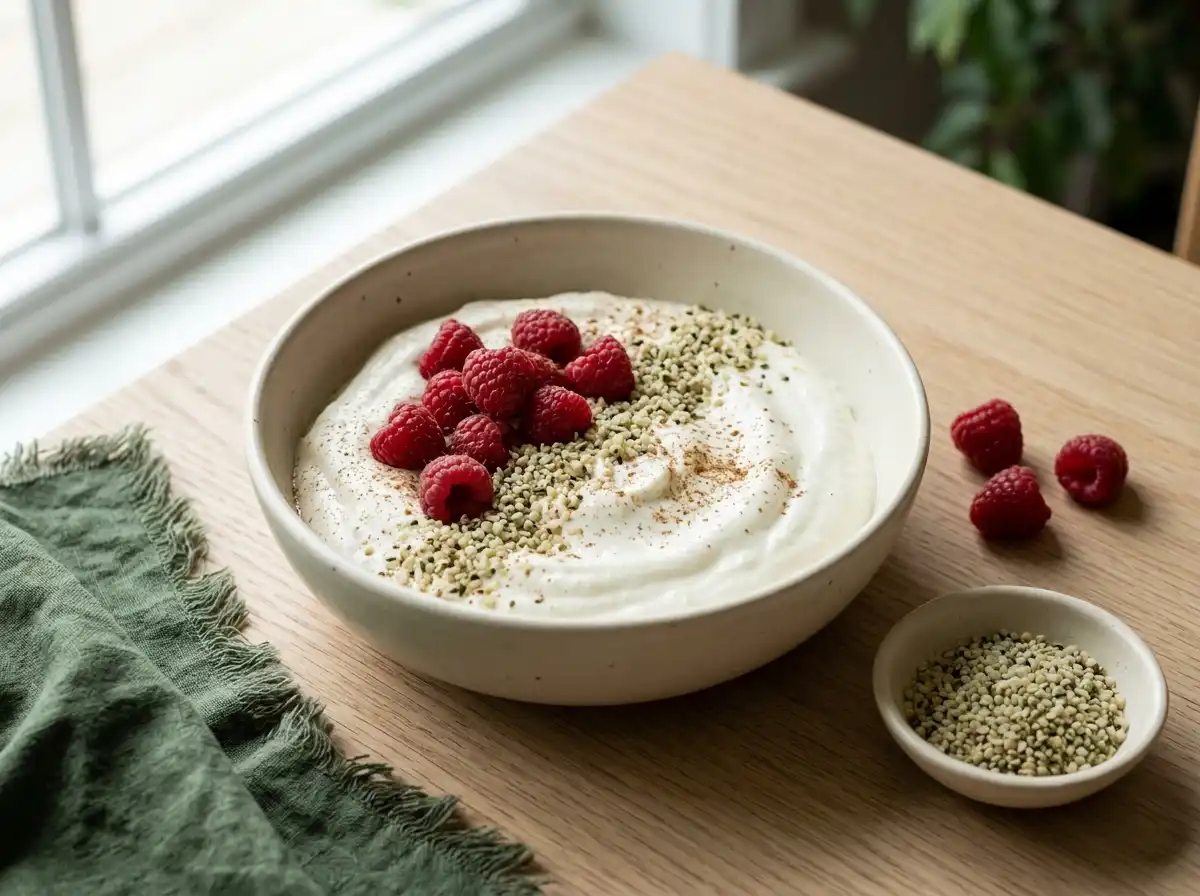
- Blend the cottage cheese alone for 60 seconds, scraping down once halfway through, until completely smooth with no visible curds.
- Stir in the honey and cinnamon by hand.
- Top with the raspberries and hemp seeds.
Nutrition
Per serving (recipe makes 1):
| Calories | 371 |
| Protein | 29 g |
| Carbohydrates | 25 g |
| Fiber | 5 g |
| Fat | 19 g |
| Sodium | 730 mg |
These figures are calculated ingredient by ingredient from a USDA-sourced nutrition database and divided by the serving count. They’re calculated values rather than laboratory-tested ones, and they’ll shift with your brands. Carbohydrates include fiber, following the US convention, so net carbs are about 20 grams per serving.
The sodium in this recipe comes almost entirely from one ingredient. Cottage cheese contributes 728 of the 730mg — essentially all of it. There’s no added salt and nothing else in the bowl carries a meaningful amount. This makes cottage cheese sodium the single number worth checking if you’re comparing brands: it varies more than most people expect, and in this recipe it’s the only variable that matters for that figure.
Frequently Asked Questions
Is cottage cheese a good breakfast?
Yes, primarily because of its protein density — 4% cottage cheese carries around 11 grams of protein per 100 grams with relatively few calories. On its own, straight from the container, many people find the texture unappealing, which is the main reason cottage cheese gets skipped as a breakfast option despite the nutrition being strong.
How do you make cottage cheese taste better?
Blending is the single most effective change. About sixty seconds in a blender or food processor breaks down the curd structure completely, turning cottage cheese from lumpy and watery into something closer to thick Greek yogurt or crème fraîche. From there, it takes toppings — honey, fruit, cinnamon — the same way any creamy base would.
How much protein is in a cottage cheese breakfast?
This bowl reaches 29.2 grams from 200 grams of cottage cheese and 20 grams of hemp seeds. Cottage cheese alone carries roughly 11 grams of protein per 100 grams, so a 200-gram portion supplies about 22 grams before any toppings are added.
Should cottage cheese be eaten sweet or savory?
Either works, and it comes down to preference rather than nutrition — the protein content is identical either way. Sweet preparations like this one pair it with fruit, honey and seeds. Savory versions pair it with herbs, olive oil, tomatoes or a soft-boiled egg, closer to how it’s traditionally eaten in parts of Eastern Europe.
More High Protein Breakfasts
This is one of fifteen recipes in the high protein breakfast collection, grouped by savory, sweet and make-ahead, with protein, calories and sodium compared across all fifteen.
For the same five-minute idea built around Greek yogurt instead, the Greek yogurt breakfast bowl reaches 33 grams with a full topping breakdown.
If you want the same base baked into something more substantial, cottage cheese oat muffins use the same ingredient as their foundation.
Made this? Leave a rating and tell me if the blending step changed your mind about cottage cheese — it’s the one detail this whole recipe depends on.