
Quick answer: This tofu scramble has 39 grams of protein and 395 calories per serving, and it’s fully vegan. Firm tofu carries most of that on its own, and kala namak — Indian black salt — is what makes it taste like eggs instead of warm tofu. Serves 2, about 20 minutes. It’s the highest-protein plant-based recipe in the collection.
Tofu is one of the few plant foods dense enough to build a high protein breakfast around without pairing it with a second source. Two hundred grams per serving carries close to 35 grams of protein on its own, before anything else goes in the pan.
What usually holds tofu scramble back isn’t the protein — it’s the flavour. Plain tofu tastes like almost nothing, which is exactly why most versions taste like warm, bland curds instead of something resembling scrambled eggs. Two specific ingredients fix that, and neither is expensive or hard to find.
Why This Scramble Has 39 Grams of Protein
| Source | Per serving |
|---|---|
| Tofu, firm (200g) | 34.6 g |
| Nutritional yeast (5g) | 2.5 g |
| Everything else | 2.2 g |
| Total | 39.3 g |
Tofu does nearly 90% of the work. At 17.3 grams of protein per 100 grams, firm tofu is one of the densest plant proteins available, and 200 grams per serving is a substantial but not extreme portion — roughly what you’d use for a stir-fry serving two.
Nutritional yeast adds real protein, not just flavour. It’s included here mainly for taste, but at 50 grams of protein per 100 grams it isn’t nutritionally inert — 5 grams of it contributes 2.5 grams of protein on its own.
The Two Ingredients That Make This Taste Like Eggs
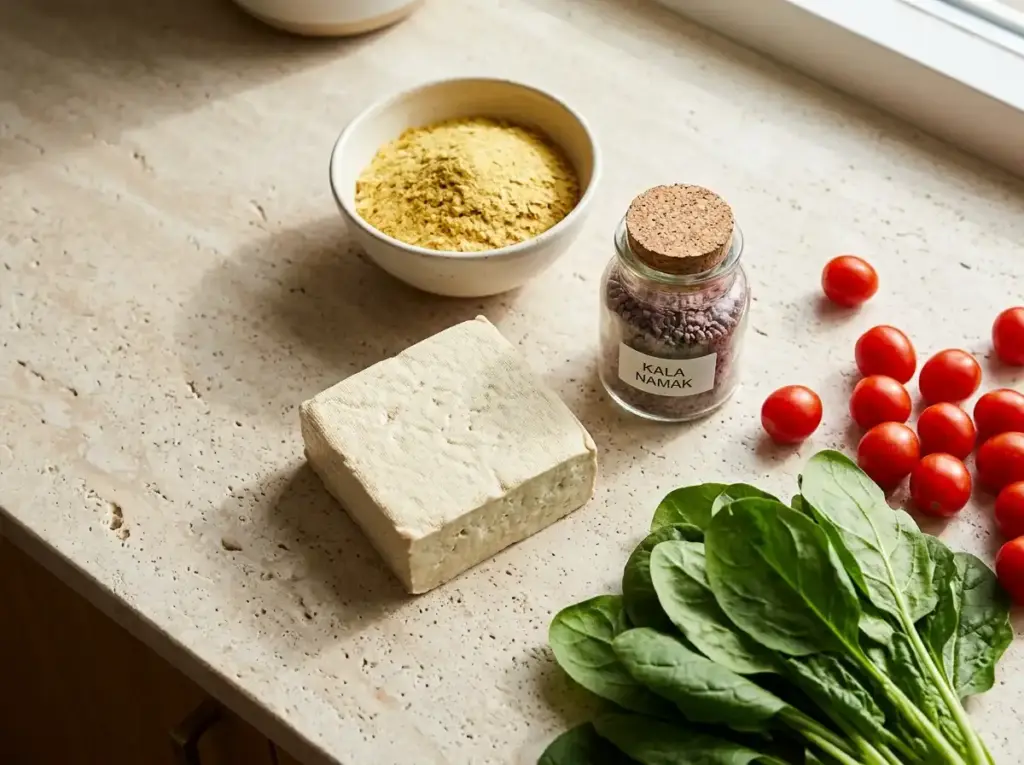
Kala namak, or Indian black salt, is the one non-negotiable ingredient here. It contains sulfur compounds that regular salt doesn’t, and those compounds are what create the distinctive savory, faintly eggy flavour that makes a tofu scramble taste like something rather than nothing. Regular salt seasons the dish; kala namak changes what it tastes like. It’s sold in most well-stocked grocery stores and any Indian grocer, and a small jar lasts a very long time since a little goes a long way.
Lemon juice, added off the heat at the end, does something different but equally important. Without acid, a tofu scramble — like most bland, protein-dense foods — tastes flat no matter how well it’s seasoned otherwise. A small amount of lemon juice stirred in right before serving brightens the whole dish in a way that’s hard to achieve any other way.
Turmeric is in this recipe too, but it’s doing something much simpler: it’s there for the yellow colour, not the flavour. A pinch goes a long way, and more than that starts to taste bitter without adding anything visually beyond what a smaller amount already achieves.
What You Need
- 14 oz (400g) firm tofu
- 1 packed cup spinach (100g)
- 1 tablespoon nutritional yeast (10g)
- 1 tablespoon extra-virgin olive oil (14g)
- ⅔ cup cherry tomatoes, halved (100g)
- 2 spring onions, sliced (20g)
- ¼ teaspoon ground turmeric (1g)
- ¼ teaspoon kala namak (2g)
- ¼ teaspoon black pepper (1g)
- 1½ teaspoons fresh lemon juice (8g)
Notes on the ones that matter:
Press the tofu for at least 15 minutes. Firm tofu straight from the package carries a significant amount of water, and that water is what keeps it from browning properly in the pan. Wrap it in a clean towel with something heavy on top — a cast iron pan works well — and let it sit while you prep everything else.
Nutritional yeast, sold in the health food or vegan section of most supermarkets, has a savory, cheese-adjacent flavour that’s central to this recipe. There’s no good substitute if you want that specific taste.
Kala namak specifically, not just any salt. This is the one ingredient worth seeking out before making this recipe, since it’s doing something regular salt can’t.
How to Make It
- Press the tofu 15 minutes, then crumble it by hand into rough, uneven pieces — not too fine, or it turns mushy in the pan.
- Heat the olive oil in a nonstick pan over medium-high until shimmering.
- Add the crumbled tofu and let it sit undisturbed for 2 to 3 minutes before the first stir, to build some browning on the base.
- Stir in the turmeric, kala namak and nutritional yeast, tossing to coat evenly.
- Cook 5 to 6 minutes, stirring occasionally, until lightly golden in places.
- Add the spinach, tomatoes and spring onion and cook 2 more minutes, until the spinach wilts.
- Remove from heat and stir in the lemon juice and black pepper.
Twenty minutes, most of it hands-off while the tofu browns.
Tips
Press the tofu properly — this is the whole recipe. Skipping this step, or pressing for only a few minutes, is why tofu scramble often comes out steamed and pale rather than lightly browned. Fifteen minutes under real weight makes a visible difference.
Let it sit before stirring. The instinct is to move the tofu around constantly, but that’s what prevents browning. Two or three minutes of undisturbed contact with a hot pan is what builds colour and texture.
Add the lemon juice off the heat, at the very end. Cooking lemon juice mutes its brightness. Added after the pan comes off the heat, it does exactly what it’s there for.
Start with less kala namak than you think you need. It’s potent, and oversalting with it is easy to do since the flavour is unfamiliar if you haven’t cooked with it before. A quarter teaspoon for two servings is a reasonable starting point — taste and adjust from there.
Substitutions
Every figure below is per serving, calculated from the same USDA data as the main recipe.
| Swap | Protein | Calories | Notes |
|---|---|---|---|
| Add 15g hemp seeds | +2.4 g | +41 | Stir in at the end, off the heat, for added crunch and protein. |
| Nutritional yeast 10g → 15g | +1.2 g | +9 | Stronger savory flavour. Easy to overdo — add gradually. |
| Reduce olive oil to 10g | 0 g | −18 | Works fine if you’re managing fat intake. Slightly less browning. |
What not to substitute: don’t skip the kala namak and assume regular salt will do the same job. It won’t — the flavour this recipe is built around comes specifically from the sulfur compounds in black salt, and there’s no real substitute for that particular taste.
Storage
Three days refrigerated, in an airtight container.
Reheating: a dry skillet over medium heat, 3 to 4 minutes, stirring occasionally, brings back most of the original texture. The microwave works in 60 to 90 seconds but leaves it slightly softer than fresh.
Not ideal for freezing. Tofu’s texture changes noticeably after freezing and thawing — it becomes spongier and releases more water, which works against the texture this recipe is built to achieve.
Make-ahead approach: press the tofu and crumble it up to a day ahead, storing it covered in the fridge. The cooking itself still takes the full 15 minutes, but the most time-sensitive step is done in advance.
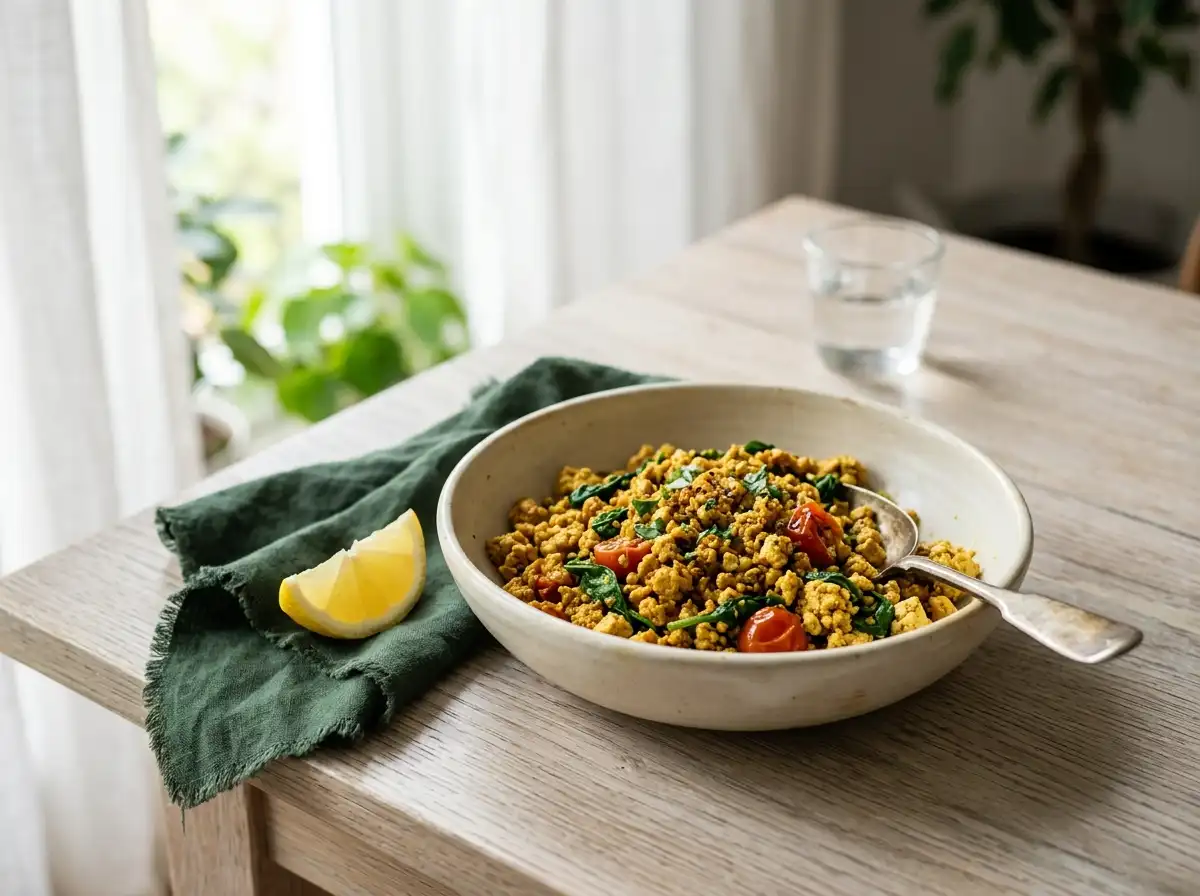

Savory Tofu Scramble with Spinach
Ingredients
Method
- Press the tofu 15 minutes, then crumble it by hand into rough, uneven pieces — not too fine, or it turns mushy in the pan.
- Heat the olive oil in a nonstick pan over medium-high until shimmering.
- Add the crumbled tofu and let it sit undisturbed for 2 to 3 minutes before the first stir, to build some browning on the base.
- Stir in the turmeric, kala namak and nutritional yeast, tossing to coat evenly.
- Cook 5 to 6 minutes, stirring occasionally, until lightly golden in places.
- Add the spinach, tomatoes and spring onion and cook 2 more minutes, until the spinach wilts.
- Remove from heat and stir in the lemon juice and black pepper.
Nutrition
Per serving (recipe makes 2):
| Calories | 395 |
| Protein | 39 g |
| Carbohydrates | 13 g |
| Fiber | 8 g |
| Fat | 25 g |
| Sodium | 461 mg |
These figures are calculated ingredient by ingredient from a USDA-sourced nutrition database and divided by the serving count. They’re calculated values rather than laboratory-tested ones, and they’ll shift with your brands — tofu firmness and nutritional yeast in particular vary between manufacturers. Carbohydrates include fiber, following the US convention, so net carbs are about 5 grams per serving.
At 39 grams of protein, this is the highest-protein plant-based recipe in the high protein breakfast collection, and it’s also relatively low in sodium at 461mg — most of it from the kala namak itself, which is a form of salt.
Frequently Asked Questions
What kind of tofu is best for scrambling?
Firm or extra-firm tofu, not silken or soft. Firm tofu holds together when crumbled and browns properly in a pan, while softer varieties break down into something closer to a purée. Extra-firm needs slightly less pressing time since it starts with less water content.
How do you make tofu scramble taste like eggs?
Kala namak, or Indian black salt, is the ingredient responsible. It contains sulfur compounds that regular salt doesn’t have, which produce a savory, faintly eggy flavour when added to tofu. Regular table salt seasons the dish without creating that specific taste — kala namak is the one ingredient in this recipe that isn’t optional if that flavour is the goal.
Why is my tofu scramble watery?
Almost always insufficient pressing. Firm tofu straight from the package holds a significant amount of water, and that water needs to be pressed out before cooking or it releases into the pan and steams the tofu instead of letting it brown. Fifteen minutes under real weight — not just a light plate — makes a clear difference.
Can you make tofu scramble ahead of time?
Partially. The tofu can be pressed and crumbled up to a day in advance and stored covered in the fridge, which saves the most time-consuming step. The full dish itself keeps 3 days refrigerated and reheats well in a dry skillet, though it’s best made fresh if possible since reheating softens the texture slightly.
How much protein is in tofu scramble?
This recipe reaches 39.3 grams per serving, with tofu alone contributing 34.6 grams from a 200-gram portion. That makes it more protein-dense than most egg-based scrambles in this collection, since firm tofu carries 17.3 grams of protein per 100 grams — denser by weight than a whole egg.
More High Protein Breakfasts
This is one of fifteen recipes in the high protein breakfast collection, grouped by savory, sweet and make-ahead, with protein, calories and sodium compared across all fifteen.
For another savory, egg-adjacent breakfast with a similar cooking style, savory oatmeal with soft egg uses a completely different protein source but a similar low-and-slow approach.
If you want a batch-cook version to cover several mornings, the high protein breakfast casserole makes six servings at once, though it isn’t vegan.
Made this? Leave a rating and tell me if you tried it without the kala namak — I’d be curious whether the difference is as noticeable to everyone as it is to me.