
Quick answer: This poke-style spicy tuna rice bowl has about 38 grams of protein and 465 calories per serving, and takes about 20 minutes with no actual cooking of the tuna. Sashimi-grade tuna is cubed and marinated in a spicy sesame-soy sauce, then served over rice with avocado and edamame. Serves 4. Sodium runs moderate-to-high, about 590 mg per serving if you use low-sodium soy sauce, as specified below.
This is the fresh, raw-tuna version of Spicy Tuna Rice Bowl — same idea of a spicy tuna bowl, built with cubed sashimi-grade tuna in a marinade instead of canned tuna mixed with yogurt. It’s the higher-protein, more restaurant-style option of the two.
Why This Recipe Has About 38 Grams of Protein
| Source | Per serving |
| Sashimi-grade tuna, raw (112.5 g) | 28.1 g |
| Edamame (40 g) | 4.4 g |
| Cooked rice (120 g) | 3.2 g |
| Everything else | 2.6 g |
| Total | 38.3 g |
Fresh tuna is more protein-dense than canned by weight, which is what pushes this one well past the other rice bowls in the cluster.
A Note on Sodium
About 590 mg per serving, roughly 26% of the WHO’s 2,300 mg daily limit — using low-sodium soy sauce, as this recipe specifies. Regular soy sauce in the same quantity would push this considerably higher, since soy sauce is one of the most concentrated sodium sources in any pantry.
- Low-sodium soy sauce: ~371 mg
- Sriracha: ~165 mg
- Sashimi-grade tuna: ~45 mg
- Everything else: ~9 mg
What You Need
Makes 4 servings
- 1 lb (450 g) sushi-grade tuna, cubed
- 3 tbsp low-sodium soy sauce
- 2 tbsp sriracha
- 1 tsp sesame oil
- 1 tsp rice vinegar
- 4 cups cooked rice (480 g)
- 1 avocado, sliced
- 1 cup (160 g) shelled edamame
- 1 cucumber, diced
- Sesame seeds, nori strips and green onion, to serve
A note on the tuna: use genuinely sushi-grade or sashimi-grade tuna from a fishmonger you trust, sold specifically for raw eating — not standard grocery-counter tuna steaks.
How to Make It
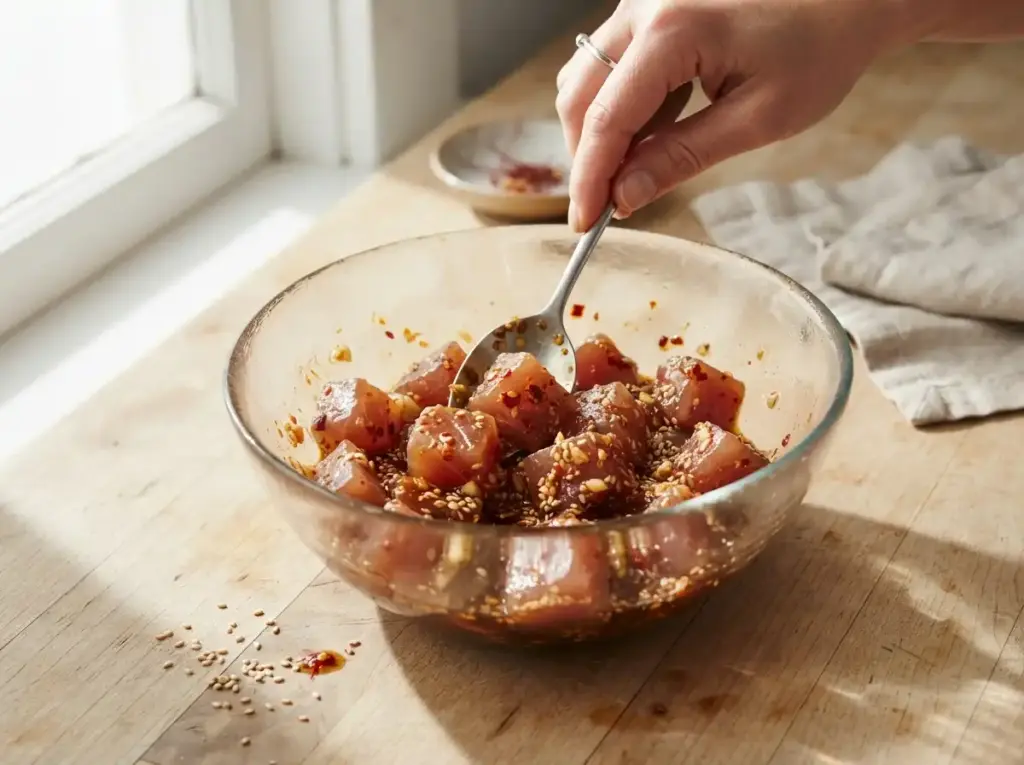
- Marinate the tuna. Cube it and toss with soy sauce, sriracha, sesame oil and rice vinegar. Let it sit 5-10 minutes.
- Cook the rice, if not already made.
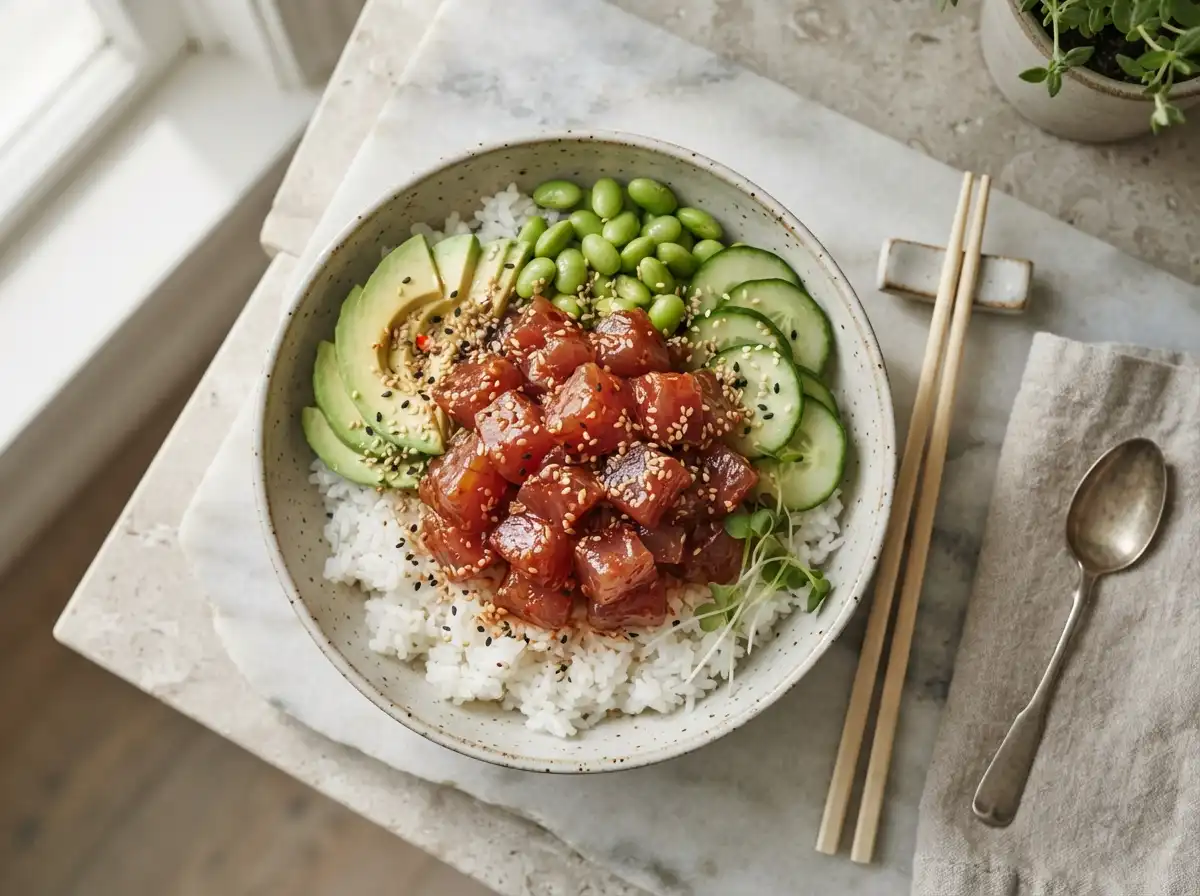
- Assemble bowls: rice, marinated tuna, avocado, edamame and cucumber.
- Finish with sesame seeds, nori strips and green onion.
Tips
Don’t marinate longer than 15 minutes. The acid in the marinade starts to “cook” the tuna past that point, changing the texture.
Buy the tuna the day you’re serving it. Raw fish doesn’t hold in the fridge the way canned or cooked tuna does.
Substitutions
Tuna: if sashimi-grade isn’t available, use the canned, cooked version of this recipe instead. Edamame: shelled peas work in a pinch, with less protein.
Storage
Not recommended to store. This is meant to be eaten the day it’s made — raw fish doesn’t keep safely beyond that.

Spicy Tuna Rice Bowl Recipe
Ingredients
Method
- Cube the tuna and marinate in soy sauce, sriracha, sesame oil and rice vinegar for 5-10 minutes.
- Cook or reheat the rice.
- Assemble bowls with rice, marinated tuna, avocado, edamame and cucumber.
- Top with sesame seeds, nori and green onion.
Notes
- Use only genuinely sashimi-grade tuna.
- Do not store, eat the same day.
Nutrition
Per serving (recipe makes 4):
| Calories | 465 |
| Protein | 38 g |
| Sodium | 590 mg |
Verified against the Tuna nutrition workbook, calculated ingredient-by-ingredient from USDA FoodData Central reference values. Sodium figure assumes low-sodium soy sauce as specified.
Frequently Asked Questions
What does sashimi-grade mean?
Fish handled and frozen to a standard that makes it safe to eat raw — ask your fishmonger specifically for sashimi-grade or sushi-grade tuna, not a regular tuna steak.
How is this different from the canned spicy tuna bowl?
This uses raw, marinated fresh tuna and is higher in protein; the other uses canned tuna mixed with yogurt and is faster and more pantry-friendly.
Can I make this ahead?
No — this is a same-day recipe because of the raw fish.
Is regular soy sauce okay instead of low-sodium?
It works, but the sodium total will be considerably higher than stated above.
More High Protein Tuna Recipes
Part of the growing Tuna collection, alongside Tuna Rice Bowl (the non-spicy version of this same fresh-tuna style) and Spicy Tuna Rice Bowl (the canned, quicker version).
Made this? Leave a rating and a comment below.