
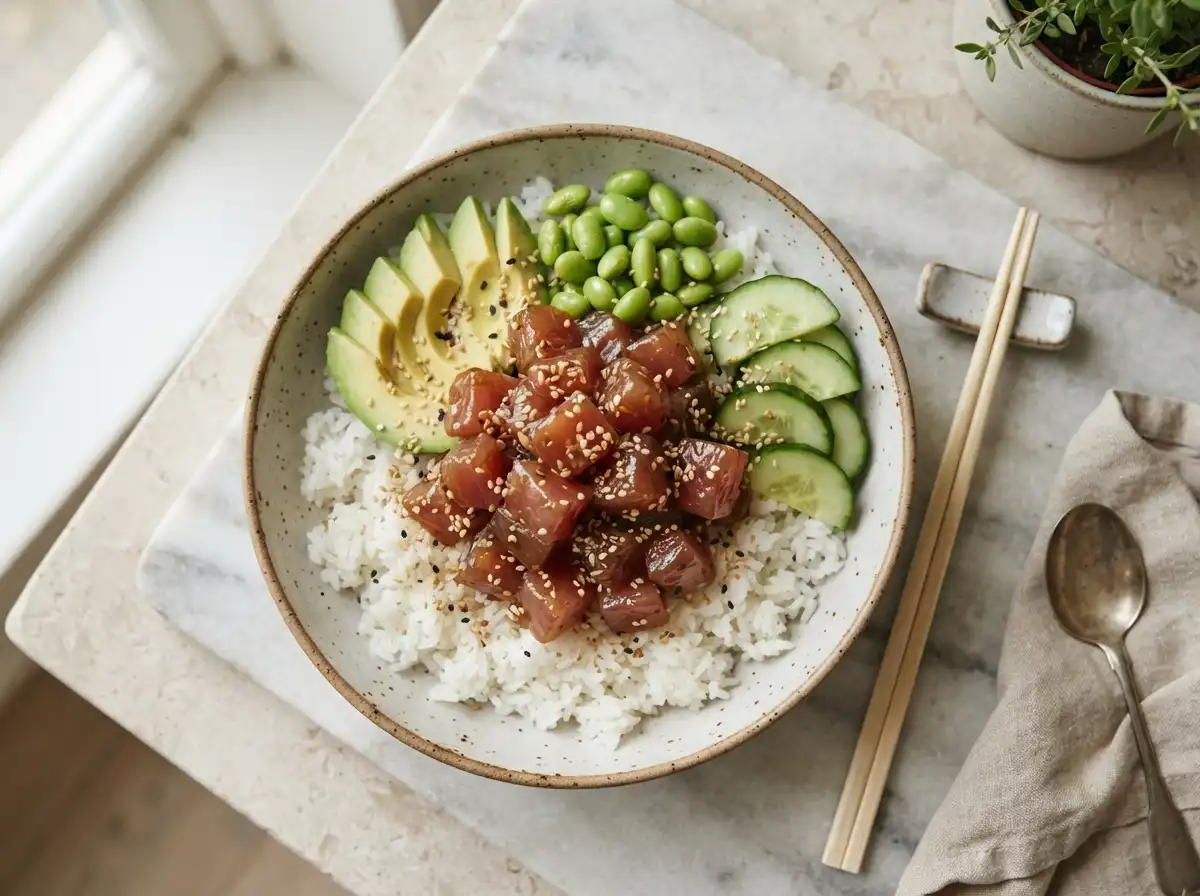
Quick answer: This tuna rice bowl has about 38 grams of protein and 455 calories per serving, and takes about 20 minutes with no actual cooking of the tuna. Sashimi-grade tuna cubes sit in a mild sesame-soy dressing over rice, with avocado, edamame and cucumber. Serves 4. Sodium is the lowest of any rice bowl in the collection, about 300 mg per serving.
This is the flagship of the Tuna Rice Bowls collection — the classic, mild poke-style bowl that Spicy Tuna Rice Bowl Recipe turns up the heat on. If you’d rather use canned tuna and skip the raw-fish step entirely, see Tuna and Rice Bowl instead.
Why This Recipe Has About 38 Grams of Protein
| Source | Per serving |
| Sashimi-grade tuna, raw (112.5 g) | 28.1 g |
| Edamame (40 g) | 4.4 g |
| Cooked rice (120 g) | 3.2 g |
| Everything else | 2.1 g |
| Total | 37.8 g |
Fresh tuna is more protein-dense than canned by weight, and edamame adds more here than it looks like it would — together they push this past every other rice bowl in the collection.
A Note on Sodium
About 300 mg per serving, roughly 13% of the WHO’s 2,300 mg daily limit — the lowest sodium figure of any rice bowl on the site, since there’s no sriracha, gochujang or regular soy sauce here.
- Low-sodium soy sauce: ~247 mg
- Sashimi-grade tuna: ~45 mg
- Everything else: ~8 mg
What You Need
Makes 4 servings
- 1 lb (450 g) sushi-grade tuna, cubed
- 2 tbsp low-sodium soy sauce
- 1 tsp sesame oil
- 1 tsp rice vinegar
- 4 cups cooked rice (480 g)
- 1 avocado, sliced
- 1 cup (160 g) shelled edamame
- 1 cucumber, diced
- Sesame seeds and sliced green onion, to serve
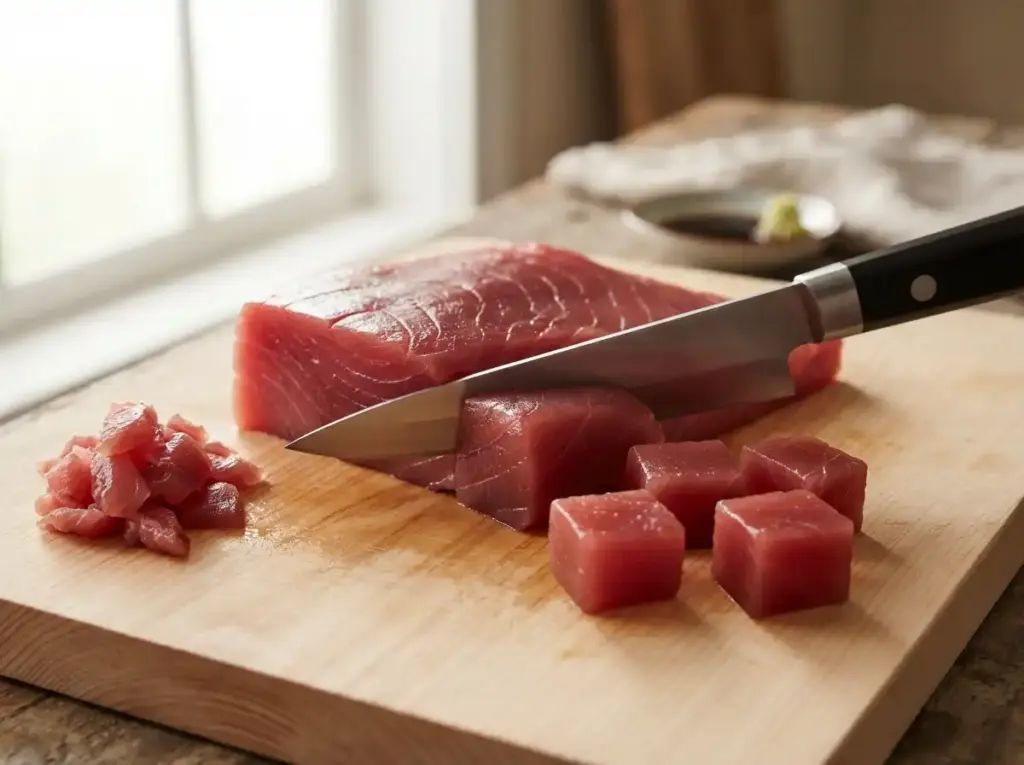
A note on the tuna: use genuinely sushi-grade or sashimi-grade tuna from a fishmonger you trust, sold specifically for raw eating.
How to Make It
- Dress the tuna. Cube it and toss gently with soy sauce, sesame oil and rice vinegar.
- Cook the rice, if not already made.
- Assemble bowls: rice, dressed tuna, avocado, edamame and cucumber.
- Finish with sesame seeds and green onion.
Tips
Cut the tuna into even cubes. Uneven pieces mean uneven marinating and an inconsistent bite.
Buy the tuna the day you’re serving it. Raw fish doesn’t hold in the fridge the way canned tuna does.
Substitutions
Tuna: if sashimi-grade isn’t available, use Tuna and Rice Bowl instead, built on canned tuna. Edamame: shelled peas work in a pinch.
Storage
Not recommended to store. Meant to be eaten the day it’s made.

Tuna Rice Bowl
Ingredients
Method
- Cube the tuna and toss with soy sauce, sesame oil and rice vinegar.
- Cook or reheat the rice.
- Assemble bowls with rice, dressed tuna, avocado, edamame and cucumber.
- Top with sesame seeds and green onion.
Notes
- Use only genuinely sashimi-grade tuna.
- Do not store — eat the same day.
Nutrition
Per serving (recipe makes 4):
| Calories | 455 |
| Protein | 38 g |
| Sodium | 300 mg |
Verified against the Tuna nutrition workbook, calculated ingredient-by-ingredient from USDA FoodData Central reference values.
Frequently Asked Questions
What does sashimi-grade mean?
Fish handled and frozen to a standard that makes it safe to eat raw — ask your fishmonger specifically for it.
How is this different from the spicy version?
No sriracha here — this is the mild, classic bowl the spicy recipe is built from.
Can I use canned tuna instead?
Yes, but use Tuna and Rice Bowl instead — it’s built specifically around canned tuna rather than this fresh-tuna method.
Can I make this ahead?
No — same-day only, because of the raw fish.
More High Protein Tuna Recipes
Part of the growing Tuna collection, alongside Spicy Tuna Rice Bowl Recipe and Tuna and Rice Bowl.
Made this? Leave a rating and a comment below.