
Quick answer: This cottage cheese tuna salad has about 34 grams of protein and 305 calories per serving, and takes about 20 minutes, most of it boiling the eggs. It skips mayonnaise entirely — canned tuna, cottage cheese and hard-boiled eggs each bring their own protein instead. Serves 4. Sodium runs high, about 680 mg per serving; there’s a section on that below.
A lot of “healthy” tuna salads still lean on a big spoonful of mayonnaise to hold everything together, which adds fat and calories but no protein. Here, cottage cheese does that job instead — tossed with lemon juice, it loosens slightly and coats the tuna and vegetables the way a dressing would, while the curds stay visible rather than disappearing into a smooth paste.
This is deliberately a bowl-style salad, served over crisp vegetables rather than tucked into bread. If you want a more spreadable, sandwich-style version, that’s a different recipe with a different texture — not this one.
Why This Recipe Has About 34 Grams of Protein
| Source | Per serving |
| Canned tuna, drained (82 g) | 15.9 g |
| Cottage cheese, 4% (112 g) | 12.2 g |
| Egg, large (50 g) | 6.3 g |
| Total | 34.4 g |
Three animal-protein sources, none of them carrying the bowl alone — the tuna and cottage cheese together already clear 28 grams before the egg is counted.
A Note on Sodium
This recipe carries about 680 mg of sodium per serving, roughly 30% of the World Health Organization’s 2,300 mg daily limit. That’s high, and it’s the main trade-off of leaning on cottage cheese as both the protein source and the dressing base.
- Cottage cheese: ~393 mg
- Canned tuna: ~205 mg
- Egg: ~71 mg
- Vegetables and seasoning: ~10 mg
(totals per serving; the recipe serves 4)
What helps: a low-sodium or no-salt-added cottage cheese cuts the single largest contributor here by a meaningful margin. Rinsing the tuna briefly (rather than just pressing it) removes a little more.
What doesn’t help much: the vegetables and seasoning barely register — the sodium here comes almost entirely from the two dairy-and-fish ingredients that make up most of the bowl.
What You Need
Makes 4 servings
- 3 cans (5 oz / 142 g each) light tuna in water, drained (about 330 g drained total)
- 2 cups (450 g) 4% cottage cheese
- 4 large eggs
- 1 cucumber, diced
- 200 g cherry tomatoes, halved
- ¼ red onion, thinly sliced
- 1 lemon, juiced
- 1 tbsp olive oil
- 2 tbsp fresh dill, chopped
- Black pepper, to taste
Notes on the ones that matter:
4% cottage cheese, not low-fat. The higher-fat version keeps its curds distinct in a chunky bowl salad; low-fat cottage cheese thins out faster once it meets acid.
Tuna, pressed dry. Wet tuna dilutes the bowl fast since there’s no thick dressing to absorb it.
No added salt. Between the tuna, the cottage cheese and the eggs, there’s already plenty. Taste before reaching for the shaker.
How to Make It
- Boil the eggs. Cover with cold water, bring to a boil, then simmer 9-10 minutes for a fully set yolk. Cool in cold water, peel, and quarter.
- Drain the tuna. Press out as much liquid as possible, then flake it into a large bowl.
- Prep the vegetables. Dice the cucumber, halve the tomatoes, thinly slice the red onion.
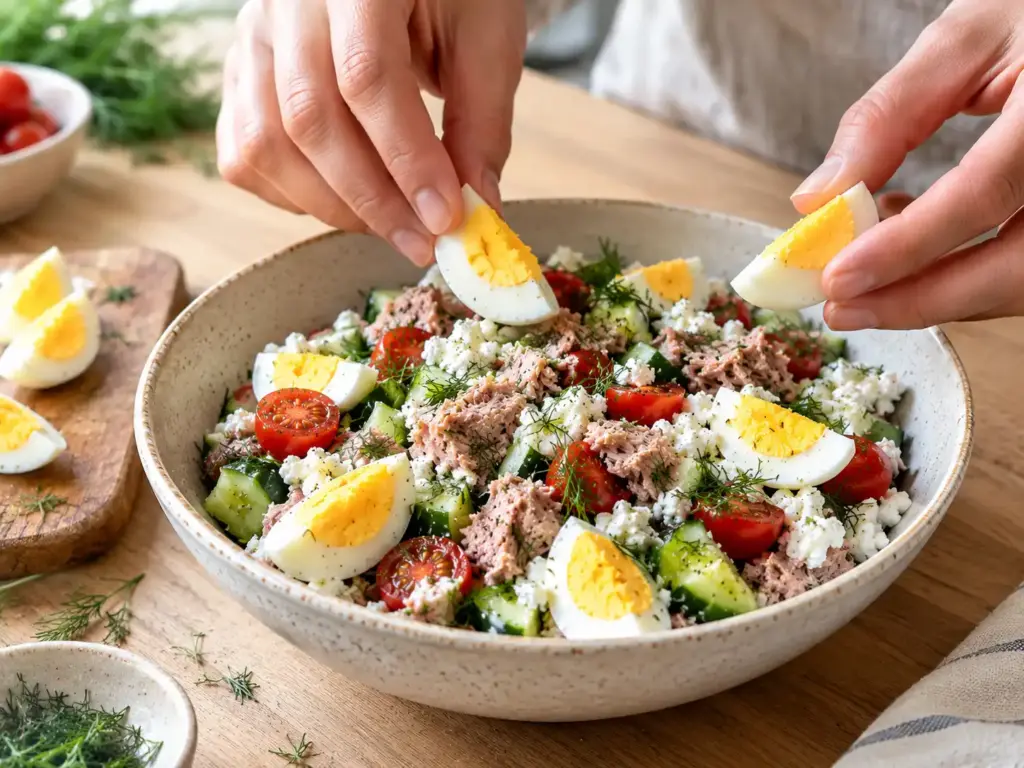
- Combine. Add the cottage cheese, cucumber, tomatoes and red onion to the tuna. Add the lemon juice and olive oil, and toss gently — just enough to coat, without mashing the cottage cheese.
- Finish. Fold in the dill, season with pepper, and top with the quartered eggs just before serving.
Tips
Add the eggs last, on top, rather than folding them in. Mixed through, the yolks break apart and the bowl turns slightly grainy; left in quarters on top, they stay intact.
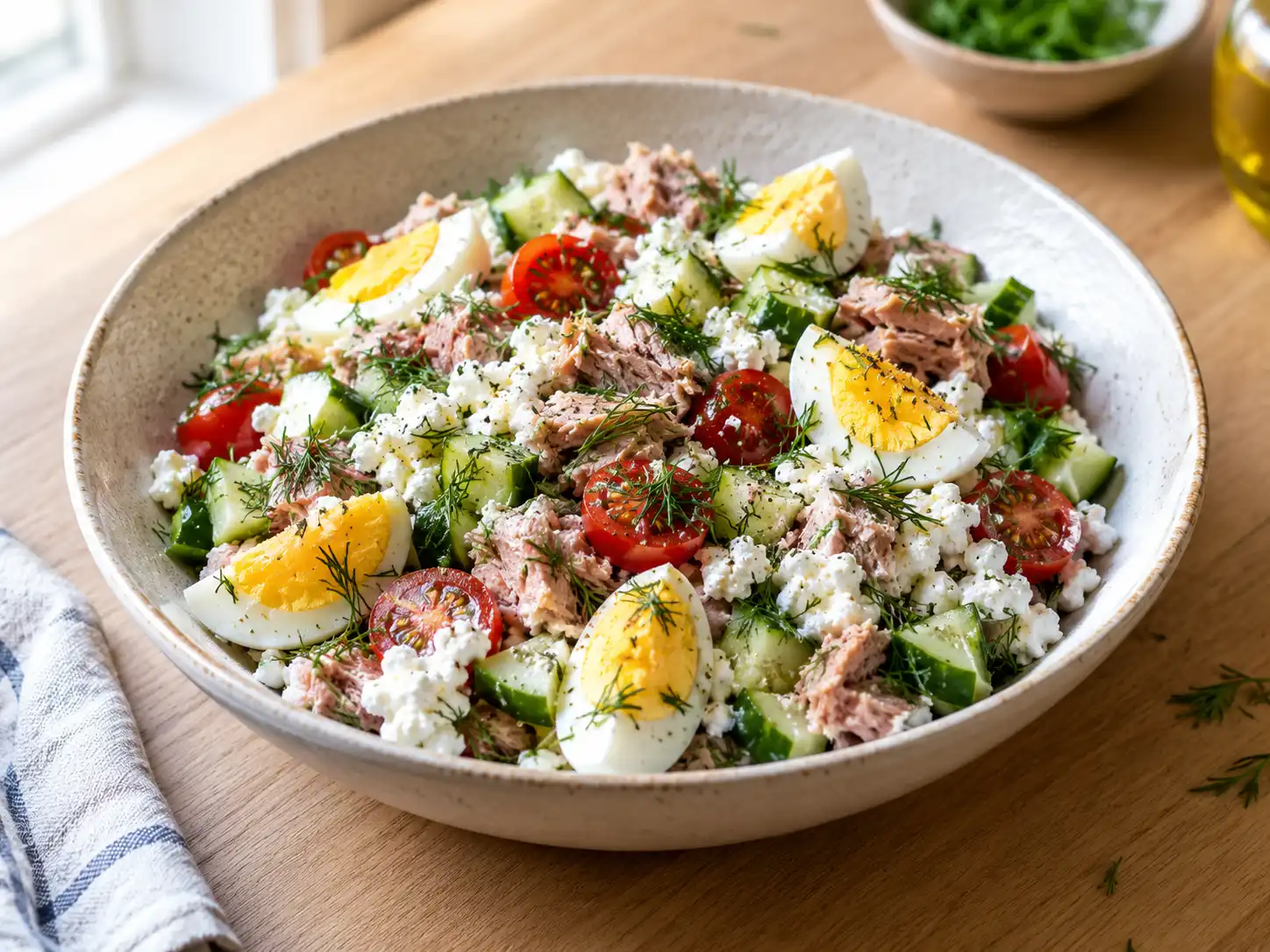
Toss gently. The goal is coated, not mashed — cottage cheese curds should still be visible in the finished bowl.
Substitutions
Cottage cheese: low-fat (2%) works, though the texture is thinner and the protein count drops slightly.
Eggs: shelled edamame keeps this egg-free while adding a similar protein boost.
Tuna: canned white (albacore) tuna in water works in place of light tuna, with slightly more protein and more sodium per ounce.
Vegetables: bell pepper or celery in place of cucumber.
Storage
Up to 2 days refrigerated, in an airtight container — shorter than a pasta-based salad, since both the cottage cheese and the diced vegetables release moisture over time. For best texture, add the eggs fresh each time rather than storing them mixed in.

Cottage Cheese Tuna Salad
Ingredients
Method
- Boil the eggs 9-10 minutes, cool in cold water, peel and quarter.
- Drain the tuna thoroughly, pressing out the water, and flake it into a large bowl.
- Dice the cucumber, halve the tomatoes, and thinly slice the red onion.
- Add the cottage cheese and vegetables to the tuna. Add lemon juice and olive oil, and toss gently.
- Fold in the dill, season with pepper, and top with the quartered eggs just before serving.
Notes
- Using low-sodium cottage cheese meaningfully lowers the sodium total.
- Keeps 2 days refrigerated; add eggs fresh if making ahead.
Nutrition
Per serving (recipe makes 4):
| Calories | 305 |
| Protein | 34 g |
| Sodium | 680 mg |
These figures are a preliminary calculation from standard USDA FoodData Central reference values for the ingredients listed — not yet verified ingredient-by-ingredient against a finished Tuna nutrition workbook, unlike the Salads and Breakfast silos where that workbook already exists. Treat these as directionally accurate rather than final until that verification happens. The calorie figure here has been recalculated more precisely than an earlier draft estimate and is lower than previously stated.
Frequently Asked Questions
Can I use low-fat cottage cheese instead of 4%?
Yes, though the texture is thinner and the protein count lands slightly lower than the estimate above.
How long does this salad keep in the fridge?
Up to 2 days in an airtight container, best within the first day.
Can I make this the night before?
Prep the tuna, cottage cheese and vegetables a day ahead, but boil the eggs and add them fresh just before serving.
How is this different from a regular tuna salad?
There’s no mayonnaise — cottage cheese takes its place both as the binder and as a real source of protein.
Can I leave out the eggs?
Yes — shelled edamame is a good swap if you want to keep this egg-free while still adding protein.
More High Protein Tuna Recipes
This is one of the recipes in the growing high protein Tuna collection on the site, alongside High Protein Tuna Pasta Salad — a pasta-based version built the same no-mayo way.
If you want a more spreadable version to use in a sandwich or wrap, that’s a different recipe (Tuna Salad with Cottage Cheese) not yet published.
Made this? Leave a rating and a comment below — I’d love to know how it turned out for you.