
Quick answer: This tuna pasta salad has about 36 grams of protein and 485 calories per serving, and takes about 25 minutes, most of it spent waiting on pasta water to boil. It skips mayonnaise entirely — cottage cheese folds into the pasta instead and does double duty as both the dressing base and a real protein source. Serves 4. Sodium sits at a moderate-to-high ~645 mg per serving; there’s a section on that below.
Most tuna pasta salads lean on one protein source — the tuna — and let mayonnaise carry the rest of the bowl in fat and calories with nothing to show for it nutritionally. This version stacks three sources instead: tuna, cottage cheese, and whole wheat pasta, with a handful of peas adding a little more on top.
It’s designed to sit alongside Cottage Cheese Tuna Salad as the pasta-based option in the same cluster — same no-mayo, cottage-cheese-forward approach, but built around pasta rather than served as a bowl salad.
Why This Recipe Has About 36 Grams of Protein
| Source | Per serving |
| Canned tuna, drained (82 g) | 15.9 g |
| Cottage cheese, 2% (85 g) | 9.4 g |
| Whole wheat pasta, dry (57 g) | 7.4 g |
| Frozen peas (65 g) | 3.2 g |
| Everything else | 0.3 g |
| Total | 36.2 g |
None of the three main ingredients gets you to 36 grams alone. The tuna and cottage cheese together already clear 25 grams before the pasta or peas are even counted, which is the margin the recipe is built around.
A Note on Sodium
This recipe carries about 645 mg of sodium per serving, roughly 28% of the World Health Organization’s 2,300 mg daily limit.
- Cottage cheese: ~298 mg
- Canned tuna: ~206 mg
- Dijon mustard: ~83 mg
- Everything else: ~58 mg
(totals per serving; the recipe serves 4)
What helps: using a low-sodium or no-salt-added cottage cheese cuts a meaningful chunk of this, since it’s the single largest contributor. Salting the pasta water lightly rather than heavily also matters more than it seems, since starchy pasta absorbs some of whatever salt is in the water.
What You Need
Makes 4 servings
- 3 cans (5 oz / 142 g each) light tuna in water, drained (about 330 g drained total)
- 8 oz (227 g) whole wheat rotini or elbow pasta, dry
- 1½ cups (340 g) low-fat (2%) cottage cheese
- 1 cup (260 g) frozen peas, thawed
- 2 stalks celery, finely diced
- ¼ cup red onion, finely diced
- 1 lemon, juiced
- 2 tbsp olive oil
- 1 tbsp Dijon mustard
- 2 tbsp fresh dill, chopped
- Black pepper, to taste
Notes on the ones that matter:
Tuna, drained hard. Press it against the can lid before flaking it in — wet tuna thins out a dressing that’s already lean without mayonnaise to carry it.
2% cottage cheese, not 4%. The lower-fat version blends into a lighter dressing here; save the 4% for a chunkier, bowl-style salad where you want the curds to stay visible.
No added salt. Between the tuna, the cottage cheese and the Dijon, there’s already enough. Taste before reaching for the shaker.
How to Make It
- Cook the pasta. Boil in well-salted water until just al dente, then drain and rinse briefly under cold water to stop the cooking. Let it cool fully — this matters (see Tips).
- Drain and season the tuna. Press out as much liquid as possible, then flake it into a large bowl. Season lightly with pepper on its own.
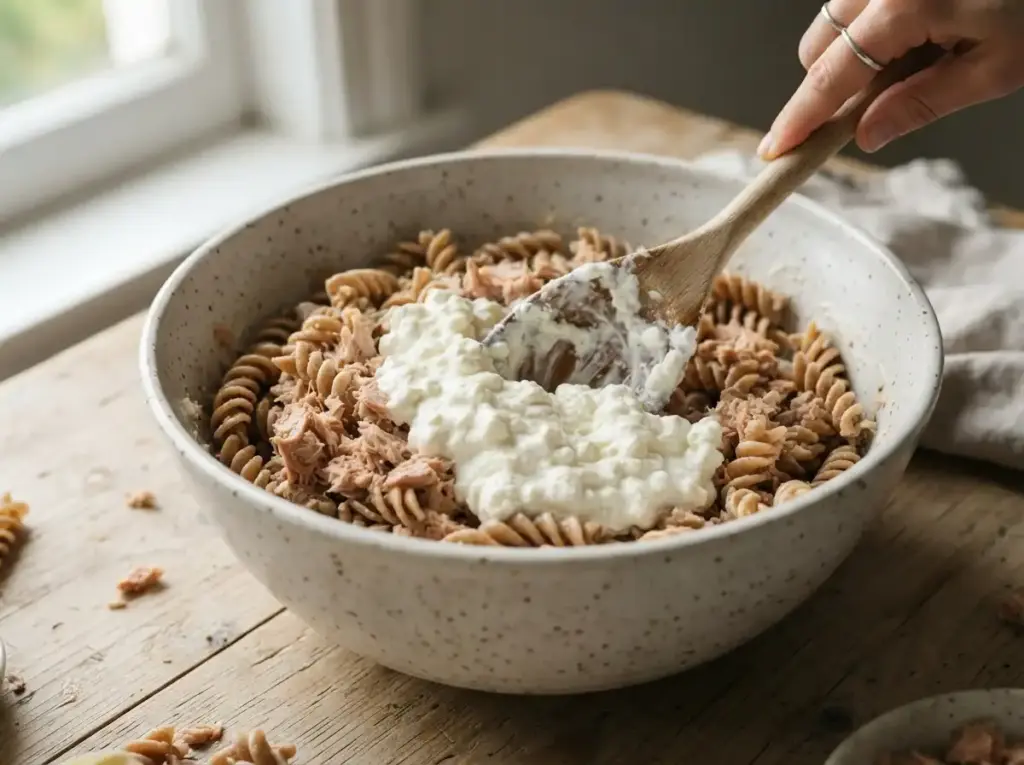
- Make the dressing. Whisk the lemon juice, olive oil and Dijon mustard in a small bowl, then stir in the cottage cheese — a few turns is enough, it doesn’t need to be smooth.
- Combine. Add the cooled pasta, tuna, peas, celery and red onion to the dressing. Toss gently until coated.
- Finish. Fold in the dill, taste, and adjust lemon juice or pepper. Chill at least 15 minutes before serving.
Tips
Let the pasta cool all the way, not just drain. Warm pasta breaks the cottage cheese down further than intended and leaves the salad thinner than it should be by the time it’s chilled.
Fold, don’t stir, once the cottage cheese goes in. Stirring hard turns the curds into a paste; folding keeps some texture.
Add the dill at the end. Like most soft herbs, it darkens and loses aroma if it sits too long in an acidic dressing.
Substitutions
Pasta: any short gluten-free pasta works in place of whole wheat; texture holds up fine cold.
Tuna: canned white (albacore) tuna in water works in place of light tuna — slightly more protein per ounce, but also more sodium.
Cottage cheese: plain Greek yogurt makes a smoother, tangier dressing, though the protein contribution shifts slightly.
Peas: diced cucumber or halved cherry tomatoes if you’d rather skip peas.
Storage
Up to 3 days refrigerated, in an airtight container. The pasta keeps absorbing the dressing over that window, so it’s best in the first two days if you want more bite than softness. Not a good candidate for freezing — both the pasta and the cottage cheese change texture badly.
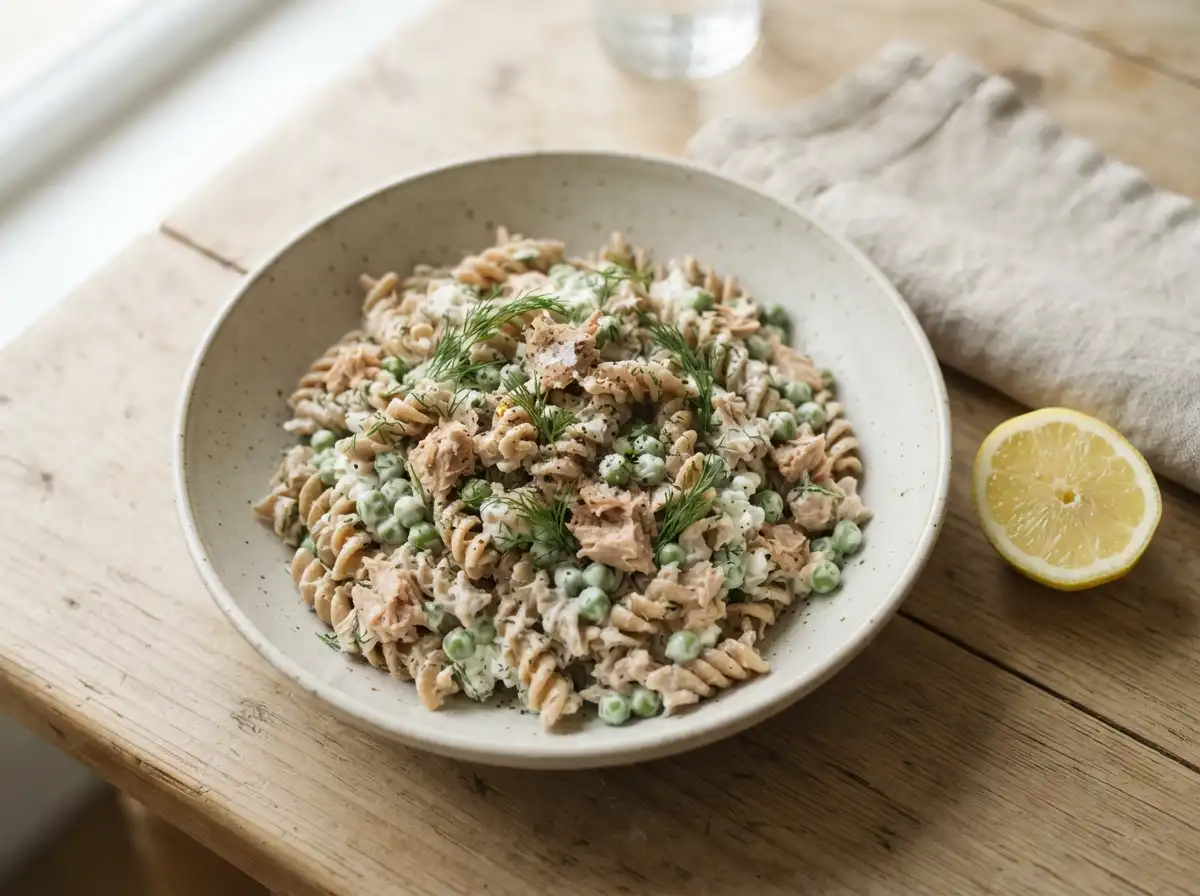

High Protein Tuna Pasta Salad
Ingredients
Method
- Cook the pasta in well-salted water until just al dente. Drain, rinse briefly under cold water, and let cool completely.
- Drain the tuna thoroughly, pressing out the water, and flake it into a large bowl. Season with pepper.
- Whisk the lemon juice, olive oil and Dijon mustard together, then stir in the cottage cheese.
- Add the cooled pasta, tuna, peas, celery and red onion to the dressing. Toss gently to coat.
- Fold in the dill and adjust seasoning. Chill at least 15 minutes before serving.
Notes
- Using low-sodium cottage cheese meaningfully lowers the sodium total.
- Keeps 3 days refrigerated; not suitable for freezing.
Nutrition
Per serving (recipe makes 4):
| Calories | 485 |
| Protein | 36 g |
| Sodium | 645 mg |
These figures are verified against the Tuna nutrition workbook, calculated ingredient-by-ingredient from USDA FoodData Central reference values.
Frequently Asked Questions
Can I use regular pasta instead of whole wheat?
Yes. Whole wheat pasta contributes a little more protein and fiber per serving, but regular pasta works fine — the protein count lands slightly lower.
How long does this tuna pasta salad last in the fridge?
Up to 3 days in an airtight container, best within the first two.
Can I make this ahead for meal prep?
Yes — portion it into containers once fully assembled and chilled. It’s meant to be eaten cold.
Why use cottage cheese instead of mayonnaise?
Cottage cheese adds real protein per serving that mayonnaise doesn’t contribute at all, while still giving the salad a creamy, dressed texture.
Can I freeze this salad?
No. Cottage cheese and cooked pasta both go watery and grainy after freezing and thawing.
More High Protein Tuna Recipes
This is one of the recipes in the growing high protein Tuna collection on the site, alongside Cottage Cheese Tuna Salad — a bowl-style version built the same no-mayo way, but without pasta. For a different pasta-based angle, see Tuna Pasta Salad Without Mayo — same no-mayo idea, built on a Mediterranean olive oil dressing instead.
Made this? Leave a rating and a comment below — I’d love to know how it turned out for you.