
Quick answer: This tuna and rice bowl has about 28 grams of protein and 280 calories per serving, and takes about 15 minutes with rice already made. It’s the mild, classic version — inspired by Japanese tuna mayo donburi — with no spice and no cooking beyond the rice. Serves 4. Sodium runs moderate, about 380 mg per serving.
Where Spicy Tuna Rice Bowl leans into heat, this one stays close to the Japanese convenience-store classic it’s based on — tuna, a light Greek-yogurt “mayo,” rice, and furikake. No sriracha, no avocado required.
Why This Recipe Has About 28 Grams of Protein
| Source | Per serving |
| Canned tuna, drained (110 g) | 21.3 g |
| Cooked rice (120 g) | 3.2 g |
| Plain Greek yogurt (30 g) | 3.0 g |
| Everything else | 0.5 g |
| Total | 28.1 g |
Same protein backbone as the spicy version — four cans of tuna across the batch, with rice and yogurt rounding it out.
A Note on Sodium
About 380 mg per serving, roughly 17% of the WHO’s 2,300 mg daily limit — this recipe uses far less soy sauce than the spicy version, which is what keeps it much lower.
- Canned tuna: ~275 mg
- Furikake: ~50 mg
- Everything else: ~55 mg
What You Need
Makes 4 servings
- 4 cans (5 oz / 142 g each) light tuna in water, drained (about 440 g drained total)
- ½ cup (120 g) plain Greek yogurt
- 4 cups cooked rice (480 g)
- 1 tsp soy sauce (low-sodium recommended)
- 2 tbsp furikake seasoning
- Nori strips and sliced green onion, to serve
How to Make It
- Cook the rice ahead, or use leftovers.
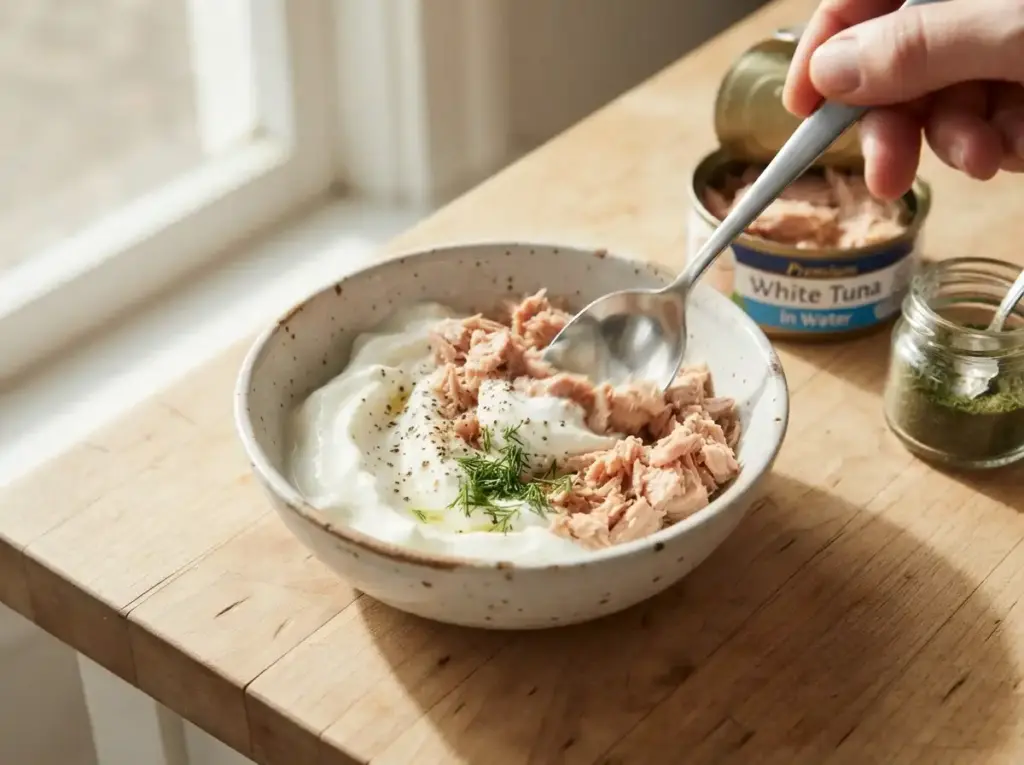
- Mix the tuna with Greek yogurt and soy sauce.
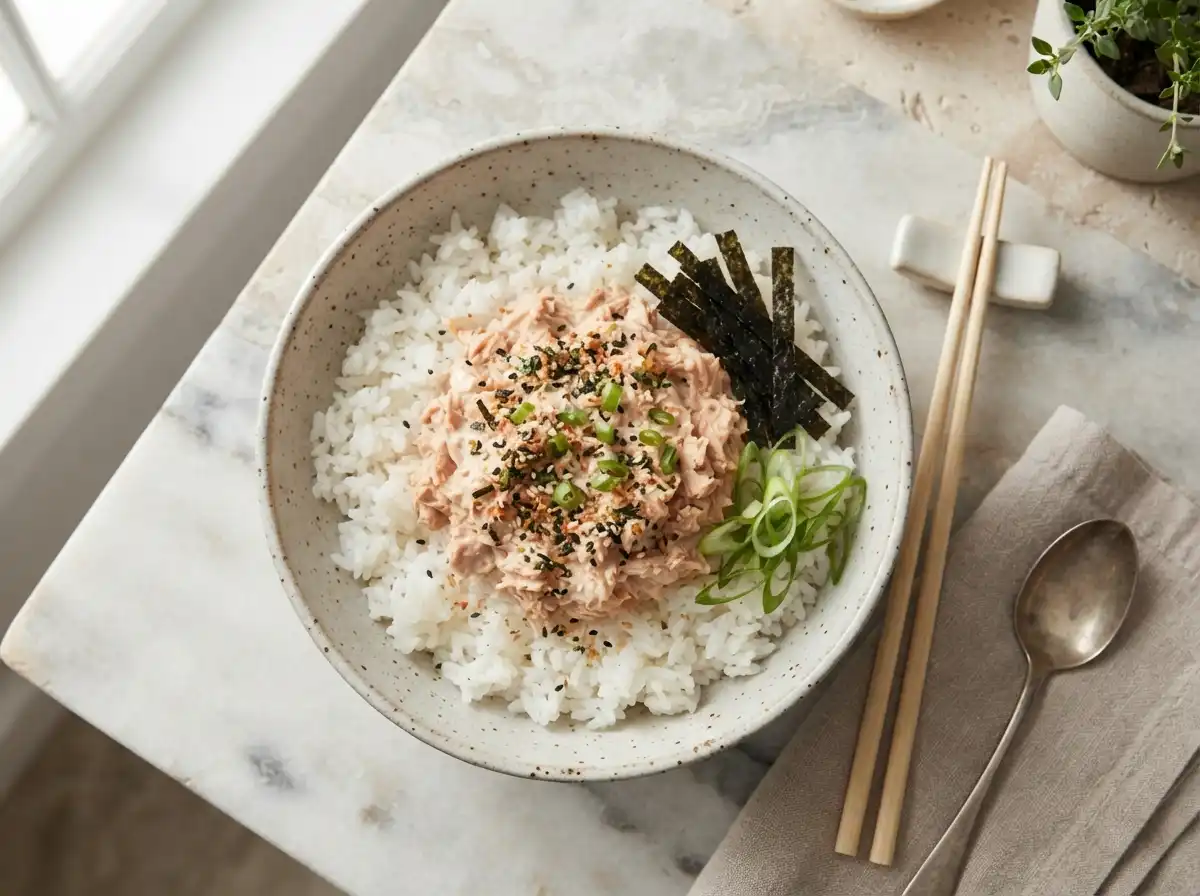
- Assemble: rice in a bowl, tuna mixture on top.
- Finish with furikake, nori strips and green onion.
Tips
Furikake is doing a lot of the flavor work here. Don’t skip it — without it, this leans bland.
Warm rice, cold tuna mixture is the traditional contrast — don’t warm the tuna mixture itself.
Substitutions
Yogurt: cottage cheese blended smooth works and keeps the protein similar. Rice: short-grain white rice is traditional, but brown rice works fine.
Storage
Tuna mixture keeps 2 days refrigerated, stored separately from the rice.

Tuna and Rice Bowl
Ingredients
Method
- Cook or reheat the rice.
- Mix tuna with yogurt and soy sauce.
- Assemble rice topped with the tuna mixture.
- Finish with furikake, nori and green onion.
Notes
- Low-sodium soy sauce noticeably lowers the sodium total.
- Store tuna mixture separately from rice.
Nutrition
Per serving (recipe makes 4):
| Calories | 280 |
| Protein | 28 g |
| Sodium | 380 mg |
Verified against the Tuna nutrition workbook, calculated ingredient-by-ingredient from USDA FoodData Central reference values.
Frequently Asked Questions
What is furikake?
A Japanese rice seasoning blend, usually sesame seeds, seaweed flakes and salt — sold in most well-stocked grocery stores or Asian markets.
How is this different from the spicy version?
No sriracha, no avocado — this stays closer to the mild, classic Japanese tuna-mayo rice bowl it’s based on.
Can I use real mayonnaise instead of yogurt?
Yes, though it removes the protein contribution the yogurt adds.
Can I meal prep this?
Store the tuna mixture separately from the rice and assemble just before eating.
More High Protein Tuna Recipes
Part of the growing Tuna collection, alongside Spicy Tuna Rice Bowl and Tuna Rice Bowl (the fresh, poke-style flagship version).
Made this? Leave a rating and a comment below.