
Quick answer: This egg white wrap has 33 grams of protein and 447 calories per serving, and takes about 12 minutes. Two hundred grams of egg whites — about six eggs’ worth — carry 22 grams of that protein with almost no fat. Serves 1. At 1,160 mg of sodium it runs on the higher side of the collection; there’s a section on that below.
Egg whites are the leanest route to a high protein number that exists. Ten point nine grams of protein per 100 grams, with 0.17 grams of fat — for comparison, a whole egg carries 9.5 grams of fat per 100 grams. If the goal is protein without the fat that comes attached to it, egg whites are the most direct way there.
Six whites, feta, spinach and a large tortilla get to 33 grams. The trade-off is real and worth naming upfront: egg whites cook fast and turn rubbery faster, so the technique matters more here than in most egg recipes.
Why This Wrap Has 33 Grams of Protein
| Source | Per serving |
|---|---|
| Egg whites (200 g, about 6 whites) | 21.8 g |
| Tortilla (70 g) | 5.7 g |
| Feta (25 g) | 3.5 g |
| Spinach and tomatoes | 1.7 g |
| Total | 32.7 g |
Egg whites carry two-thirds of the protein for almost none of the fat. A whole egg is roughly half fat by calorie; egg whites are close to fat-free. That’s the entire reason to use them over whole eggs — not more protein, but the same protein without the fat.
The tortilla is doing real work. Five point seven grams from the wrap itself is more than the spinach, tomatoes and oil combined. A smaller tortilla would drop the total below 32.
A Note on Sodium
This wrap carries 1,160 mg of sodium per serving, about 50% of the World Health Organization’s 2,300 mg daily limit — the second-highest recipe in the collection after the smoked salmon toast.
There’s no added salt here. It comes from three ingredients:
- Flour tortilla: 515 mg (44%)
- Egg whites: 332 mg (29%)
- Feta: 279 mg (24%)
The egg white number surprises people. Whole eggs carry very little sodium — around 142 mg for the same 200 grams used here. Commercial liquid egg whites, and even whole eggs separated at home, pick up more sodium than you’d expect relative to their size, and 200 grams of whites contributes nearly a third of this wrap’s total on its own.
What actually helps: if you’re buying carton egg whites rather than separating your own, check the label — some brands add sodium as a stabiliser and the range between products is wide. The feta is already reduced from a standard portion specifically to manage this; going further would mean losing the flavour the feta is there for.
What doesn’t help: the vegetables. Spinach and tomatoes together contribute under 3% of the total.
If you’re watching sodium closely, the Greek yogurt breakfast bowl comes in at 87 mg with roughly the same protein number.
What You Need
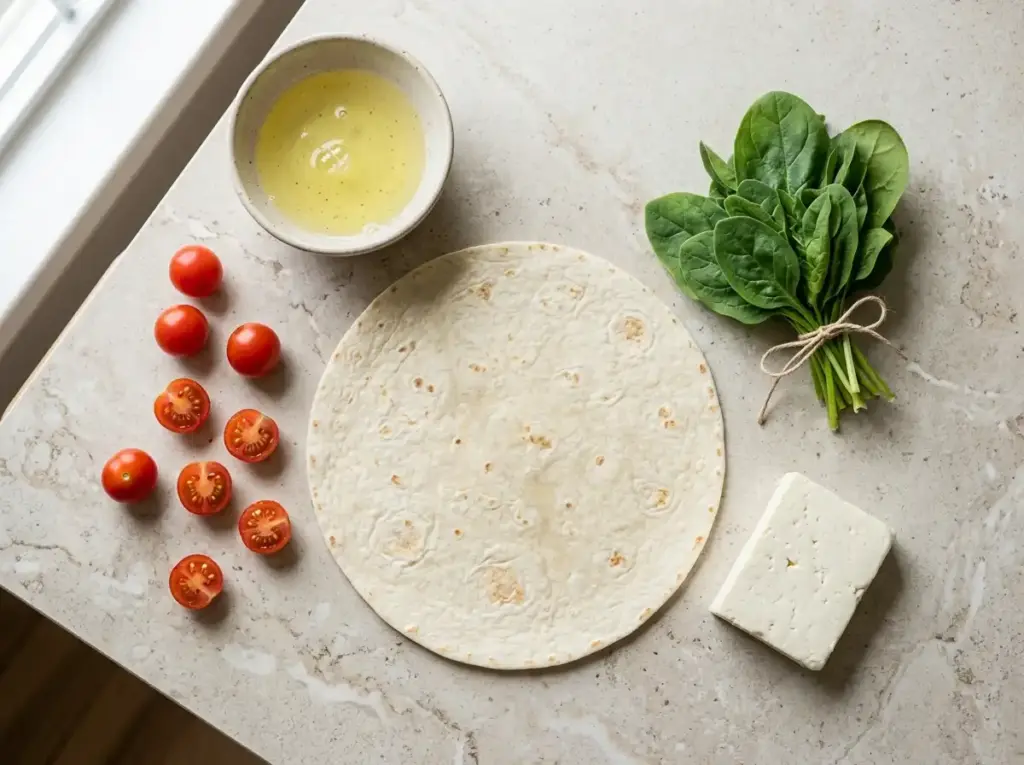
- 200g egg whites, about 6 large eggs’ worth (or 1 carton, US standard)
- 25g crumbled feta (about 3 tablespoons)
- 1 large flour tortilla, 10-inch (70g)
- 40g fresh spinach (about 1 packed cup)
- 50g cherry tomatoes, halved (about ⅓ cup)
- 1 teaspoon olive oil (5g)
Notes on the ones that matter:
A 10-inch tortilla, not 8-inch. Two hundred grams of cooked egg white plus feta and vegetables doesn’t fold into an 8-inch tortilla — it splits down the side.
Separate your own eggs, or buy a carton. Six eggs separated at home cost less than a carton but take five minutes longer. Either works identically in this recipe; the nutrition figures assume plain egg white with nothing added.
Feta is reduced here on purpose. A standard portion would push the sodium higher for a marginal flavour gain. Twenty-five grams is enough to taste in every bite without adding more than it needs to.
How to Make It
- Heat the olive oil in a nonstick pan over medium-low. Low heat matters more here than with whole eggs — see the tips.
- Pour in the egg whites and let them sit undisturbed for 30 seconds before stirring gently.
- Cook 3 to 4 minutes, folding occasionally, and pull the pan off the heat while the eggs still look slightly underdone. They finish in residual heat.
- Warm the tortilla for 20 seconds in a dry pan or 10 seconds in the microwave, so it folds without cracking.
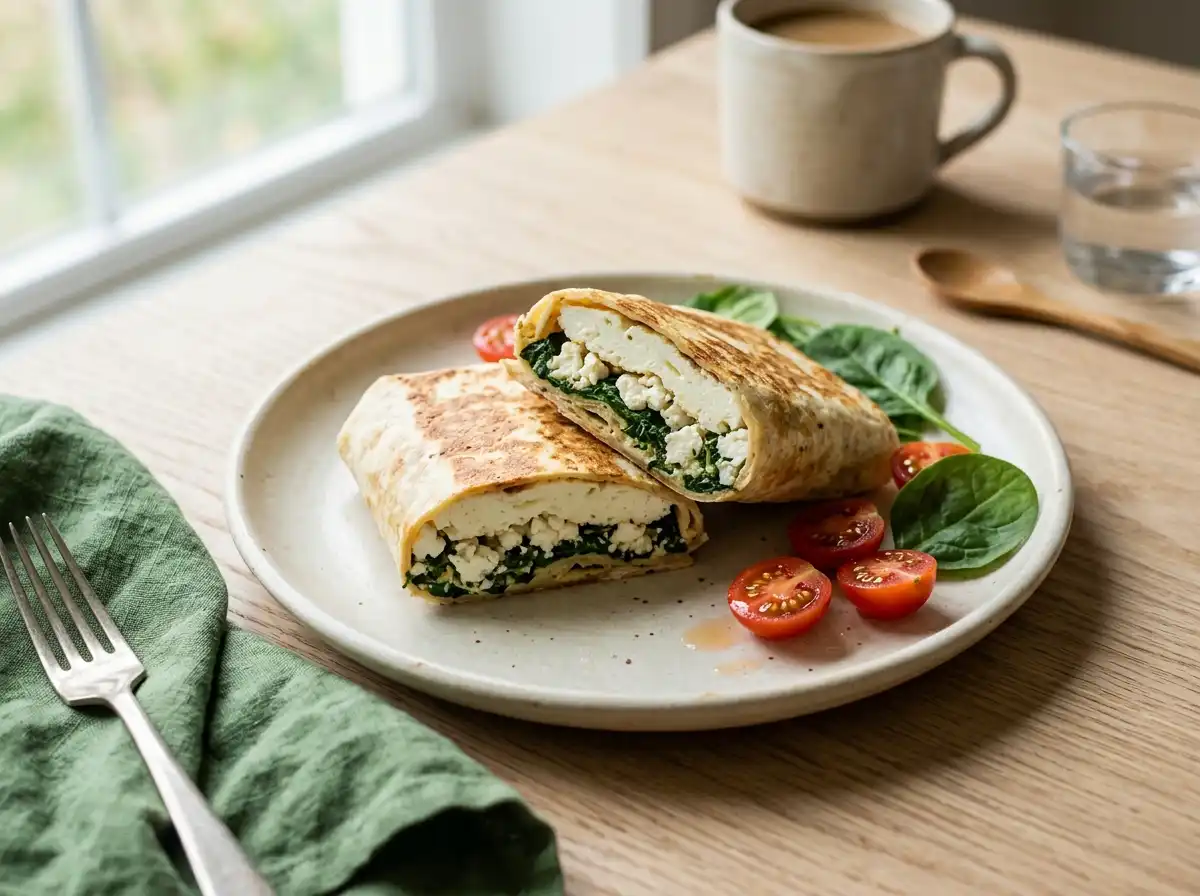
- Layer the spinach, egg whites, tomatoes and feta across the centre of the tortilla and fold.
Twelve minutes, most of it at the stove.
Tips
Cook low and pull them off early. This is the one technique that decides whether this recipe works. Egg whites have no yolk fat to buffer the proteins as they cook, so they go from properly set to rubbery in under a minute. Pulling the pan off while they still look slightly wet, and letting residual heat finish the job, is what keeps them tender instead of springy.
Let them sit for the first 30 seconds. Stirring too early breaks up the protein structure before it has a chance to set, and you end up with small curds instead of soft folds.
Warm the tortilla before filling it. A cold tortilla cracks at the fold, especially a larger one carrying this much filling.
Don’t overfill the centre. A wrap this size wants the filling in a line down the middle, not spread edge to edge, or it won’t close.
Substitutions
Every figure below is per serving, calculated from the same USDA data as the main recipe.
| Swap | Protein | Calories | Sodium | Notes |
|---|---|---|---|---|
| Add 50 g cottage cheese, 4% | +5.5 g | +49 | +182 mg | The most effective single addition. Stir in off the heat. |
| Feta → cheddar, same weight | +2.2 g | +35 | −116 mg | More protein and less sodium. Milder flavour. |
| Egg whites → 4 whole eggs, same weight | +3.4 g | +182 | −48 mg | More protein but reintroduces the fat this recipe is built to avoid. |
| 10-inch tortilla → 8-inch | −0.8 g | −31 | −74 mg | Only works if you reduce the filling proportionally — otherwise it won’t fold. |
What not to substitute: don’t swap in a low-carb or high-fiber tortilla without checking its sodium. Some run considerably higher than standard flour tortillas, which would undercut the point of using egg whites at all.
Storage
Two days refrigerated, wrapped tightly in foil or parchment.
Not a good freezer candidate. Cooked egg whites turn watery and rubbery on thawing — noticeably more than whole eggs do.
Make-ahead approach: cook the egg whites and store them separately from the tortilla and vegetables for up to 2 days, then assemble fresh each morning. This takes about 90 seconds and the texture holds up far better than a fully assembled wrap that’s been refrigerated overnight.

Egg White Breakfast Wrap
Ingredients
Method
- Heat the olive oil in a nonstick pan over medium-low. Low heat matters more here than with whole eggs — see the tips.
- Pour in the egg whites and let them sit undisturbed for 30 seconds before stirring gently.
- Cook 3 to 4 minutes, folding occasionally, and pull the pan off the heat while the eggs still look slightly underdone. They finish in residual heat.
- Warm the tortilla for 20 seconds in a dry pan or 10 seconds in the microwave, so it folds without cracking.
- Layer the spinach, egg whites, tomatoes and feta across the centre of the tortilla and fold.
Notes
- A 10-inch tortilla, not 8-inch. Two hundred grams of cooked egg white plus feta and vegetables doesn’t fold into an 8-inch tortilla — it splits down the side.
- Separate your own eggs, or buy a carton. Six eggs separated at home cost less than a carton but take five minutes longer. Either works identically in this recipe; the nutrition figures assume plain egg white with nothing added.
- Feta is reduced here on purpose. A standard portion would push the sodium higher for a marginal flavour gain. Twenty-five grams is enough to taste in every bite without adding more than it needs to.
Nutrition
Per serving (recipe makes 1):
| Calories | 447 |
| Protein | 33 g |
| Carbohydrates | 40 g |
| Fiber | 4 g |
| Fat | 16 g |
| Sodium | 1,160 mg |
These figures are calculated ingredient by ingredient from a USDA-sourced nutrition database and divided by the serving count. They’re calculated values rather than laboratory-tested ones, and they’ll shift with your brands — the tortilla and any carton egg whites you use are the two ingredients most likely to move the sodium figure. Carbohydrates include fiber, following the US convention, so net carbs are about 36 grams per serving.
At 16 grams of fat for 33 grams of protein, this has the leanest protein-to-fat ratio of any egg-based recipe in the high protein breakfast collection.
Frequently Asked Questions
How many egg whites equal one whole egg in protein?
By weight, egg white carries slightly less protein than whole egg — 10.9 grams per 100 grams against roughly 12.6 for whole egg, because the yolk is itself protein-dense. The real difference is fat: a whole egg carries about 9.5 grams of fat per 100 grams, while egg white carries under 0.2. So egg whites aren’t a way to get more protein — they’re a way to get the same protein without the fat.
Are egg whites better than whole eggs for breakfast?
It depends on what you’re optimising for. Egg whites give you protein with almost no fat, which is useful if you’re managing calories or fat intake specifically. Whole eggs carry more nutrients overall — most of an egg’s vitamins and minerals are in the yolk — and a slightly higher protein content by weight. Neither is objectively better; they solve different problems.
Why are my egg whites rubbery?
Overcooking, almost always. Egg whites have no yolk fat to buffer the protein as it sets, so they move from properly cooked to rubbery within about a minute of heat exposure. Cook them on low heat and pull the pan off while they still look slightly underdone — they’ll finish setting from residual heat in the pan.
Can you use carton egg whites?
Yes, and they perform identically to separated fresh whites in this recipe. Check the label for added sodium, since some brands include a stabiliser that raises the sodium figure noticeably above plain separated eggs. If sodium matters to you, compare a few brands — the range is wider than you’d expect for what is otherwise a simple ingredient.
Made this? Leave a rating and tell me if the low-heat technique worked for you — it’s the one detail that makes or breaks this recipe.