Quick answer: This salad has 30 grams of protein and 523 calories per serving, with 11 grams of fiber. It takes 15 minutes, needs no stove and no equipment beyond a bowl and a knife, and serves 3. Cottage cheese folded in at the end acts as the dressing. It’s also high in sodium at 1,251 mg per serving — there’s a section on that, with two ways to bring it down.
If you’ve never built a salad around protein before, start here. There’s no cooking, no marinating, no technique to get wrong, and the whole thing is assembly. It’s the recipe I’d point a beginner to in the high protein salad collection, and it demonstrates the principle the rest of the collection rests on: two protein sources working together rather than one doing everything.
Cottage cheese also does something unexpected here. Folded through gently at the end, it half-dissolves into the lemon and oil and coats everything — which means you need far less dressing than a salad this size would normally take.
Why This Salad Has 30 Grams of Protein
| Source | Per serving |
|---|---|
| Cottage cheese (133 g) | 14.8 g |
| Chickpeas (133 g) | 9.3 g |
| Feta (27 g) | 3.8 g |
| Cucumber, tomatoes, onion, parsley | 2.0 g |
| Total | 29.9 g |
Three sources, none of them dominant. Cottage cheese at 11 grams per 100 g is the biggest contributor, but it only reaches 15 grams because the portion is generous.
This is the lowest protein figure of the fifteen recipes on this site, and it’s still a substantial meal — because 30 grams sits right in the range where a salad stops behaving like a snack. It also carries 11 grams of fiber, which does as much for how full you feel as the protein does.
A Note on Sodium
1,251 mg per serving, about 54% of the WHO’s 2,300 mg daily limit. That’s the second-highest figure on this site, and it’s worth knowing before you make it.
| Source | Whole recipe (serves 3) | Share |
|---|---|---|
| Cottage cheese | 1,456 mg | 39% |
| Canned chickpeas | 984 mg | 26% |
| Feta | 893 mg | 24% |
| Added salt | 388 mg | 10% |
Three of the four are structural — salted dairy and canned legumes are what this salad is made of. But two changes genuinely help, and they stack:
Rinse the chickpeas under running water rather than just draining them. That removes around 40% of their sodium, roughly 131 mg per serving, and it also gets rid of the metallic taste of the canning liquid.
Taste before you add the salt. The recipe is calculated with 1 gram of added salt, which contributes 129 mg per serving. In a bowl already containing cottage cheese, chickpeas and feta, most people won’t need it. Leaving it out is the single easiest change here.
Do both and the salad comes in around 990 mg — still not low, but a meaningful difference. If you want a genuinely low-sodium option with a similar protein number, the edamame and crispy tofu salad sits at 442 mg. and the shrimp and avocado salad at 226 mg.
What You Need
Serves 3.
For the salad
- 1¾ cups 4% cottage cheese (400 g)
- 2½ cups canned chickpeas, drained and rinsed (400 g), about 1½ standard cans
- ½ cup crumbled feta (80 g)
- 2¼ cups diced cucumber (300 g), about 1 large
- 2 cups halved cherry tomatoes (300 g)
- ½ cup thinly sliced red onion (60 g)
- ¼ cup chopped parsley (15 g)
For the dressing
- 2½ tablespoons extra-virgin olive oil (30 g)
- ¼ cup fresh lemon juice (60 g), about 2 lemons
- ½ teaspoon freshly ground black pepper
- A scant ¼ teaspoon salt (1 g) — taste first
Notes on the ones that matter:
Use 4% cottage cheese, not low fat. This is the one ingredient decision that determines whether the recipe works. Low-fat cottage cheese releases water the moment it meets acid, and a bowl that was creamy when you made it is watery twenty minutes later. The fat is also what carries the lemon and the pepper.
Chickpeas rinsed, then dried. Wet chickpeas dilute a dressing that’s already lean. Shake them in the colander and give them a moment on a towel.
Cut everything to roughly chickpea size. It sounds fussy. It’s the difference between a bowl where every forkful has a bit of everything and one where you get three bites of cucumber in a row.
The lemon quantity is high on purpose — a quarter cup for three servings. Chickpeas and cottage cheese are both mild, and this is a large bowl. Under-acidified, it tastes of very little.
How to Make It
- Drain and rinse the chickpeas, dry them, and season them on their own with the black pepper and a squeeze of the lemon. They’re the blandest thing in the bowl and the largest by volume.
- Chop the cucumber, tomatoes and red onion to roughly chickpea size.
- Shake the dressing — olive oil, the rest of the lemon juice, pepper — in a jar until it comes together.
- Toss the chickpeas, vegetables, feta and parsley with the dressing.
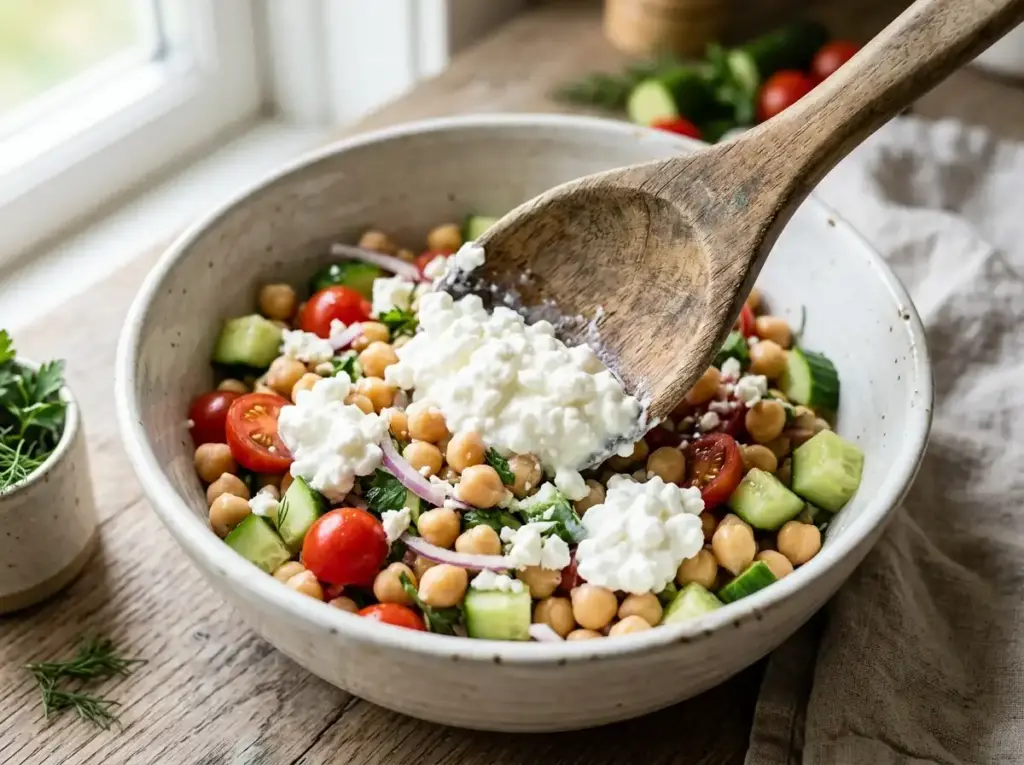
- Fold in the cottage cheese last, with a few gentle turns only.
- Taste, then decide about salt.
Why the Cottage Cheese Goes in Last
This is the only technique in the recipe, and it takes thirty seconds to get right or wrong.
Cottage cheese is curds suspended in a small amount of liquid. Stirred vigorously, the curds break down and the whole thing turns into a uniform white paste — which coats everything, tastes flat, and looks unappetizing.
Folded gently at the end, something better happens: some of the curds break and merge with the lemon and oil into a creamy dressing, while others stay intact. You get both textures in the same bowl, and you need much less oil than a salad of this size would otherwise take.
Practically: add it, turn the bowl three or four times with a large spoon, and stop. It will look under-mixed. It isn’t.
Tips
Salt the chickpeas separately, first. They’re a third of the bowl by volume and they’re bland. Seasoning them before anything else touches them changes the finished salad noticeably.
Let it sit five minutes before eating. The chickpeas absorb the lemon in that time, and the cottage cheese loosens slightly into the dressing.
Slice the red onion paper-thin, or soak it in the lemon juice for five minutes first. Sixty grams of raw red onion is assertive.
Add the parsley last. It darkens in acid within minutes of being chopped.
Substitutions
Cannellini or butter beans instead of chickpeas. Creamier, and they behave the same way. White beans are also slightly lower in sodium once rinsed.
Blended cottage cheese if the curd texture isn’t for you — thirty seconds in a small blender turns it into something like a thick cream cheese. You lose the two-texture effect described above, but the protein is identical.
Ricotta instead of cottage cheese works and is smoother out of the tub, but carries noticeably less protein — expect the salad to land closer to 24 grams per serving.
Skip the feta if you’re reducing sodium. That’s 298 mg per serving, at a cost of about 3.8 grams of protein.
Add-ins worth trying: olives, roasted red pepper, a pinch of za’atar or sumac, cucumber ribbons instead of dice, or a handful of arugula to turn it into a leaf salad.
Storage
Two days refrigerated, in a sealed container.
The chickpeas keep improving in the lemon, but the cucumber releases water and the cottage cheese loosens. By day two it’s a looser, wetter salad than it was — perfectly good, noticeably different.
If you’re making it ahead deliberately, hold back the cucumber, parsley and cottage cheese and add them when you eat. The chickpea, tomato, onion and feta base keeps well on its own for 3 days.
Don’t freeze it. Cottage cheese splits completely on thawing.
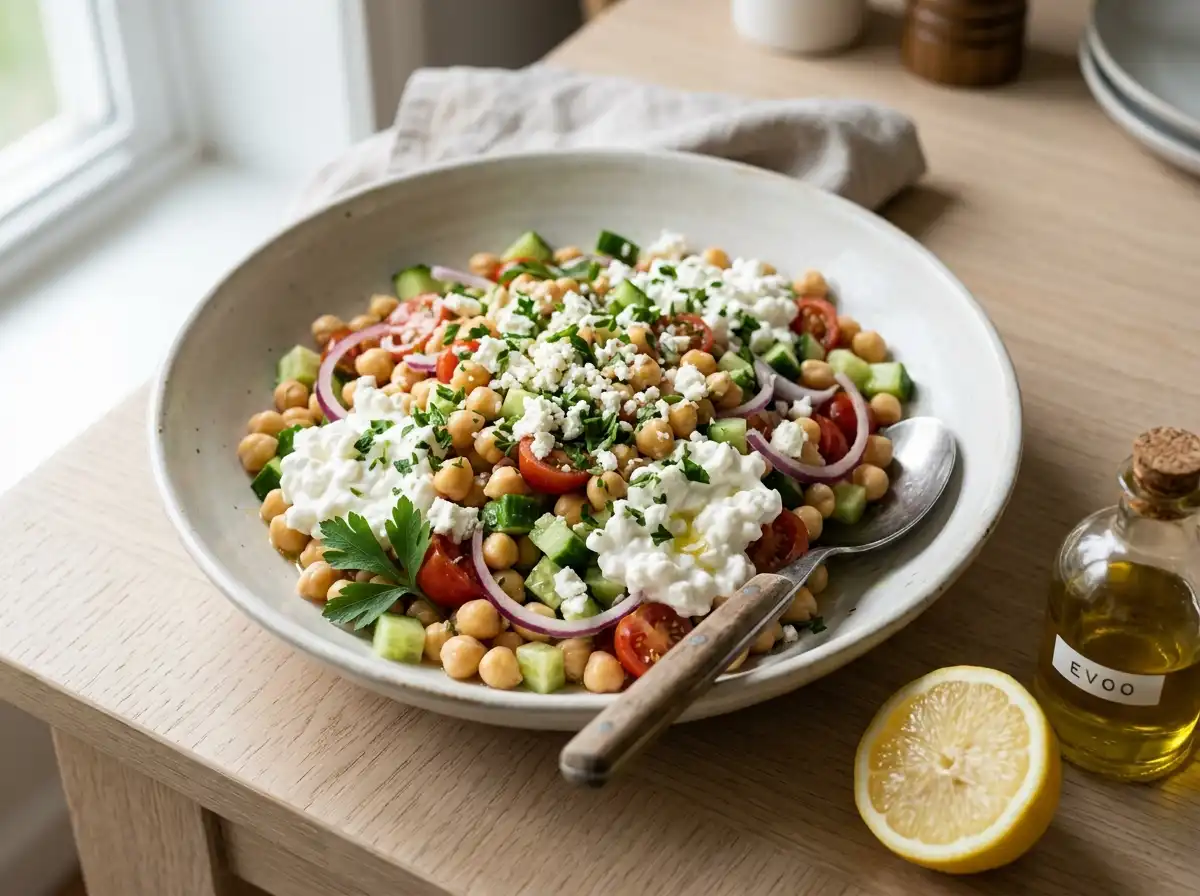

High Protein Chickpea and Cottage Cheese Salad
Ingredients
Method
- Drain and rinse the chickpeas under running water, dry them, and season them on their own with black pepper and a squeeze of the lemon juice.
- Dice the cucumber, halve the tomatoes and slice the red onion thinly, cutting everything to roughly chickpea size.
- Shake the olive oil, remaining lemon juice and black pepper together in a jar until combined.
- Toss the chickpeas, cucumber, tomatoes, onion, feta and parsley with the dressing.
- Fold in the cottage cheese last, turning the bowl three or four times only. It should look under-mixed.
- Taste before adding any salt, then rest the salad 5 minutes before serving.
Notes
- Use 4% cottage cheese. Low fat releases water as soon as it meets acid and thins the whole bowl out.
- Rinsing the chickpeas rather than only draining them removes about 131 mg of sodium per serving.
- Keeps 2 days. To make it ahead, hold back the cucumber, parsley and cottage cheese.
Nutrition
Per serving (recipe makes 3):
| Calories | 523 |
| Protein | 30 g |
| Carbohydrates | 47 g |
| Fiber | 11 g |
| Fat | 25 g |
| Sodium | 1,251 mg |
These figures are calculated ingredient by ingredient from a USDA-sourced nutrition database and divided by the serving count. They’re calculated values rather than laboratory-tested ones, and they’ll shift with your brands — cottage cheese and feta both vary considerably in salt content. Chickpeas are a drained weight, calculated without rinsing. Carbohydrates include fiber, following the US convention, so net carbs are about 36 grams per serving.
At 549 grams, this is one of the largest servings on the site by weight.
Frequently Asked Questions
How much protein is in cottage cheese?
About 11 grams per 100 g for 4% cottage cheese, which makes it one of the more protein-dense dairy products by weight. In this salad, a 133 g portion supplies about 15 of the 30 grams per serving.
Why use full-fat cottage cheese instead of low fat?
Low-fat cottage cheese releases water as soon as it meets acid, and this salad has a quarter cup of lemon juice in it. Within twenty minutes you’d have a watery bowl. The fat also carries flavor — a low-fat version tastes noticeably blander with the same seasoning.
Can I make this salad ahead of time?
Two days, though it changes. The cucumber releases water and the cottage cheese loosens into the dressing. To make it properly ahead, prepare the chickpea, tomato, onion and feta base — that keeps 3 days — and add the cucumber, parsley and cottage cheese when you eat.
How do I reduce the sodium in this salad?
Rinse the chickpeas rather than just draining them, which removes about 131 mg per serving, and taste before adding the salt, which saves another 129 mg. Both together bring it to roughly 990 mg. Leaving out the feta saves a further 298 mg, at a cost of about 4 grams of protein.
What can I use instead of chickpeas?
Cannellini beans or butter beans. Both are creamier, behave the same way in the bowl, and are slightly lower in sodium once rinsed. The protein figure barely moves.
More High Protein Salads
This is one of fifteen recipes in the high protein salad collection, grouped by no-cook, low carb, vegetarian and meal prep, with protein and calories compared across all fifteen.
For another no-cook option that’s higher in protein, the tuna and white bean salad takes ten minutes and reaches 47 grams.
Made this? Leave a rating and tell me how it went in the comments — especially if you changed something that worked.
I was surprised by how creamy this turned out without needing much dressing. The cottage cheese works really well with the chickpeas, and I liked that I could put the whole thing together without cooking.