
Quick answer: This tuna and white bean salad has 47 grams of protein and 476 calories per serving, and takes about 10 minutes with no cooking. It’s built from three pantry cans — tuna, cannellini beans, capers — plus lemon, olive oil, red onion and parsley. Serves 2 as a main. It’s also high in sodium at 999 mg per serving; there’s a section on that below.
This is the recipe for the evening when nothing was planned. Everything in it except the lemon, the onion and the parsley comes out of a cupboard, and it goes from cupboard to bowl in the time it takes to slice an onion.
It’s also, by some distance, the best protein-to-effort ratio in the high protein salad collection. No cooking, no marinating, no waiting — and 47 grams of protein, which is more than most cooked chicken dishes manage.
The version most people know is Italian: tonno e fagioli, tuna and beans with olive oil and onion. This one keeps that structure and adds capers and a lot of parsley.
Why This Salad Has 47 Grams of Protein
| Source | Per serving |
|---|---|
| Canned tuna, drained (140 g) | 35.7 g |
| Cannellini beans (120 g) | 8.9 g |
| Everything else | 1.9 g |
| Total | 46.5 g |
That’s a genuinely large tuna portion — 140 grams drained per person, which is around two and a half standard cans between two people. Canned tuna in water is about 25% protein by weight once drained, with almost no fat, so it climbs fast.
If that’s more tuna than you want, one can less brings the salad to roughly 35 grams of protein per serving, which is still a substantial meal. The beans and the dressing don’t change.
A Note on Sodium
This salad carries 999 mg of sodium per serving, about 43% of the World Health Organization’s 2,300 mg daily limit. That’s high, and it’s worth knowing before you make it rather than after.
The reason is structural rather than a seasoning choice — the recipe has no added salt at all. Almost all of it comes from three ingredients:
- Capers: 704 mg
- Canned tuna: 692 mg
- Canned beans: 576 mg
(totals for the whole recipe, which serves 2)
What actually helps: rinse the beans under running water rather than just draining them. That removes around 40% of their sodium, roughly 115 mg per serving, and it also gets rid of the metallic edge of the canning liquid. Rinsing the capers helps too.
What doesn’t help: using less olive oil or skipping the pepper. Neither contributes anything meaningful here.
If you’re watching sodium closely, this isn’t the recipe to choose — the rotisserie chicken caesar salad comes in at 515 mg with a comparable protein number. For everyone else, it’s a normal amount for a canned-fish meal, and a good reason to keep the rest of the day lighter on salt.
What You Need
- 2 cans (7 oz each) tuna in water, drained — about 280 g drained
- 1 can (15 oz) cannellini beans, drained and rinsed (240 g)
- ⅔ cup thinly sliced red onion (100 g), about half a large onion
- ⅔ cup halved cherry tomatoes (100 g)
- ½ cup chopped flat-leaf parsley (30 g)
- 3 tablespoons capers, drained (30 g)
- 2½ tablespoons extra-virgin olive oil (30 g)
- 3 tablespoons fresh lemon juice (45 g), about 1½ lemons
- ½ teaspoon freshly ground black pepper
Notes on the ones that matter:
Tuna in water, drained properly. Three standard 5 oz cans work equally well if that’s what your store sells. Press the tuna against the lid to get the water out — wet tuna dilutes the dressing, and this dressing is already lean.
Cannellini beans, or any white bean. Butter beans are creamier, navy beans firmer. All three behave the same way in the bowl.
Flat-leaf parsley, and more than feels right. Half a cup for two servings sounds like a lot. It isn’t a garnish here; it’s what keeps a bowl of canned food tasting fresh.
No added salt. Between the tuna, the beans and the capers, the salt is already there. Taste before you even consider it.
How to Make It
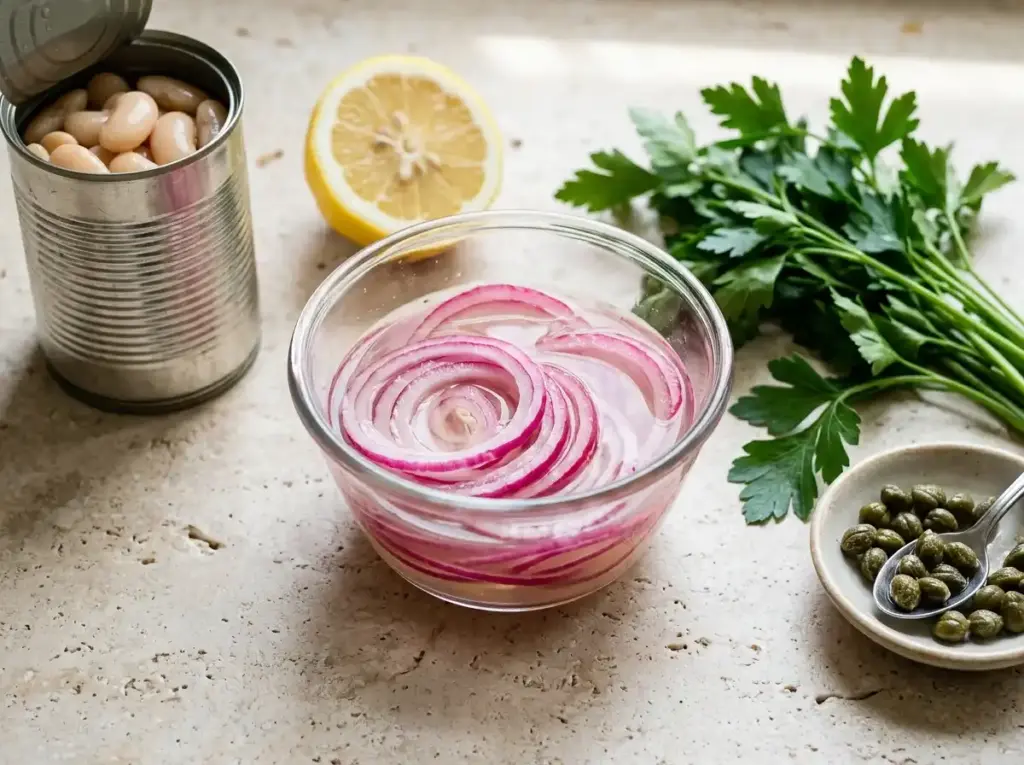
- Slice the onion and put it in the lemon juice first. Leave it there while you do everything else — five minutes minimum. Raw red onion at this quantity is aggressive, and the acid takes the harsh edge off while keeping the crunch.
- Drain and rinse the beans thoroughly under running water, then shake them dry.
- Drain the tuna hard, pressing out the water, and flake it into a bowl.
- Add the beans, tomatoes, capers and parsley, then pour over the lemon-and-onion mixture with the olive oil and black pepper.
- Toss gently and let it sit 5 minutes before eating. The beans absorb the dressing in that time and the whole thing improves.
Ten minutes, most of it waiting.
Tips
Don’t over-mix. Tuna breaks down into paste if you stir it like a dressing. Fold from the bottom a few times and stop, so you still have flakes rather than a spread.
The five-minute rest isn’t optional. Beans are bland and porous; they need those minutes in the acid. Eaten immediately, this tastes like three separate ingredients in a bowl.
Room temperature, not cold. Straight from the fridge, olive oil goes dull and the beans taste chalky. If the cans have been refrigerated, it’s better after ten minutes on the counter.
Add the parsley last. It bruises and darkens if it sits in acid too long.
Substitutions
Tuna in olive oil works, and tastes richer. Use the oil from the can as part of the dressing and reduce the added olive oil accordingly — but note the nutrition figures here are calculated on water-packed tuna plus separately added oil, which is what lets you control the fat precisely.
Canned salmon swaps in directly, with a softer texture and a little more fat.
Chickpeas instead of white beans work but change the character — firmer, nuttier, less creamy.
No capers? Chopped green olives give a similar salty, briny hit. Both are high in sodium, so it’s a swap rather than an improvement on that front.
Add-ins worth trying: celery for crunch, a jarred roasted red pepper for sweetness, a handful of arugula to turn it into more of a leaf salad.
Storage
Two days refrigerated, in a sealed container.
It’s genuinely good on day two — the beans keep absorbing the dressing and the onion mellows further. What it loses is the parsley, which darkens overnight. If you’re making it ahead deliberately, hold back half the parsley and stir it in before serving.
Don’t freeze it. Beans go grainy and tuna goes dry.
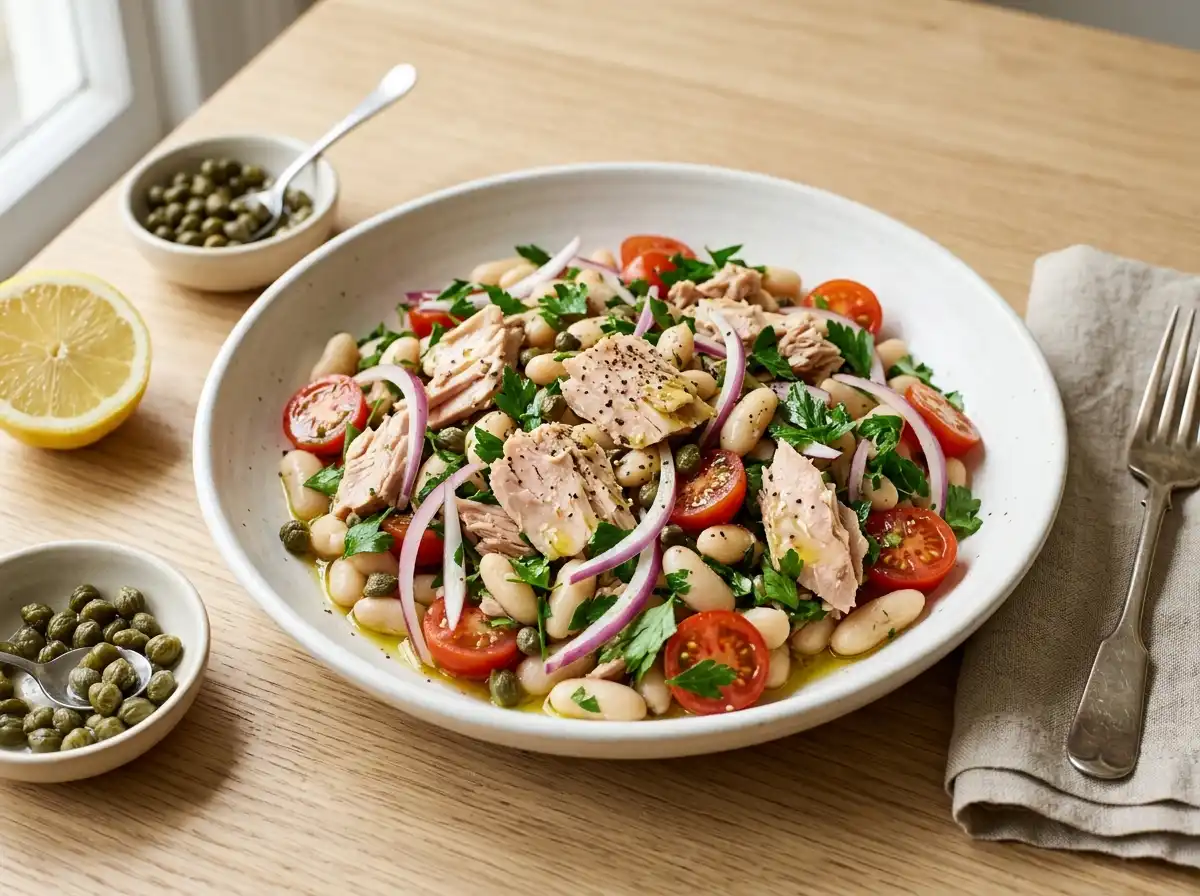

High Protein Tuna and White Bean Salad
Ingredients
Method
- Slice the red onion thinly and put it in the lemon juice. Leave it for at least 5 minutes while you prepare everything else.
- Drain and rinse the cannellini beans under running water, then shake dry.
- Drain the tuna thoroughly, pressing out the water, and flake it into a large bowl.
- Add the beans, cherry tomatoes, capers and parsley. Pour over the lemon and onion with the olive oil and black pepper.
- Fold gently a few times, keeping the tuna in flakes rather than breaking it up. Do not add salt.
- Let the salad sit for 5 minutes before serving so the beans absorb the dressing.
Notes
- Rinsing the beans rather than only draining them removes around 40% of their sodium.
- Three standard 5 oz cans of tuna can replace the two 7 oz cans.
- Keeps for 2 days refrigerated. Hold back half the parsley if making it ahead.
Nutrition
Per serving (recipe makes 2):
| Calories | 476 |
| Protein | 47 g |
| Carbohydrates | 35 g |
| Fiber | 9 g |
| Fat | 17 g |
| Sodium | 999 mg |
These figures are calculated ingredient by ingredient from a USDA-sourced nutrition database and divided by the serving count. They’re calculated values rather than laboratory-tested ones, and they’ll shift with your brands — canned tuna and beans vary noticeably between manufacturers. Tuna and beans are drained weights, calculated without rinsing. Carbohydrates include fiber, following the US convention, so net carbs are about 26 grams per serving.
At 9 grams, this carries more fiber than most high protein meals, almost all of it from the beans.
Frequently Asked Questions
How much tuna do I need for this salad?
280 grams drained, which is two 7 oz cans or three standard 5 oz cans between two people. That works out at 140 grams per serving and supplies about 36 of the 47 grams of protein. Using one can less brings the salad to roughly 35 grams of protein per serving.
Is canned tuna high in protein?
Yes — canned tuna in water is roughly 25% protein by weight once drained, with almost no fat. It’s one of the most protein-dense ingredients available at any price, which is why a no-cook salad built on it reaches numbers that usually require cooking meat.
Can I use tuna in olive oil instead?
Yes, and it tastes richer. Use the oil from the can as part of the dressing and cut the added olive oil to match. The figures on this page are calculated on water-packed tuna with olive oil added separately, which is the version that lets you control exactly how much fat is in the bowl.
How do I reduce the sodium?
Rinse the beans under running water instead of just draining them — that removes around 40% of their sodium, about 115 mg per serving. Rinsing the capers helps too. There’s no added salt in the recipe to remove. If sodium is a real concern, look for no-salt-added canned beans and low-sodium tuna, which most supermarkets carry.
How long does it keep?
Two days refrigerated. It’s arguably better on day two, since the beans keep absorbing the dressing, but the parsley darkens overnight — hold half of it back and stir it in just before serving.
More High Protein Salads
This is one of fifteen recipes in the high protein salad collection, grouped by no-cook, low carb, vegetarian and meal prep, with protein and calories compared across all fifteen.
If you’re after another no-cook option with a lower sodium count, the rotisserie chicken caesar salad takes 15 minutes and comes in at 515 mg.
Made this? Leave a rating and tell me how it went in the comments — especially if you changed something that worked.
This was probably the easiest one I’ve tried so far. The tuna and white beans made it surprisingly filling, and the lemon and capers kept it from tasting too heavy. Definitely a good quick lunch.