
Quick answer: These high protein muffins have 27 grams of protein per serving, and a serving is three muffins, not one. A single muffin carries about 8.7 grams. Made with cottage cheese and oats, no protein powder, and they freeze well. Makes 12 muffins across 4 servings, about 35 minutes total.
Worth being direct about this before anything else: if a recipe claims one high protein muffin delivers a complete high-protein breakfast, check the serving size on the nutrition label. A single muffin here carries under 9 grams, which is a reasonable snack number and not a breakfast number.
Three muffins is what actually gets you to 27 grams, and that’s the honest serving size this recipe is built around.
Why Three Muffins, Not One
A standard muffin, protein-boosted or not, tops out around 8 to 10 grams of protein per serving unless it’s loaded with additions most people wouldn’t recognise as a muffin anymore. This recipe reaches its number by using cottage cheese as the batter base rather than as an add-in, which is a different approach from most “high protein muffin” recipes that simply stir a scoop of powder into a regular batter.
Per muffin, cottage cheese contributes 4.62 grams — 52% of the muffin’s total protein. Eggs add another 2.10 grams and oats 1.98. That adds up to 8.71 grams per muffin, and three muffins clear 26 grams before rounding.
The alternative — cramming enough protein into a single muffin to call it a full serving — usually means so much cottage cheese or so many eggs that the result stops being recognisable as a muffin. This recipe doesn’t try to do that. It states the real serving size instead.
Why This Recipe Has 27 Grams of Protein Per Serving
| Source | Per serving (3 muffins) |
|---|---|
| Cottage cheese (125g per serving) | 13.9 g |
| Eggs (50g per serving) | 6.3 g |
| Rolled oats (45g per serving) | 5.9 g |
| Fruit and everything else | 0.5 g |
| Total | 26.6 g |
(recipe makes 12 muffins across 4 servings; figures above are per 3-muffin serving)
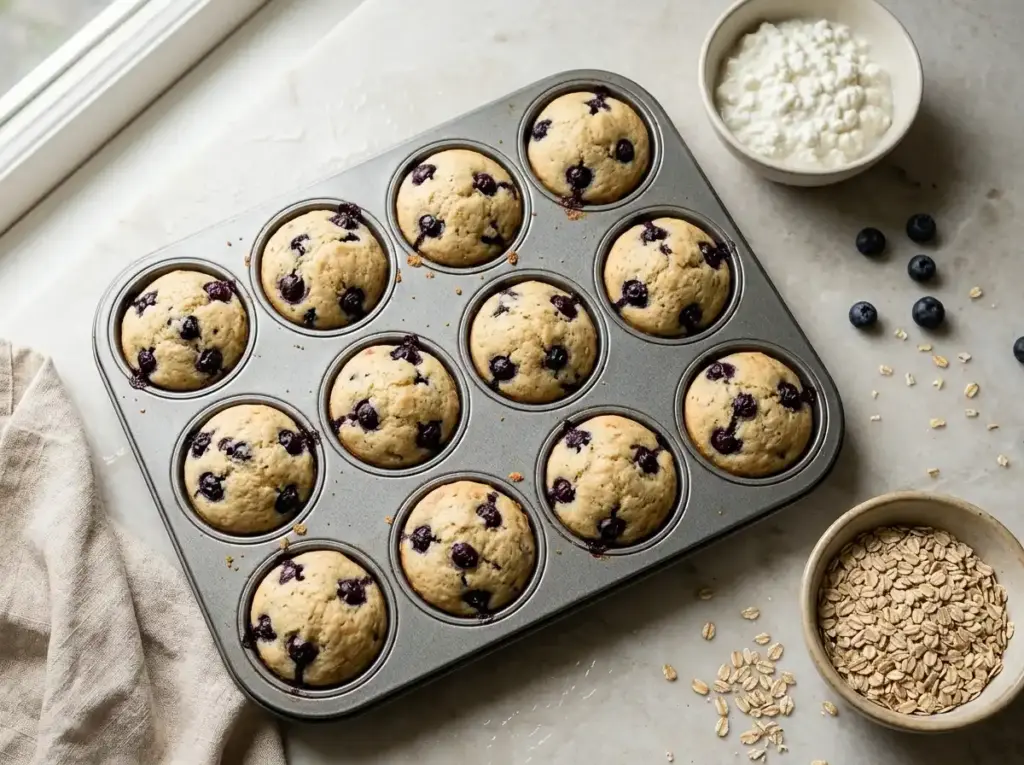
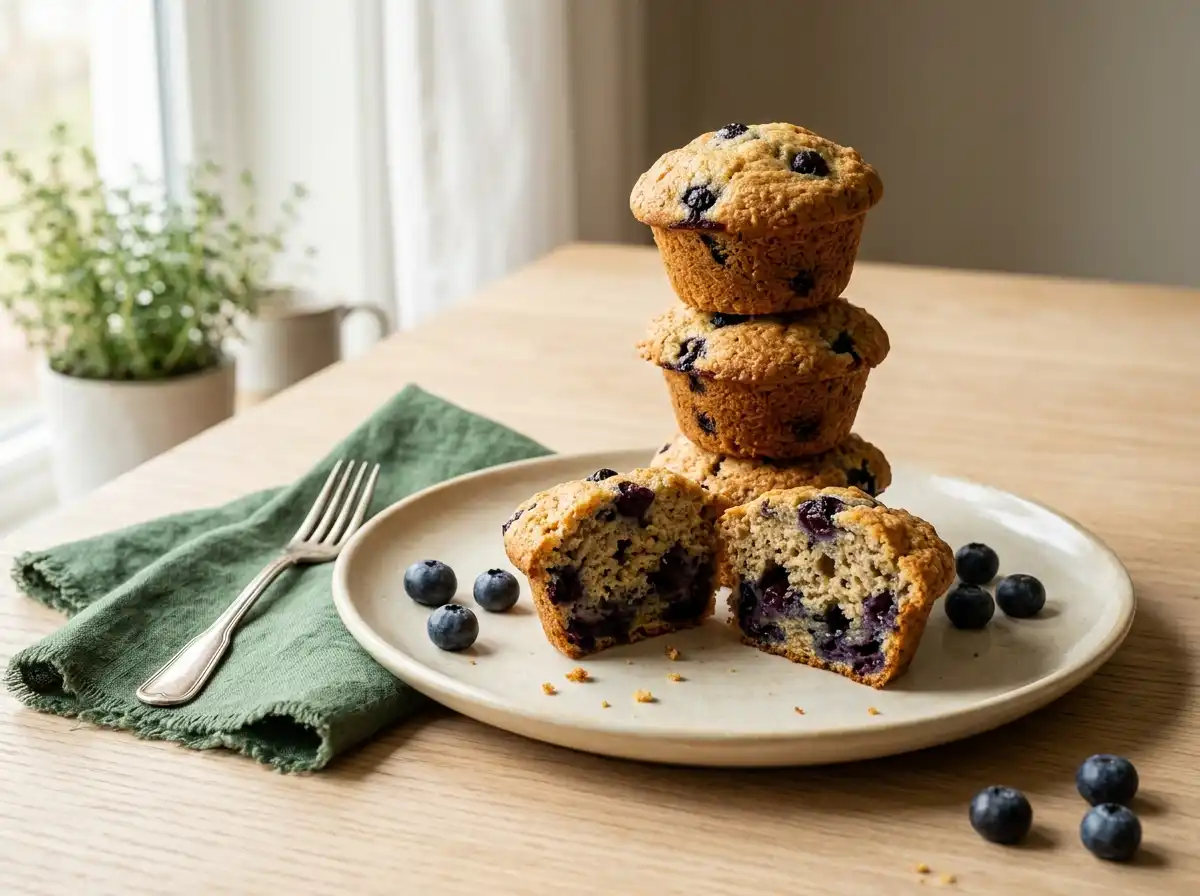
These are also noticeably denser and moister than bakery muffins — closer to baked oatmeal cups than a typical crumbly muffin. That’s what happens when 500 grams of cottage cheese goes into a 12-muffin batch, and it’s a fair trade for the protein number.
What You Need
- 1 cup cottage cheese, 4% (125g per serving; 500g total)
- 4 large eggs (200g)
- 1½ cups rolled oats (180g)
- 1 medium banana, mashed (100g)
- ½ cup blueberries (100g)
- 2½ tablespoons maple syrup (40g)
- 2 teaspoons baking powder (8g)
- ¾ teaspoon ground cinnamon (3g)
- 1 teaspoon vanilla extract (5g)
Makes 12 muffins, 4 servings of 3 muffins each.
Notes on the ones that matter:
Rolled oats, not instant. Instant oats break down further in the batter and produce a denser, gummier crumb.
4% cottage cheese. Low-fat versions carry more water, which affects how the batter sets and can leave the centre undercooked at the standard bake time.
How to Make It
- Preheat the oven to 350°F (175°C) and line a 12-cup muffin tin.
- Blend the cottage cheese, eggs, mashed banana, maple syrup and vanilla until smooth.
- Pulse the oats separately to a coarse flour, then fold into the wet mixture along with the baking powder and cinnamon.
- Fold in the blueberries last, gently, to avoid streaking the batter purple.
- Divide evenly among the 12 cups, filling each about ¾ full.
- Bake 22 to 25 minutes, until a toothpick comes out clean and the tops spring back when pressed.
- Cool in the tin 5 minutes, then transfer to a rack.
Fifteen minutes of prep, twenty-five in the oven.
Tips
Blend the wet ingredients before adding the oats. Cottage cheese blends far more smoothly into eggs and banana before any dry ingredient is added — mixing everything at once leaves visible curd flecks in the batter, which bake into slightly rubbery spots.
Don’t overmix once the oats go in. These behave more like a quick bread than a cake batter. Overmixing develops the small amount of gluten in the oats and toughens the crumb.
They’re moister than bakery muffins, and that’s expected. Five hundred grams of cottage cheese in a 12-muffin batch produces a texture closer to baked oatmeal than a light, airy muffin. If you’re expecting bakery texture, adjust that expectation rather than the recipe — this density is where the protein comes from.
Check doneness with a gentle press, not just the toothpick. The moisture content makes a toothpick test slightly less reliable than usual. The top should spring back rather than leave an indent.
Substitutions
Every figure below is per serving, calculated from the same USDA data as the main recipe.
| Swap | Protein | Calories | Sodium | Notes |
|---|---|---|---|---|
| Add 15g hemp seeds to the batter | +1.2 g | +21 | 0 | The most effective addition. Doesn’t change the texture noticeably. |
| Sodium-free baking powder | 0 g | 0 | −212 mg | Baking powder is the second-largest sodium source here after the cottage cheese. |
| Skip the maple syrup | 0 g | −26 | 0 | The banana carries more sweetness than you’d expect once baked. |
| Banana → blueberries, same weight | −0.1 g | −8 | 0 | Fewer natural sugars, slightly less moisture in the crumb. |
What not to substitute: don’t drop the cottage cheese to “lighten” the recipe. It’s not an add-in here — it’s over half the protein in the batter, and removing or reducing it significantly changes what this recipe is.
Storage
Refrigerator: 5 days in an airtight container.
Freezer: 2 months. Wrap individually or separate with parchment, since they stick together straight out of the freezer bag otherwise.
Reheating: 20 seconds in the microwave from frozen, or a 300°F oven for 8 minutes for a firmer, less steamed texture.
Batch logic: twelve muffins across four servings is a reasonable week’s supply if paired with fruit or yogurt on the side, since three muffins alone at 434 calories is a substantial but not enormous breakfast.

High Protein Muffins
Ingredients
Method
- Preheat the oven to 350°F (175°C) and line a 12-cup muffin tin.
- Blend the cottage cheese, eggs, mashed banana, maple syrup and vanilla until smooth.
- Pulse the oats separately to a coarse flour, then fold into the wet mixture along with the baking powder and cinnamon.
- Fold in the blueberries last, gently, to avoid streaking the batter purple.
- Divide evenly among the 12 cups, filling each about ¾ full.
- Bake 22 to 25 minutes, until a toothpick comes out clean and the tops spring back when pressed.
- Cool in the tin 5 minutes, then transfer to a rack.
Nutrition
Per serving (recipe makes 4, 3 muffins each):
| Calories | 434 |
| Protein | 27 g |
| Carbohydrates | 52 g |
| Fiber | 6 g |
| Fat | 13 g |
| Sodium | 743 mg |
These figures are calculated ingredient by ingredient from a USDA-sourced nutrition database and divided by the serving count. They’re calculated values rather than laboratory-tested ones, and they’ll shift with your brands — cottage cheese sodium in particular varies widely between labels. Carbohydrates include fiber, following the US convention, so net carbs are about 46 grams per serving.
On the sodium: 212 of the 743mg per serving come from the baking powder, and 455mg from the cottage cheese — together they account for nearly all of it. Sodium-free baking powder is the single easiest reduction available, removing 212mg without any change to how the muffins bake or taste.
Per single muffin, for reference: roughly 145 calories, 8.7 grams protein, 17 grams carbohydrates, 2 grams fiber, 4 grams fat, 248mg sodium.
Frequently Asked Questions
Can you make protein muffins without protein powder?
Yes, and this recipe reaches 27 grams per serving without any. The protein comes from cottage cheese blended into the batter as its base, rather than added as a mix-in — 500 grams of cottage cheese across a 12-muffin batch contributes over half the total protein. Eggs and oats supply the rest.
How many protein muffins are one serving?
In this recipe, three muffins. A single muffin carries about 8.7 grams of protein, which is a reasonable snack but not a full breakfast serving. Some recipes and products market a single muffin at 20 grams or more of protein, which usually means either a much larger muffin or protein powder added directly to the batter.
Why are my protein muffins dry?
Overbaking is the most common cause, since high-protein batters made with cottage cheese or Greek yogurt tend to firm up faster than standard butter-and-flour batters once they pass done. The other cause is too little fat relative to the protein content — this recipe relies on the moisture from cottage cheese and banana rather than added oil, so using a low-fat cottage cheese can leave the crumb noticeably drier.
Can you freeze protein muffins?
Yes, for up to 2 months. Wrap them individually or separate with parchment paper, since they tend to stick together in a bag straight from the oven. Reheat from frozen — about 20 seconds in the microwave restores most of the fresh texture.
More High Protein Breakfasts
This is one of fifteen recipes in the high protein breakfast collection, grouped by savory, sweet and make-ahead, with protein, calories and sodium compared across all fifteen.
For a similarly dense, cottage-cheese-based batter cooked differently, cottage cheese waffles use the same base ingredients in a waffle iron for 30 grams per serving.
If you’d rather skip baking altogether, the whipped cottage cheese bowl uses the same core ingredient with no oven required.
Made these? Leave a rating and tell me if you tried a different fruit — banana and blueberry is the base, but this batter takes most fruit swaps well.