
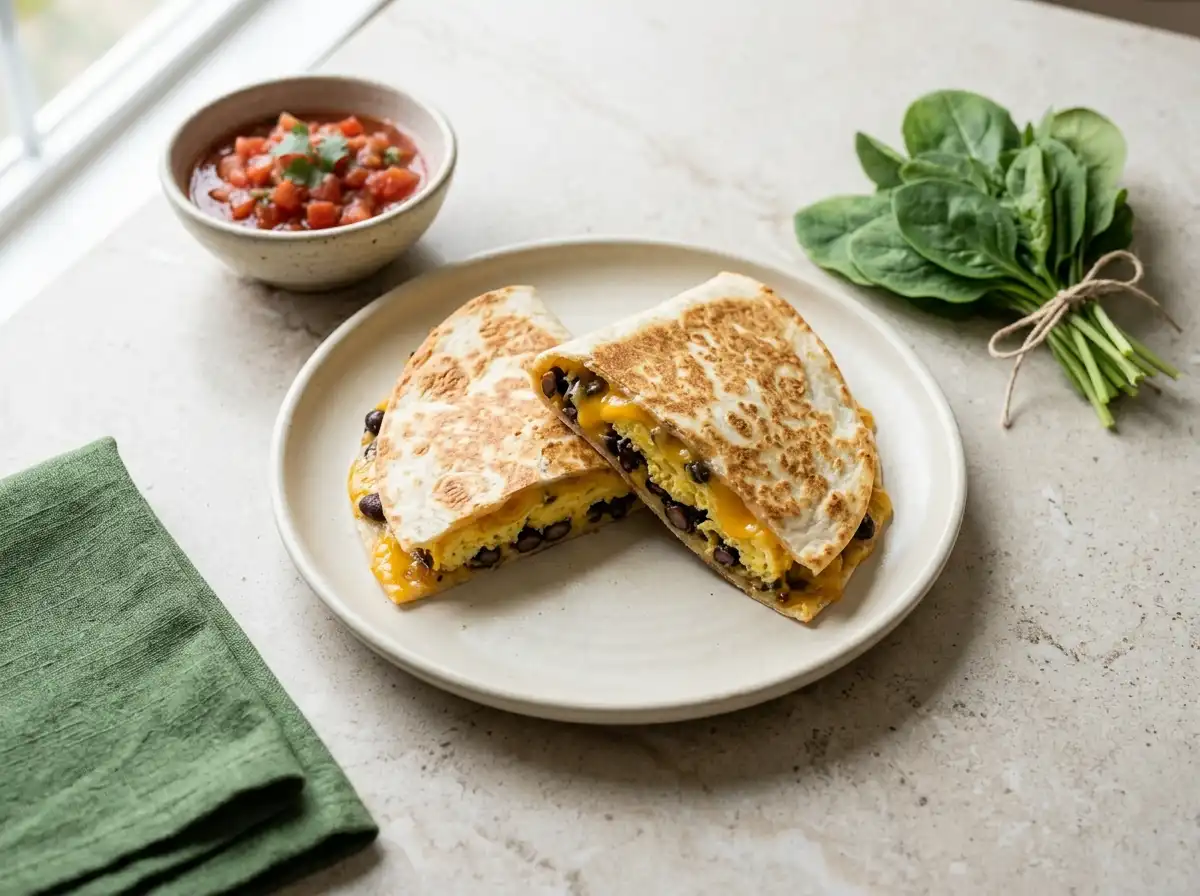
Quick answer: This breakfast quesadilla has 31 grams of protein and 612 calories per serving, and takes about 15 minutes. Two eggs, black beans and cheddar folded into a large tortilla — the one recipe in this collection you can eat standing up, one-handed. Serves 1. It also carries 1,141 mg of sodium, the third-highest in the collection; there’s a section on that below.
Most breakfast quesadillas are built for speed and end up thin on protein — an egg and some cheese folded into a small tortilla, gone in three bites and not particularly filling.
This one is built the other way round. Two eggs and black beans together carry nearly 18 grams before the cheese goes anywhere near it, and the whole thing folds into something you can genuinely eat with one hand on the way out the door.
Why This Quesadilla Has 31 Grams of Protein
| Source | Per serving |
|---|---|
| Eggs (100g, 2 large) | 12.6 g |
| Tortilla (70g) | 5.7 g |
| Cheddar (30g) | 6.9 g |
| Black beans (60g) | 5.3 g |
| Salsa | 0.5 g |
| Total | 31.0 g |
No single ingredient dominates. Eggs contribute the most at 12.6 grams, but cheddar, beans and the tortilla itself all add real amounts. That’s different from most of the high protein breakfast collection, where one or two sources carry most of the total.
The tortilla alone contributes 5.7 grams. That’s more than the black beans add on their own, which is easy to overlook when thinking about where the protein in a quesadilla comes from.
Why the Tortilla Size Matters
An 8-inch tortilla is standard for lunch quesadillas, and it doesn’t work here. Two eggs’ worth of filling plus beans and cheese is more volume than an 8-inch circle can fold around — the seam splits and the filling spills out the side.
This recipe uses a 10-inch tortilla. The extra size costs 5.7 grams of protein and 214 calories on its own, which is already accounted for in the totals above, but it’s the difference between a quesadilla that folds cleanly and one that falls apart in the pan.
A Note on Sodium
This carries 1,141 mg of sodium per serving, about 50% of the World Health Organization’s 2,300 mg daily limit — the third-highest in the collection.
There’s no added salt. It comes from five ingredients, none of them dominant on their own:
| Ingredient | Sodium |
|---|---|
| Tortilla | 515 mg (45%) |
| Cheddar | 196 mg (17%) |
| Black beans | 159 mg (14%) |
| Salsa | 129 mg (11%) |
| Eggs | 142 mg (12%) |
What actually helps: rinse the black beans thoroughly under running water rather than just draining them — canned beans lose a meaningful share of their sodium that way, and it also removes the metallic edge of the canning liquid. Beyond that, there isn’t a single lever that moves this much, because the sodium is spread across five ingredients rather than concentrated in one.
What doesn’t help: cutting the cheese. It’s a smaller contributor than the tortilla or the beans, and losing it costs flavour for a modest reduction.
If sodium is a real concern, the Greek yogurt breakfast bowl reaches almost the same protein number at 87 mg.
What You Need
- 1 large flour tortilla, 10-inch (70g)
- 2 large eggs (100g)
- ¼ cup shredded cheddar (30g)
- ⅓ cup canned black beans, drained and rinsed (60g)
- 2 tablespoons salsa, for serving (30g)
- 1 teaspoon olive oil (5g)
Notes on the ones that matter:
Rinse the black beans thoroughly. Beyond the sodium, the canning liquid has a metallic edge that comes through in the finished quesadilla if it isn’t washed off.
Salsa is served on the side, not inside. This is deliberate, not a preference — see the tips below for why.
A 10-inch tortilla, not the 8-inch size sold as standard in some brands. Check the package.
How to Make It
- Scramble the eggs softly in the olive oil over medium-low heat, pulling them off just before fully set.
- Warm the tortilla in a dry pan for 20 seconds per side, so it’s pliable rather than stiff.
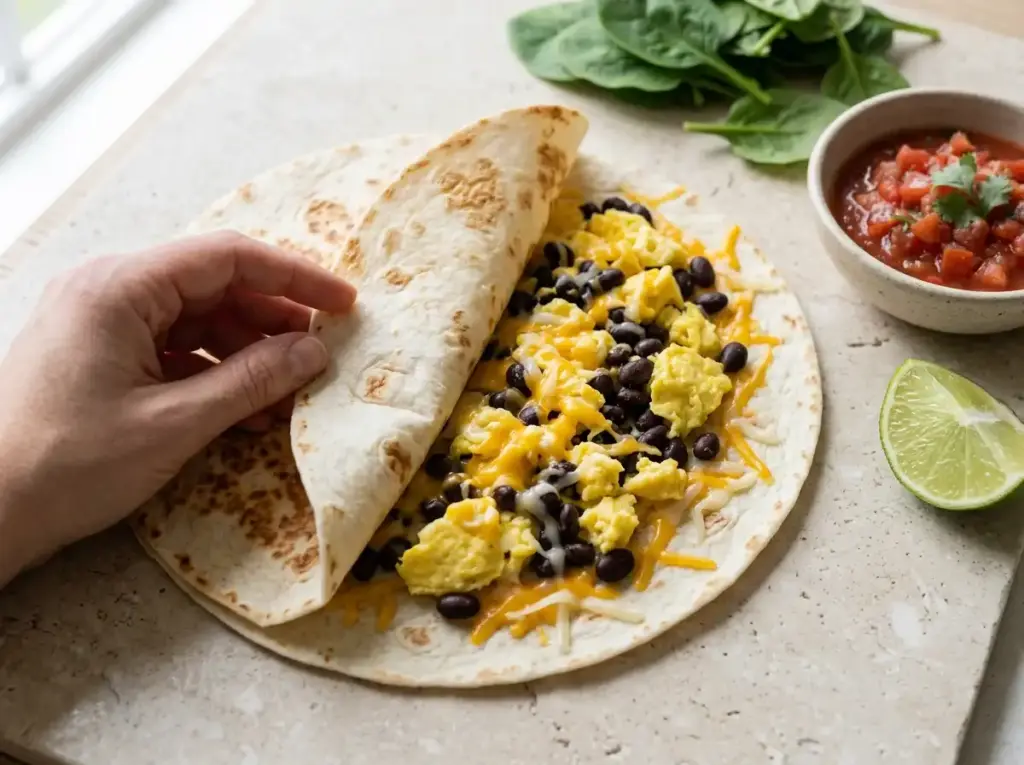
- Layer the beans, scrambled egg and cheddar across one half of the tortilla.
- Fold and press into a half-moon, then return to the pan.
- Cook 2 to 3 minutes per side, pressing gently with a spatula, until the outside is golden and the cheese has melted through.
- Cut in half and serve with the salsa on the side.
Fifteen minutes, most of it at the stove.
Tips
Serve the salsa on the side. This is the whole trick. Salsa releases water fast, and inside a folded quesadilla that water has nowhere to go — it soaks straight into the tortilla and turns the seam soggy within a minute of plating. Dipping the finished quesadilla keeps the outside crisp for as long as you’re eating it.
Rinse the beans, don’t just drain them. Canning liquid carries a metallic taste that’s noticeable once everything is folded together and harder to fix after the fact.
Press while it cooks, not just at the end. Even pressure with a spatula helps the cheese make full contact with both sides of the tortilla, which is what actually seals the fold.
Don’t overfill. It’s tempting to add more once you see how much room a 10-inch tortilla has. More filling than this recipe uses makes it harder to fold and more likely to split.
Substitutions
Every figure below is per serving, calculated from the same USDA data as the main recipe.
| Swap | Protein | Calories | Sodium | Notes |
|---|---|---|---|---|
| 2 whole eggs → 1 egg + 100 g egg whites | +4.6 g | −20 | +95 mg | The most effective change here, though it raises sodium slightly. |
| Add 30 g more black beans | +2.7 g | +40 | +80 mg | Rinse the extra beans too. |
| Cheddar → feta, same weight | −2.6 g | −42 | +139 mg | Trades protein for flavour and more sodium. Not recommended here. |
| Add 50 g avocado | +1.0 g | +80 | +4 mg | Best added after folding, as a side rather than inside. |
| 10-inch tortilla → 8-inch | −0.8 g | −31 | −74 mg | Only viable if the filling is also reduced — otherwise it won’t fold. |
What not to substitute: a low-carb tortilla without checking sodium first. Several run higher than standard flour tortillas, which would work against the point of rinsing the beans.
Storage
Two days refrigerated, wrapped in foil, though this is best eaten fresh — the tortilla loses its crispness quickly once cooled.
Reheating: a dry skillet over medium heat, 2 minutes per side, re-crisps it close to fresh. The microwave leaves the tortilla soft and slightly tough.
Not a good freezer candidate. The egg and bean filling separates on thawing and the texture doesn’t recover.
Make-ahead approach: scramble the eggs and rinse the beans up to 2 days ahead, storing them separately. Assembly and cooking still takes the full 8 minutes, but the prep work is done.
Black Bean & Egg Breakfast Quesadilla
Ingredients
Method
- Scramble the eggs softly in the olive oil over medium-low heat, pulling them off just before fully set.
- Warm the tortilla in a dry pan for 20 seconds per side, so it’s pliable rather than stiff.
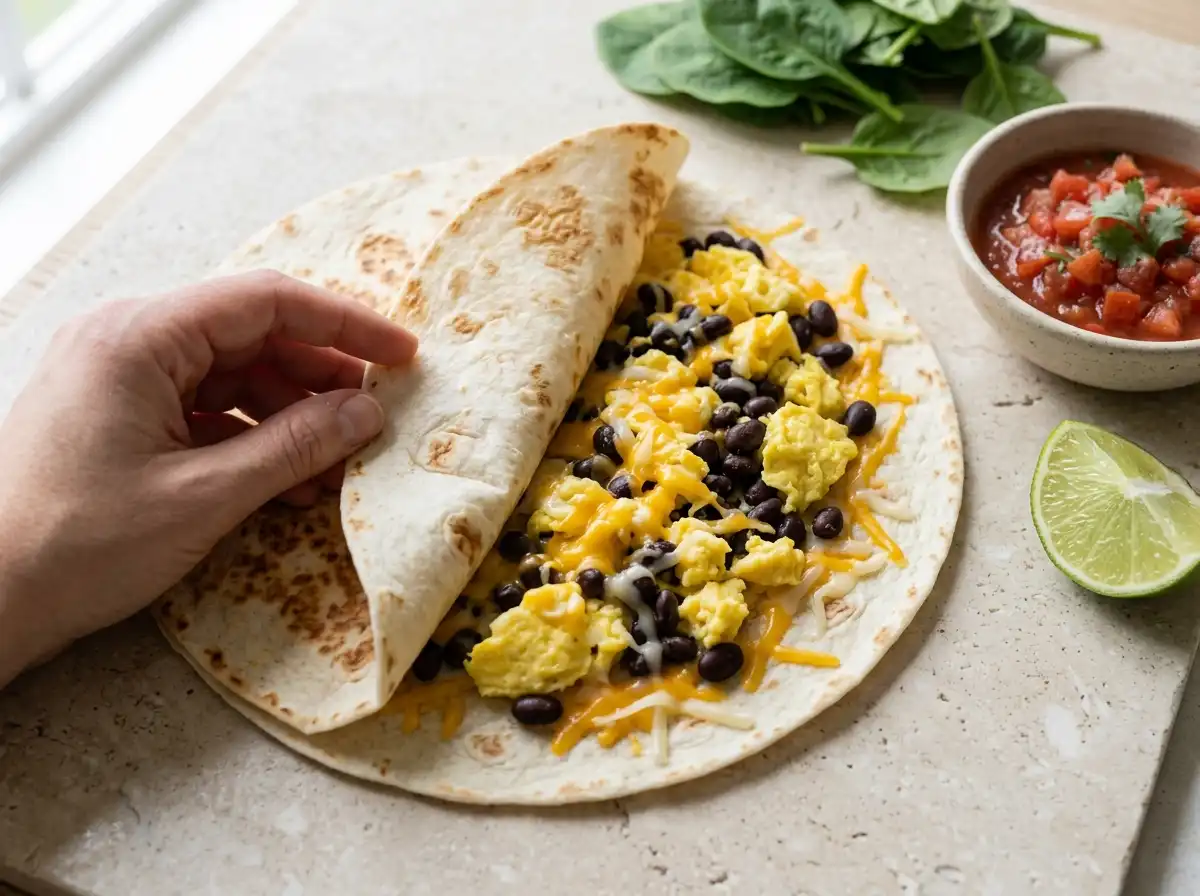
- Layer the beans, scrambled egg and cheddar across one half of the tortilla.
- Fold and press into a half-moon, then return to the pan.
- Cook 2 to 3 minutes per side, pressing gently with a spatula, until the outside is golden and the cheese has melted through.
- Cut in half and serve with the salsa on the side.
Notes
- Rinse the black beans thoroughly. Beyond the sodium, the canning liquid has a metallic edge that comes through in the finished quesadilla if it isn’t washed off.
- Salsa is served on the side, not inside. This is deliberate, not a preference — see the tips below for why.
- A 10-inch tortilla, not the 8-inch size sold as standard in some brands. Check the package.
Nutrition
Per serving (recipe makes 1):
| Calories | 612 |
| Protein | 31 g |
| Carbohydrates | 53 g |
| Fiber | 8 g |
| Fat | 30 g |
| Sodium | 1,141 mg |
These figures are calculated ingredient by ingredient from a USDA-sourced nutrition database and divided by the serving count. They’re calculated values rather than laboratory-tested ones, and they’ll shift with your brands — the tortilla and the canned beans are the two most variable ingredients here. Carbohydrates include fiber, following the US convention, so net carbs are about 45 grams per serving.
At 612 calories, this is the second most calorie-dense recipe in the collection, largely a function of the full-size tortilla. It’s also the highest in fiber among the savory recipes, at 8 grams, mostly from the black beans.
Frequently Asked Questions
Can you freeze breakfast quesadillas?
Not well. The egg and bean filling separates on thawing and the tortilla doesn’t regain its texture. This one is better made fresh or refrigerated for up to 2 days and reheated in a dry skillet rather than frozen.
What tortilla is best for a breakfast quesadilla?
A 10-inch flour tortilla, not the 8-inch size some brands sell as standard. Two eggs’ worth of scrambled filling plus beans and cheese is more volume than an 8-inch tortilla can fold around without splitting at the seam.
How do you keep a breakfast quesadilla from getting soggy?
Serve the salsa on the side rather than inside. Salsa releases water quickly, and folded inside a warm quesadilla that water soaks straight into the tortilla within a minute, softening the seam. Dipping the finished quesadilla keeps the exterior crisp for as long as you’re eating it.
What goes in a breakfast quesadilla?
This version uses scrambled eggs, black beans and cheddar, which together reach 31 grams of protein. Other common additions include sautéed peppers, spinach, or avocado added after folding rather than inside, since avocado turns the interior soft if it’s cooked with the filling.
Made this? Leave a rating and tell me what you added — this recipe takes extra fillings well as long as you don’t overfill it.