
Quick answer: This chia pudding has 28 grams of protein, 8 grams of fiber and 364 calories per serving, and takes about 5 minutes plus four hours in the fridge. Greek yogurt replaces most of the milk, which is where the protein comes from — no protein powder. Serves 1. It’s also one of the two lowest-sodium recipes in the collection at 135 mg.
Most chia pudding lands somewhere between 6 and 10 grams of protein. That surprises people, because chia seeds carry 16.5 grams per 100 grams and sound like a protein food.
The catch is the portion. A normal serving of chia is 20 grams, so the seeds contribute about 3 grams. Everything else has to come from the liquid — and if that liquid is almond or coconut milk, there isn’t much else.
Swap most of it for plain Greek yogurt and the same jar goes from around 8 grams to 28, with almost no change in texture.
Why This Chia Pudding Has 28 Grams of Protein
| Source | Per serving |
|---|---|
| Greek yogurt (200 g) | 19.9 g |
| Milk, 2% (130 g) | 4.3 g |
| Chia seeds (20 g) | 3.3 g |
| Everything else | 0.4 g |
| Total | 27.9 g |
The yogurt carries 71% of it. Two hundred grams of 2% Greek yogurt is a substantial portion — a little under a cup — and it’s doing most of the work while the chia does the thickening.
The chia earns its place on fiber, not protein. Twenty grams contributes 6.9 of the recipe’s 8.1 grams of fiber. That’s what keeps this satisfying at 364 calories.
The Ratio Question
The rule you’ll see everywhere is 1 part chia to 10 parts liquid. That’s correct for milk, and wrong for this recipe.
Greek yogurt is already semi-solid. It can’t hydrate seeds the way a thin liquid does, so a yogurt-based pudding needs a wider ratio than a milk-based one. This recipe uses 20 g of chia against 330 g of combined yogurt and milk — roughly 1:16 — and still sets firm enough to hold a spoon.
If you apply the 1:10 rule to a yogurt recipe, you get a solid block. That’s the single most common reason chia pudding comes out wrong, and it isn’t the recipe’s fault — it’s the rule being applied outside the case it was written for.
What You Need
- ¾ cup + 2 tablespoons plain Greek yogurt, 2% (200 g)
- ½ cup + 1 tablespoon milk, 2% (130 g)
- 2 tablespoons chia seeds (20 g)
- ½ cup sliced strawberries (60 g)
- 2½ teaspoons maple syrup (12 g)
- ½ teaspoon vanilla extract (2 g)
Notes on the ones that matter:
Plain Greek yogurt, not vanilla or fruit. Flavoured versions add 10 to 15 grams of sugar and carry slightly less protein, since the purée displaces yogurt.
Check the date on the chia. Seeds lose gelling power after roughly two years. Old chia is the second most common reason a pudding doesn’t set, after simply not waiting long enough.
Fruit at serving, not at prep. Strawberries release water into the pudding within a day and thin it noticeably. If you’re making several jars, keep the fruit separate.
How to Make It
- Whisk the yogurt and milk together first, until completely smooth. Add the vanilla and maple syrup.
- Stir in the chia seeds and mix for a full 30 seconds. Every seed needs contact with liquid.
- Wait 10 minutes, then stir again. This is the step most people skip and the one that matters most.
- Cover and refrigerate at least 4 hours, ideally overnight.
- Top with the strawberries just before eating.
Five minutes of work, the rest is waiting.
Tips
The ten-minute second stir is not optional. Chia releases a gel coating within the first few minutes. Once it forms, the seeds stick to each other and sink as one mass. Stirring at ten minutes breaks the clumps while the gel is still soft — after that they stay suspended.
Whisk the yogurt smooth before the chia goes in. Greek yogurt straight from the tub has enough body to trap dry seeds in pockets, and those pockets never hydrate. You’ll find them as gritty spots two days later.
Four hours is the minimum, not the target. It’s edible at four hours and noticeably better at twelve. The seeds keep absorbing well past the point where it looks set.
Err toward slightly thin. Too thick is harder to fix than too thin — you can always stir in a tablespoon of milk, but you can’t take liquid back out.

High Protein Chia Pudding
Ingredients
Method
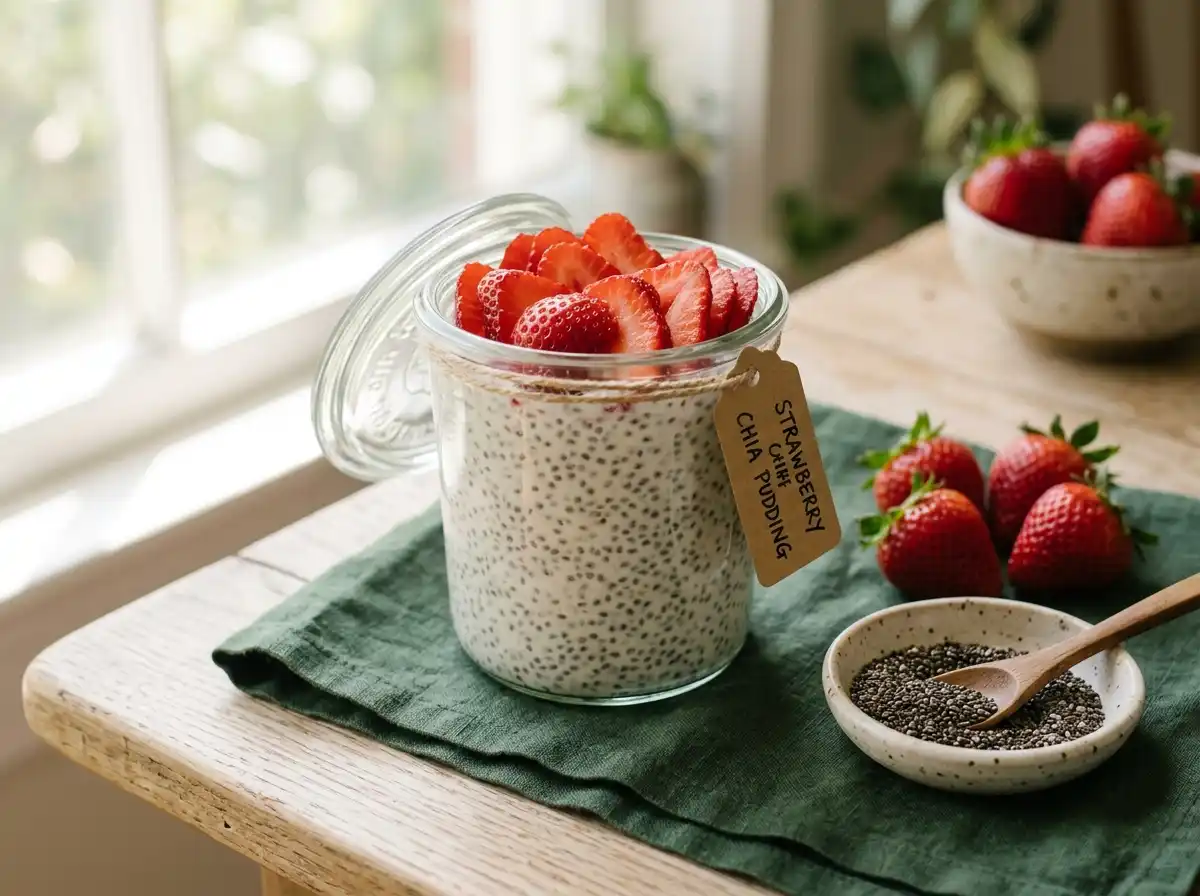
- Whisk the Greek yogurt and milk together until completely smooth. Stir in the vanilla and maple syrup.
- Add the chia seeds and stir for a full 30 seconds.
- Wait 10 minutes, then stir again to break up any clumps.
- Cover and refrigerate at least 4 hours, ideally overnight.
- Top with sliced strawberries just before eating.
Notes
- The ten-minute second stir is what prevents a solid clump at the bottom of the jar.
- Keeps 4 days refrigerated and improves on day two. Do not freeze.
- Add fruit at serving, not during prep — it thins the pudding overnight.
Substitutions
Every figure below is calculated from the same USDA data as the main recipe.
| Swap | Protein | Calories | Notes |
|---|---|---|---|
| Add 15 g hemp seeds | +4.7 g | +83 | Takes the recipe past 32 g. Mild nutty flavour. |
| Add 15 g chopped almonds | +3.2 g | +87 | Adds crunch, which chia pudding otherwise lacks entirely. |
| Greek yogurt → blended cottage cheese | +2.3 g | +50 | Must be blended completely smooth first. |
| Chia 20 g → 25 g | +0.8 g | +24 | Firmer set, closer to panna cotta. Add 20 g more milk. |
| Strawberries → raspberries | +0.3 g | +12 | Also raises fiber from 8.1 g to 10.8 g |
| Skip the maple syrup | 0 g | −31 | The vanilla and fruit carry it further than you’d expect. |
On plant milks: unsweetened almond milk works but carries under 1 gram of protein per 100 grams, so it costs roughly 4 grams against dairy milk. Soy milk is the closest substitute at around 3 grams per 100 grams.
Storage
Four days refrigerated, in a sealed jar. This is one of the few breakfasts that genuinely improves on day two, as the seeds finish hydrating.
Don’t freeze it. The gel structure breaks on thawing and separates into water and seeds.
Making several at once: four jars is the practical limit for a week, since day five is where the texture starts to slacken. Whisk the full quantity of yogurt, milk, vanilla and syrup in one bowl, stir in all the chia, wait ten minutes, stir again, then divide. Dividing first and stirring each jar individually mixes less evenly and takes longer.
Recipe Card
High Protein Chia Pudding
Prep 5 minutes · Chill 4 hours · Serves 1 · 28 g protein per serving
Ingredients
- 200 g (¾ cup + 2 tablespoons) plain Greek yogurt, 2%
- 130 g (½ cup + 1 tablespoon) milk, 2%
- 20 g (2 tablespoons) chia seeds
- 60 g (½ cup) strawberries, sliced
- 12 g (2½ teaspoons) maple syrup
- 2 g (½ teaspoon) vanilla extract
Instructions
- Whisk the Greek yogurt and milk together until completely smooth. Stir in the vanilla and maple syrup.
- Add the chia seeds and stir for a full 30 seconds.
- Wait 10 minutes, then stir again to break up any clumps.
- Cover and refrigerate at least 4 hours, ideally overnight.
- Top with sliced strawberries just before eating.
Notes
- The ten-minute second stir is what prevents a solid clump at the bottom of the jar.
- Keeps 4 days refrigerated and improves on day two. Do not freeze.
- Add fruit at serving, not during prep — it thins the pudding overnight.
Nutrition
Per serving (recipe makes 1):
| Calories | 364 |
| Protein | 28 g |
| Carbohydrates | 35 g |
| Fiber | 8 g |
| Fat | 13 g |
| Sodium | 135 mg |
These figures are calculated ingredient by ingredient from a USDA-sourced nutrition database and divided by the serving count. They’re calculated values rather than laboratory-tested ones, and they’ll shift with your brands. Carbohydrates include fiber, following the US convention, so net carbs are about 27 grams per serving.
At 135 mg, this is one of the two lowest-sodium recipes in the collection — nearly all of it occurring naturally in the yogurt and milk rather than added. For comparison, most bread-based breakfasts start above 500 mg before anything goes on top.
Frequently Asked Questions
What is the ratio of chia seeds to liquid?
For thin liquids like milk, 1 part chia to 10 parts liquid by weight is the standard — so 20 g of chia to 200 g of milk. Greek yogurt changes that: it’s already semi-solid and can’t hydrate the seeds the way a thin liquid does. This recipe uses 20 g of chia against 330 g of combined yogurt and milk, about 1:16, and still sets firm. If your recipe contains yogurt, start wider than 1:10 and thin it with milk afterwards if needed.
Why is my chia pudding not thickening?
Usually not enough time — four hours is the minimum and overnight is better. Old seeds are the second cause, since chia loses gelling power after about two years, so check the date on the bag. The third is too much liquid, which most often happens when the 1:10 milk ratio gets applied to a recipe that also contains yogurt. If it’s still thin after eight hours, stir in another teaspoon of chia and wait two more.
How long does chia pudding last in the fridge?
Four days in a sealed container, and it’s one of the few breakfasts that improves on day two as the seeds finish absorbing. Keep any fruit separate and add it each morning — berries release water into the pudding and thin it within a day. Don’t freeze it: the gel structure breaks on thawing.
How much protein is in chia pudding?
A typical chia pudding made with milk or coconut milk lands between 6 and 10 grams. Chia seeds carry 16.5 grams per 100 grams, but a normal 20-gram serving only contributes about 3 grams. This version reaches 27.9 grams because 200 grams of Greek yogurt carries 19.9 grams on its own. Adding 15 grams of hemp seeds takes it past 32.
Can you make high protein chia pudding without protein powder?
Yes — the protein comes from the liquid rather than a supplement. Greek yogurt is the most efficient option at roughly 10 grams per 100 grams, and blended cottage cheese is slightly higher at 11. Hemp seeds are the densest addition at 31.6 grams per 100 grams, though about 15 grams is the practical limit before the flavour takes over.
Made this? Leave a rating and tell me what ratio worked for you — chia is one of those recipes where everyone lands somewhere slightly different.