
Quick answer: This chicken slaw has 44 grams of protein and 401 calories per serving, makes four portions, and is the only salad on this site that’s still properly crunchy on day four. That’s because it’s built on cabbage rather than leaves. Twenty-five minutes of work, no cooking beyond the chicken, dressing kept separate.
Every make-ahead salad promises to survive the week. Most don’t, and the reason is almost always the same: leaves.
Spinach, romaine and mixed greens are structurally water held in a thin cell wall. Put them anywhere near dressing, or even just in a sealed container with something wet, and they collapse. Cabbage is built differently — dense, tightly layered, and low enough in water that it holds its texture for days.
This slaw takes advantage of that. Eight hundred grams of shredded cabbage, 500 grams of cooked chicken, and a sesame ginger dressing that goes on when you eat rather than when you make it.
It’s the most storage-resistant recipe in the high protein salad collection, and at 44 grams of protein per serving it’s also one of the highest.
Why This Slaw Has 44 Grams of Protein
| Source | Per serving |
|---|---|
| Cooked chicken breast (125 g) | 38.8 g |
| Green and red cabbage | 2.7 g |
| Sesame seeds | 0.9 g |
| Carrot, scallions, soy sauce | 1.8 g |
| Total | 44.2 g |
The chicken does 88% of the work here, and that’s by design. In a slaw, the vegetables are doing a different job — they’re providing volume, crunch and 7.6 grams of fiber, not protein.
What’s worth noticing is the ratio. A serving weighs 445 grams and contains 275 grams of vegetables, and it still reaches 44 grams of protein at 401 calories. That combination — a very large portion, a high protein number, and a moderate calorie count — is difficult to achieve any other way.
Why Cabbage Instead of Leaves
This is the whole point of the recipe, so it’s worth being specific.
Cabbage holds its structure because of what it is. The leaves are thick, tightly packed and comparatively low in water. Cut cabbage releases moisture slowly over days rather than all at once, which is why coleslaw exists as a concept and wilted-lettuce slaw does not.
Red cabbage holds up marginally better than green, and it’s why this recipe uses both. The green provides bulk and a sweeter flavor; the red brings color and structure. Using only red would give you a slaw that looks like beetroot after two days, as the color bleeds.
Carrot behaves the same way — dense, low water, holds a shred.
The practical result: on day four, this salad is still crunchy. Not “acceptable” — actually crunchy. Every other make-ahead salad on this site is at its limit by then.
What You Need
Serves 4.
For the slaw
- 3½ cups shredded cooked chicken breast (500 g / 17.5 oz)
- About 6 cups shredded green cabbage (500 g)
- About 3¾ cups shredded red cabbage (300 g)
- 1¾ cups grated carrot (200 g), about 3 medium
- 7 scallions, sliced (100 g)
- 2 tablespoons sesame seeds (20 g)
For the sesame ginger dressing
- 2¼ tablespoons toasted sesame oil (30 g)
- 2½ tablespoons rice vinegar (40 g)
- 2 tablespoons soy sauce (30 g)
- 2 tablespoons grated fresh ginger (30 g)
- 3 cloves garlic, grated (10 g)
- 1½ tablespoons fresh lime juice (20 g)
Notes on the ones that matter:
Shred the cabbage finely. Thin shreds take dressing better and are far more pleasant to eat than the thick chunks a food processor produces. A sharp knife and patience, or the slicing blade rather than the shredding disc.
Thirty grams of fresh ginger is a lot, and it should be. This dressing has no sugar and no chili in it — the ginger is what makes it taste of something. Grate it rather than chopping.
Toasted sesame oil, not plain. Plain sesame oil is a neutral cooking oil and tastes of very little. The toasted kind is the one that carries this dressing.
Cooked chicken breast, poached, roasted or leftover. Shredded rather than diced — shreds tangle into the cabbage instead of sinking to the bottom.
The Salting Step
This is the technique that buys you the fourth day, and it needs an honest explanation.
What you do: put the shredded cabbage in a colander, scatter about a teaspoon of salt over it, toss, and leave it for 20 minutes over the sink. Then squeeze it firmly in handfuls to drive out the water, and pat it dry.
Why it works: salt draws water out of the cabbage cells through osmosis. That water is what would otherwise leak into your container over four days, diluting the dressing and softening everything. Removing it in advance is the difference between a crunchy slaw on Thursday and a wet one on Tuesday.
About the salt in the numbers: the nutrition figures on this page don’t include added salt, because most of it leaves with the water you squeeze out and there’s no reliable way to calculate how much remains. Expect the real sodium figure to be somewhat above the 588 mg stated. If that matters to you, skip the salting — the slaw will still be good for three days rather than four.
How to Make It
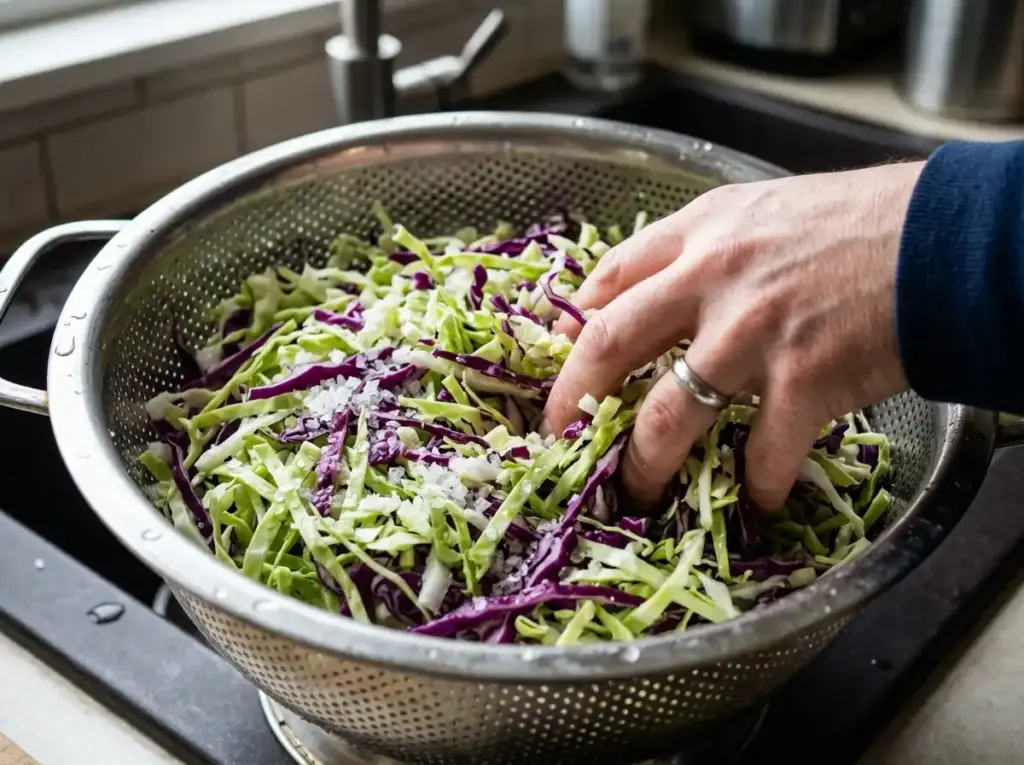
- Shred both cabbages finely and put them in a colander. Scatter over about a teaspoon of salt, toss, and leave for 20 minutes.
- Squeeze the cabbage dry in handfuls, firmly, then pat it with a clean towel.
- Grate the carrot and slice the scallions.
- Make the dressing: whisk the sesame oil, rice vinegar, soy sauce, grated ginger, grated garlic and lime juice together.
- Combine the cabbage, carrot, scallions and shredded chicken in a large bowl and toss to distribute.
- Store undressed, with the dressing in a separate container. Dress each portion as you eat it, and scatter with sesame seeds at the last moment.
Tips
Toast the sesame seeds for two minutes in a dry pan before they go on. Untoasted sesame seeds are texturally present and flavorless; toasted ones smell like the dish is supposed to taste. Store them separately from the slaw so they stay crisp.
Dress each portion individually. It’s tempting to dress the whole batch on Sunday. Don’t — that’s how you get a soft slaw by Wednesday. Roughly two tablespoons of dressing per portion.
Grate the ginger and garlic on a microplane. In a dressing with no emulsifier, anything chopped sinks. Grated, both disperse and stay suspended.
Let dressed slaw sit five minutes before eating. Cabbage takes a few minutes to absorb anything, and the difference between immediately and five minutes later is noticeable.
Shred the chicken while it’s still slightly warm if you’re cooking it fresh. It pulls apart along the grain far more easily than cold chicken.
A Note on Sodium
At 588 mg per serving, this sits in the lower half of the collection. About 70% of it — 1,648 mg of the recipe’s 2,353 mg total — comes from the soy sauce.
Reduced-sodium soy sauce contains roughly 40% less and would bring the slaw to around 425 mg per serving, with a difference in flavor most people wouldn’t detect in a dressing this strongly flavored with ginger and sesame. Tamari behaves the same way and is the gluten-free option.
Bear in mind the salting step above adds an unquantified amount on top of the stated figure.
Substitutions
Bagged coleslaw mix instead of shredding your own. It saves fifteen minutes and costs you nothing nutritionally. The shreds are usually thicker, and the salting step matters more, not less.
Rotisserie chicken works and halves the preparation. It’s brined, so it carries considerably more sodium than the plain cooked chicken breast these figures are based on — the same trade-off covered in the rotisserie chicken caesar salad.
Edamame instead of chicken for a vegan version. You’d need about 400 g shelled to reach a comparable protein number, and the slaw becomes a different but perfectly good dish.
Add-ins worth trying: sliced red chili, chopped cilantro, crushed peanuts, thinly sliced snow peas, or a tablespoon of peanut butter whisked into the dressing.
No rice vinegar? White wine vinegar or apple cider vinegar both work. Avoid balsamic, which overwhelms the sesame.
Storage
Four days refrigerated, undressed. This is the longest of any recipe on this site, and it’s the reason this one exists.
Three containers is the ideal setup: the slaw and chicken together, the dressing separately, and the toasted sesame seeds in a small pot. Assembly takes thirty seconds.
If you’ve already dressed a portion and don’t finish it, eat it the next day rather than the day after — dressed cabbage softens gradually, and it’s noticeably different by 48 hours.
Don’t freeze it. Cabbage thaws into a wet mass.
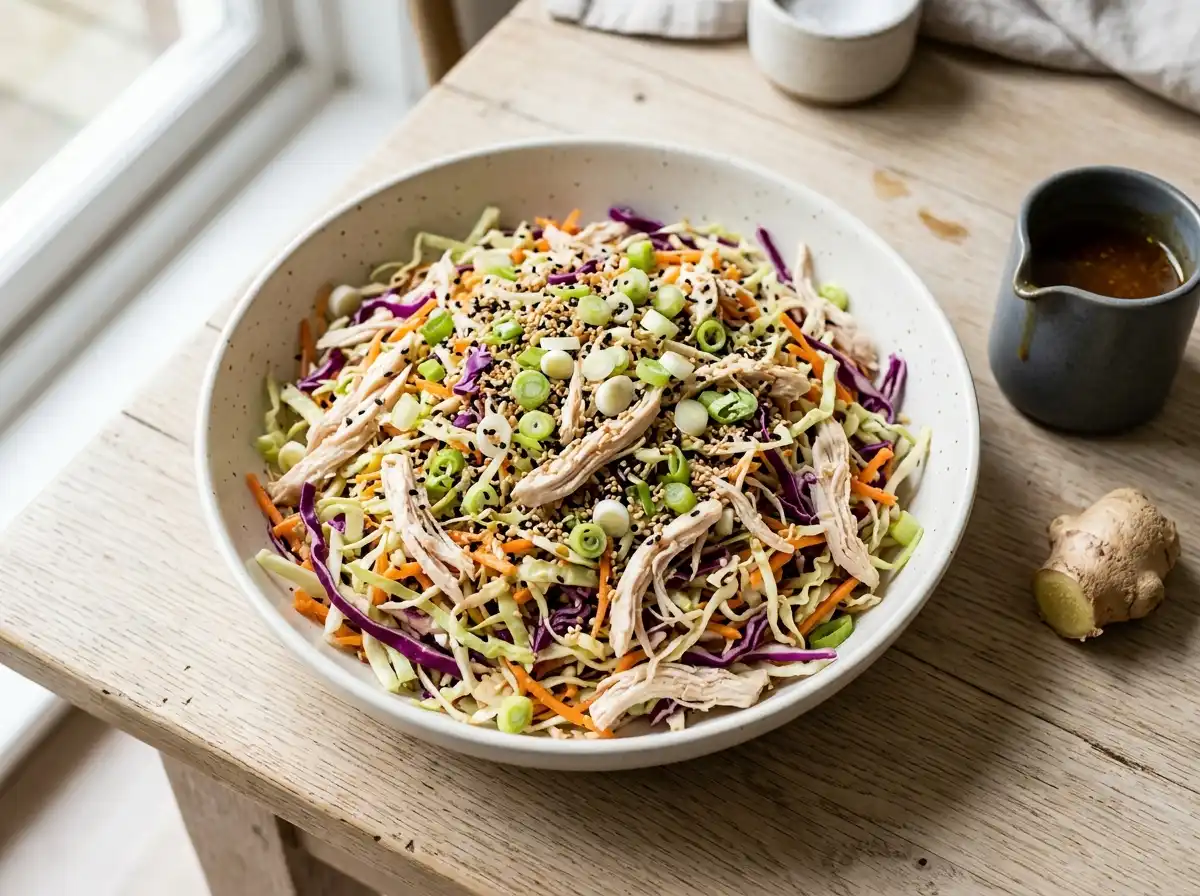

High Protein Sesame Ginger Chicken Slaw
Ingredients
Method
- Finely shred both cabbages and place them in a colander. Scatter over about a teaspoon of salt, toss, and leave for 20 minutes over the sink.
- Squeeze the cabbage firmly in handfuls to drive out the water, then pat it dry with a clean towel.
- Grate the carrot, slice the scallions, and toast the sesame seeds in a dry pan for 2 minutes.
- Whisk the sesame oil, rice vinegar, soy sauce, grated ginger, grated garlic and lime juice together to make the dressing.
- Combine the squeezed cabbage, carrot, scallions and shredded chicken in a large bowl and toss.
- Store the slaw undressed, with the dressing and sesame seeds in separate containers. Dress each portion as you serve it, about 2 tablespoons per portion, and let it sit 5 minutes before eating.
Nutrition
Per serving (recipe makes 4):
| Calories | 401 |
| Protein | 44 g |
| Carbohydrates | 24 g |
| Fiber | 8 g |
| Fat | 15 g |
| Sodium | 588 mg |
These figures are calculated ingredient by ingredient from a USDA-sourced nutrition database and divided by the serving count. They’re calculated values rather than laboratory-tested ones, and they’ll shift with your brands. Chicken is a cooked weight. Carbohydrates include fiber, following the US convention, so net carbs are about 16 grams per serving.
The figures exclude the salt used in the cabbage-salting step, most of which is discarded with the squeezed-out water. The true sodium figure will be somewhat higher than 588 mg.
Frequently Asked Questions
How long does chicken slaw last in the fridge?
Four days undressed, which is longer than any other salad on this site. Cabbage is dense and comparatively low in water, so it holds its texture where leaves collapse. Keep the dressing in a separate container and dress each portion as you eat it.
Why do you salt the cabbage before making slaw?
Salt draws water out of the cabbage through osmosis. That water is what would otherwise leak into the container over several days and soften everything. Twenty minutes with a teaspoon of salt, then squeezed dry, is the difference between a crunchy slaw on day four and a wet one on day two.
Can I use a bagged coleslaw mix?
Yes, and it saves about fifteen minutes with no nutritional difference. The shreds are usually thicker than hand-cut, so the salting step becomes more important rather than less.
How much protein is in this chicken slaw?
44 grams per serving, of which about 39 come from 125 g of cooked chicken breast. The cabbage, carrot and sesame seeds contribute the remaining 5, along with 7.6 grams of fiber.
Can I dress the whole batch in advance?
You can, but you’ll lose the main advantage of the recipe. Dressed cabbage softens gradually and is noticeably different after two days. Dressing individual portions takes thirty seconds and keeps the slaw crunchy through Thursday.
More High Protein Salads
This is one of fifteen recipes in the high protein salad collection, grouped by no-cook, low carb, vegetarian and meal prep, with protein and calories compared across all fifteen.
For a meal prep option built around grains rather than cabbage, the chicken and quinoa mason jar salad makes five jars and carries 46 grams of protein each.
Made this? Leave a rating and tell me how it went in the comments — especially if you changed something that worked.
The cabbage stayed surprisingly crunchy even after a few days in the fridge. The ginger and sesame dressing gave it plenty of flavor without making it feel heavy. This is probably the one I’d make for several lunches in advance.