
Quick answer: Grilled shrimp skewers need 2 to 3 minutes per side on a 400°F grill, about 5 minutes total. They’re done when they turn opaque and curl into a loose C shape. A tight O means overcooked. This version delivers 35 grams of protein for 200 calories per serving.
Shrimp has the best protein-to-calorie ratio of anything you can put on a grill. At 35 grams of protein for 200 calories, these skewers come in at 17.3 grams of protein per 100 calories, ahead of grilled chicken tenders at 16.6 and well ahead of the chicken fajita bowl at 9.4.
The catch is that shrimp is also the least forgiving thing on this list. The window between perfect and rubbery is under a minute, and the marinade has its own hard limit. Both are covered below.
At 200 calories this is a protein source, not a full plate. The sides table shows what to build around it.
The Two Rules That Decide Everything
Fifteen minutes in the marinade. Not thirty.
Lemon juice is acidic enough to start denaturing shrimp protein on contact. That’s the mechanism behind ceviche, where citrus alone “cooks” raw seafood without heat. Leave shrimp in a citrus marinade for an hour and the outside turns opaque and firm before it ever reaches the grill, then goes chalky once it does.
Fifteen minutes is enough for the garlic, paprika and oregano to coat. Thirty is the absolute ceiling. If you want to prep ahead, mix the marinade separately and combine it with the shrimp right before cooking.
C shape, not O shape.
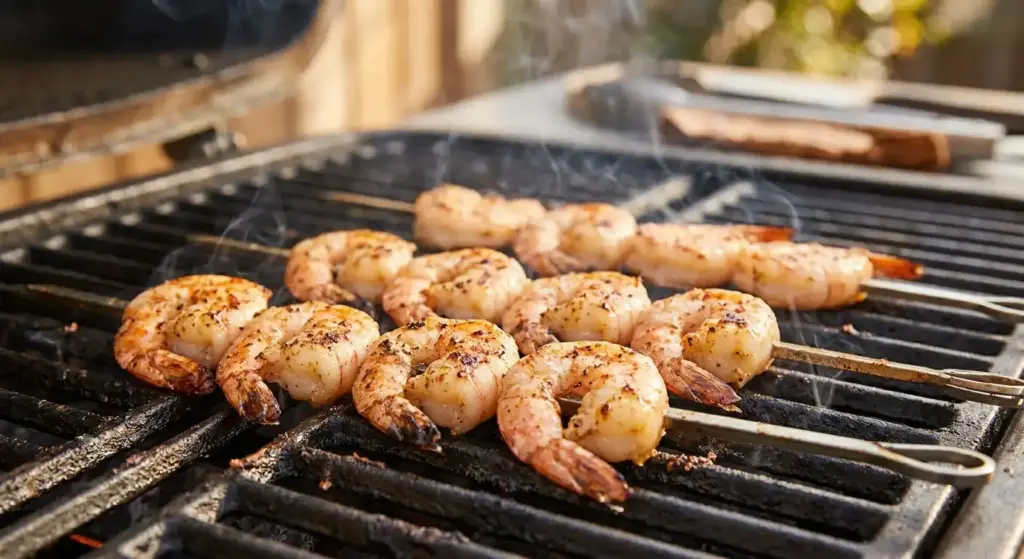
A raw shrimp is almost straight. As it cooks it curls. At the point where it forms a loose C, the center has just turned opaque and it’s done. Keep going and it tightens into a closed O, which is the visual signal that the muscle has contracted too far and squeezed its moisture out.
This is more reliable than a timer, because shrimp size varies enormously between packages.
Ingredients
Serves 4 · 8 skewers
- 1½ lb (680 g) raw shrimp, peeled and deveined — large or jumbo, 16/20 or 21/25 count
- 2 tbsp olive oil
- 2 tbsp lemon juice
- 3 cloves garlic (10 g), minced
- 1½ tsp smoked paprika
- ¾ tsp dried oregano
- ¼ tsp red pepper flakes
- ¾ tsp kosher salt
- ¼ tsp black pepper
- Small handful flat-leaf parsley, chopped
- Lemon wedges, to serve
On quantities: 680 g is the peeled weight. If you’re buying shell-on, allow around 900 g to end up with 680 g net. That difference is easy to miss at the counter.
On size: 16/20 count means 16 to 20 shrimp per pound. Larger shrimp are considerably easier to grill, because the margin between done and overdone scales with the thickness. Small shrimp on a grill are a fight you don’t need.
How to Make Them
Step 1 — Dry the shrimp
Pat them completely dry with paper towels. This matters more than it sounds: surface water steams on contact with the grates and prevents any browning at all.
If you’re using frozen shrimp, thaw them in a bowl of cold water for 10 minutes, then dry thoroughly.
Step 2 — Marinate, briefly
Whisk the oil, lemon juice, garlic, smoked paprika, oregano, red pepper flakes, salt and pepper. Add the shrimp, toss, and leave 15 minutes at room temperature. Set a timer.
Step 3 — Double-skewer
Thread the shrimp onto skewers, pushing through both the thick end and the tail so each shrimp sits in a C.
Use two parallel skewers per row rather than one. A single skewer lets each shrimp spin when you turn the whole thing, which means half of them end up cooking on the same side twice. Two skewers lock them flat.
Soak wooden skewers 20 minutes first, or use metal.
Step 4 — Grill
Preheat to 400°F and oil the grates well. Shrimp sticks more readily than chicken.
Grill 2 to 3 minutes per side, turning once. Watch the shape rather than the clock. As soon as they’re opaque and curled into a loose C, take them off.
Step 5 — Finish
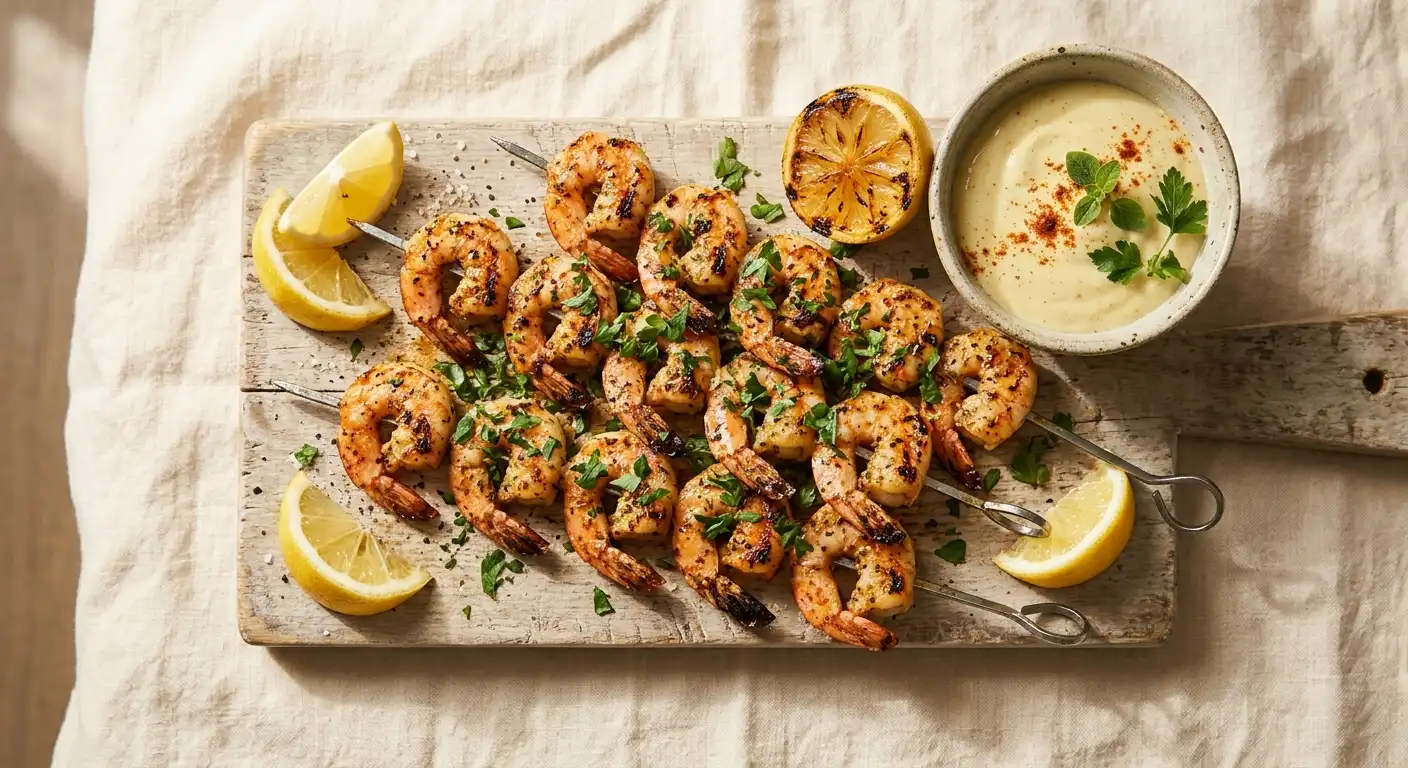
Scatter the parsley and squeeze a lemon wedge over them while they’re still hot. No resting needed, unlike chicken — shrimp is best straight off the grill.
Indoor Methods
Grill pan. Medium-high, 2 minutes per side. Works well because shrimp cook so fast that the lack of lid doesn’t matter.
Broiler. Top rack, 2 to 3 minutes per side. Keep the oven door cracked and watch them, because the garlic in the marinade burns before the shrimp overcook.
Air fryer. 400°F for 6 to 8 minutes total, shaking once. No skewers needed. The most forgiving of the three.
Turning These Into a Meal
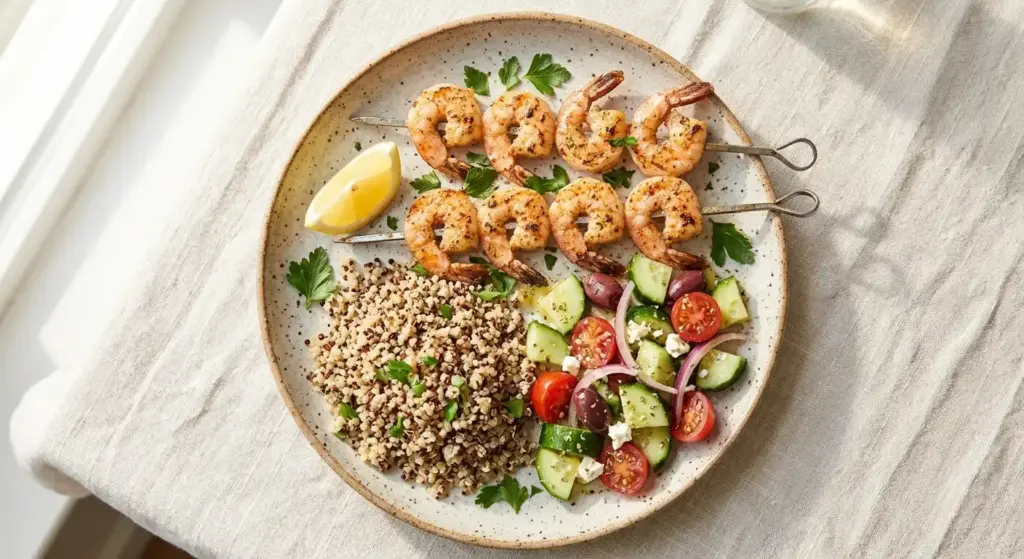
At 200 calories a portion, the skewers are the protein. Here’s what common sides add.
| Side | Portion | Calories added | Protein added |
|---|---|---|---|
| Cooked white rice | 150 g | 195 | 3.8 g |
| Cooked quinoa | 150 g | 180 | 6.6 g |
| Greek salad, no feta | 150 g | 85 | 1.8 g |
| Grilled zucchini and peppers | 150 g | 95 | 2.2 g |
Skewers with quinoa and a Greek salad lands around 465 calories with 43 grams of protein, which is a complete meal with a ratio still better than most grilled chicken dishes.
Tips Worth Knowing
- Buy larger shrimp than you think you need. 16/20 count gives you roughly twice the margin for error of 41/50 count.
- Dry them properly. Wet shrimp steam. No browning, no char, no flavor difference from boiling them.
- Don’t salt them an hour ahead. Salt draws moisture out of shrimp quickly. The 15-minute marinade is the right window for the salt too.
- Grill the vegetables separately. Peppers and onions need 8 to 10 minutes, shrimp needs 5. Putting them on the same skewer guarantees one of the two is wrong.
- Leave the tails on if you’re serving them as an appetizer, off if they’re going into a bowl or salad. Tails are a handle, and a nuisance with a fork.
Substitutions
Frozen shrimp instead of fresh: completely fine, and often fresher than what’s at the counter, since most “fresh” shrimp was previously frozen. Thaw in cold water for 10 minutes and dry thoroughly.
Lime instead of lemon: works identically. Same 15-minute limit, since lime is slightly more acidic.
Cajun seasoning instead of the spice blend: use 1½ tsp. Check the sodium on the label first, because most blends are salt-forward and this recipe is already at 496 mg per serving.
Scallops instead of shrimp: 2 minutes per side, no skewers, and no marinade longer than 10 minutes. Protein drops to about 28 g per serving.
If you want the same flavors cold, the shrimp and avocado salad uses lime and chilli on cooked shrimp with no grill involved.
Storage and Meal Prep
Cooked shrimp keeps three days refrigerated, not four. Seafood has a shorter window than poultry, and the texture degrades noticeably on day four even when it’s still safe.
Reheating grilled shrimp is a losing proposition. They were 90 seconds from rubbery when they came off the grill, and a microwave finishes the job. Eat them cold instead, sliced into a salad or a grain bowl. They’re genuinely good that way.
Don’t freeze cooked shrimp. The texture doesn’t survive it.
For a make-ahead option that keeps better, the shrimp cocktail cups are built around cold shrimp from the start.

Grilled Shrimp Skewers
Ingredients
Method
- Pat the shrimp completely dry with paper towels. If using frozen, thaw in cold water for 10 minutes first, then dry thoroughly.
- Whisk the oil, lemon juice, garlic, smoked paprika, oregano, red pepper flakes, salt and pepper. Add the shrimp and marinate 15 minutes, 30 at the most.
- Thread the shrimp onto two parallel skewers per row so they can’t spin. Soak wooden skewers 20 minutes first.
- Preheat the grill to 400°F and oil the grates. Grill 2 to 3 minutes per side, turning once, until the shrimp are opaque and curled into a loose C shape.
- Scatter chopped parsley over the hot skewers and squeeze a lemon wedge across them. Serve immediately; no resting needed.
Grilled Shrimp Skewers FAQs
How long do you grill a shrimp skewer?
Two to three minutes per side on a 400°F grill, about five minutes total. Size matters more than time: 16/20 count shrimp take closer to three minutes a side, smaller shrimp closer to 90 seconds. Judge by appearance rather than the clock. They’re done when they turn opaque and curl into a loose C shape.
What is the best marinade for shrimp skewers?
Olive oil, lemon juice, minced garlic, smoked paprika, oregano and a pinch of red pepper flakes. The oil carries the flavor and prevents sticking, the garlic and paprika do the work, and the lemon brightens it. The critical part isn’t the ingredients, it’s the time: 15 minutes, 30 at the absolute most. Citrus starts cooking shrimp on contact.
Do you marinate shrimp before grilling?
Yes, but briefly. Fifteen minutes is enough for a thin, fast-cooking protein, and it’s short enough that the acid doesn’t begin breaking down the texture. Marinating shrimp for an hour or overnight, which works for chicken, turns shrimp mealy and chalky. If you want to prep ahead, mix the marinade separately and combine right before cooking.
How do you know when grilled shrimp is done?
Look at the shape. Raw shrimp is nearly straight. Properly cooked shrimp curls into a loose C and turns opaque throughout. Overcooked shrimp tightens into a closed O. The C-to-O transition takes under a minute, which is why visual checking beats timing.
What does Texas Roadhouse put on their grilled shrimp?
The chain doesn’t publish its recipe, so anything specific you read online is a reconstruction rather than the real thing. The flavor profile people most often describe is garlic butter with a light savory seasoning, served over rice. To get close at home, grill the shrimp as directed here, then toss them off the heat with a teaspoon of melted butter and an extra clove of minced garlic. That adds roughly 35 calories per serving.
Can you grill shrimp without skewers?
Yes, with a grill basket or a sheet of perforated foil. Loose shrimp on open grates will fall through, since most are narrower than the gap between bars. If you have neither, lay them perpendicular to the bars and turn them individually with tongs.
How long does grilled shrimp last in the fridge?
Three days in an airtight container. That’s shorter than grilled chicken, and the texture softens noticeably by day three. Eat them cold rather than reheating, because reheating pushes shrimp from cooked to rubbery almost immediately.
Nutrition
Per serving (2 skewers, recipe makes 4 servings)
| Calories | 200 |
| Protein | 35 g |
| Carbohydrates | 4 g |
| Fiber | 1 g |
| Fat | 6 g |
| Sodium | 496 mg |
Calculated from USDA FoodData Central values using raw, peeled weights. Shrimp sodium varies substantially depending on whether the product has been treated with sodium tripolyphosphate, a common processing step. Check the label if sodium matters to you. Sides are not included.
Related Recipes
- Grilled Chicken Tenders — the second-best protein-to-calorie ratio in the grilling collection
- Chicken Fajita Bowl — the shrimp swap is covered in its substitutions
- High Protein Shrimp and Avocado Salad — the same flavors, served cold
- High Protein Shrimp Cocktail Cups — a make-ahead option that keeps better
- High Protein Salad Recipes — fifteen salads at 25 g protein or more
Made these? Leave a rating and a comment, and say what count shrimp you used. The timing difference between sizes is the thing most people get caught out by.