
Quick answer: This chicken caesar salad has 44 grams of protein and 370 calories per serving, and takes about 15 minutes with no cooking. The dressing is built on Greek yogurt instead of mayonnaise, so there’s no raw egg and no long ingredient list — just yogurt, Parmesan, lemon, Dijon, garlic and anchovy paste. Serves 2 as a main.
Most caesar salads are not high protein meals. They’re a bowl of lettuce carrying a mayonnaise dressing that can run well over 100 calories in two tablespoons, plus croutons, plus enough Parmesan to be interesting. The chicken is often an afterthought — a few strips laid on top.
This version reverses the ratio. The chicken is the point, the dressing does real nutritional work instead of just adding fat, and the croutons are gone. What comes out is 44 grams of protein for 370 calories — the lowest calorie count of any recipe in the high protein salad collection, and the best protein-to-calorie ratio in it.
Why This Caesar Salad Has 44 Grams of Protein
The number isn’t coming from one place, which is worth understanding if you plan to change anything.
| Source | Per serving |
|---|---|
| Cooked chicken breast (100 g / 3.5 oz) | 31 g |
| Parmesan (15 g) | 5.4 g |
| Greek yogurt in the dressing (50 g) | 5 g |
| Romaine (175 g) | 2.1 g |
| Anchovy paste | 0.5 g |
| Total | 44 g |
The chicken does most of the work, but roughly 10 grams come from the dressing and the cheese. That’s the part a standard caesar throws away: mayonnaise contributes fat and essentially no protein, so swapping it for Greek yogurt adds 5 grams per serving and removes about 100 calories at the same time.
It also means the dressing isn’t optional here. Cutting it in half to save calories takes protein with it.
What You Need
For the dressing
- Scant ½ cup plain 2% Greek yogurt (100 g)
- ⅓ cup finely grated Parmesan (30 g / 1 oz)
- 1 tablespoon extra-virgin olive oil (15 g)
- 4 teaspoons fresh lemon juice (20 g), about half a lemon
- 2 teaspoons Dijon mustard (10 g)
- 1 teaspoon anchovy paste (5 g)
- 1 small garlic clove, grated (3 g)
- ½ teaspoon freshly ground black pepper
For the salad
- 1½ cups shredded cooked chicken breast (200 g / 7 oz)
- 2 romaine hearts or 1 medium head, chopped (350 g / 12 oz), about 7–8 cups
A few notes on the ingredients that matter:
Cooked chicken breast is the base of the nutrition figures — poached, roasted or leftover. Rotisserie chicken works and is faster; see the sodium note below before you choose.
Romaine hearts, not bagged mixed greens. 350 grams is roughly two hearts, and it sounds like a lot because it is. Romaine’s spine holds up under a thick dressing in a way that spring mix and butter lettuce don’t.
2% Greek yogurt, not nonfat. Nonfat thins out fast once acid hits it and the dressing turns watery.
Anchovy paste, not fillets. Paste disperses; fillets need mashing and leave threads.
No croutons. They’re the reason a caesar’s carb count runs high, and they add almost nothing nutritionally. See the tips section for what to use instead.
How to Make the Greek Yogurt Caesar Dressing
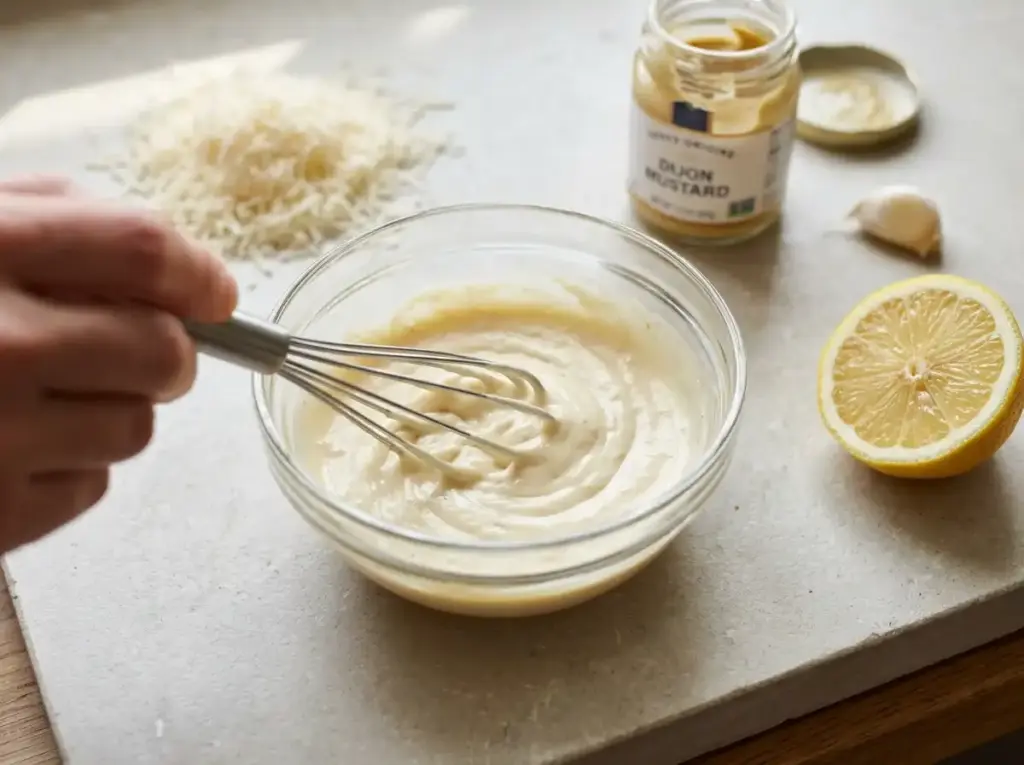
Put the yogurt, Parmesan, olive oil, lemon juice, Dijon, anchovy paste, grated garlic and black pepper in a bowl and whisk until completely smooth. That’s the whole method.
Two things are worth knowing about why this works. A classic caesar dressing emulsifies around raw egg yolk, which is what makes it rich and also what makes people hesitate to serve it to kids or during pregnancy. Here the yogurt is already an emulsion and the Dijon stabilizes it further, so the oil incorporates without any egg at all. Nothing in the dressing is raw or risky.
Second, don’t add salt. Between the Parmesan, the anchovy paste and the Dijon, this dressing is already well seasoned — that’s why the whole recipe has no added salt and still comes in at a moderate 515 mg of sodium.
Taste it before it goes anywhere near the lettuce. It should be sharper and saltier than you want the finished salad to be, because 350 grams of romaine will dilute it considerably.
How to Assemble
- Shred the chicken. Pull it into rough strips along the grain rather than cubing it. Strips catch dressing along their whole length; cubes just get coated on the outside.
- Chop and dry the romaine. Cut it into wide ribbons, wash, then dry it properly in a spinner or on paper towels. This step decides whether the salad works.
- Toss the romaine with about two-thirds of the dressing until every leaf is coated.
- Add the chicken and the rest of the dressing, toss once more, and finish with extra Parmesan.
Serve it right away. Dressed romaine holds for maybe fifteen minutes before it starts to soften.
Tips for the Best Texture
Dry the lettuce like you mean it. Water on the leaves is the single most common reason a homemade caesar tastes weak. It thins the dressing on contact and it can’t be fixed afterward with more seasoning.
One clove of garlic, not two. Raw garlic keeps getting sharper as it sits in an acidic dressing. What tastes balanced when you whisk it can taste harsh ten minutes later. If you want a stronger garlic note, grate it into the lemon juice first and let it sit five minutes before adding everything else — the acid takes the raw edge off.
Thin the dressing if it clings. Greek yogurt makes a thick dressing, and thick dressing sits in clumps instead of coating. A tablespoon of water loosens it without touching the flavor or the macros in any meaningful way.
Replace croutons with Parmesan crisps. Bake tablespoon-sized mounds of grated Parmesan at 400°F for about 5 minutes, until lacy and golden. You get the crunch, and unlike croutons it adds protein instead of starch.
Substitutions
No anchovies? Use 2 teaspoons of Worcestershire sauce instead. It contains anchovy itself, which is exactly why it works as a substitute, so it’s not a vegetarian swap.
Vegetarian version: replace the anchovy with Worcestershire’s vegetarian equivalent and the Parmesan with a vegetarian hard cheese. Be aware this costs you roughly 5 grams of protein per serving and moves the total closer to 39 g. Traditional Parmigiano-Reggiano is made with animal rennet.
No Greek yogurt? Skyr works identically. Blended 4% cottage cheese also works and adds slightly more protein, though you need a blender to get it smooth.
Different protein: cooked turkey breast is nearly identical nutritionally. Shrimp works well with the lemon and garlic. Chickpeas make it vegetarian, but a cup of chickpeas carries about half the protein of the chicken, so the total drops considerably.
Using Rotisserie Chicken: What to Know About Sodium
A supermarket rotisserie chicken is the fastest route to this salad, and it’s what most people will reach for on a weeknight. It’s a good option — with one thing to be clear about.
The nutrition figures on this page are calculated on plain cooked chicken breast, which carries about 74 mg of sodium per 100 g. Rotisserie chickens are brined and seasoned before roasting, and their sodium content is substantially higher — how much higher varies widely between stores and brands, and it’s worth reading the label if your store provides one.
That doesn’t make rotisserie chicken a bad choice. It does mean the 515 mg figure below applies to the recipe as written. If you’re watching sodium specifically, poach or roast a plain chicken breast, or use leftovers from a roast you seasoned yourself.
One practical note either way: shred the chicken while it’s still slightly warm. It separates along the grain much more easily than cold chicken straight from the fridge.
Storage and Meal Prep
Assembled: don’t. Dressed romaine is finished within an hour. This is not a salad to build ahead.
As components: 3 days. Shred the chicken and refrigerate it in one container. Make the dressing and refrigerate it in another — it thickens as it sits, so stir in a splash of water before using. Wash, dry and store the romaine wrapped in a paper towel inside a bag.
With those three things ready, assembly is under two minutes, which makes this a realistic weekday lunch rather than something you only make on a Sunday.
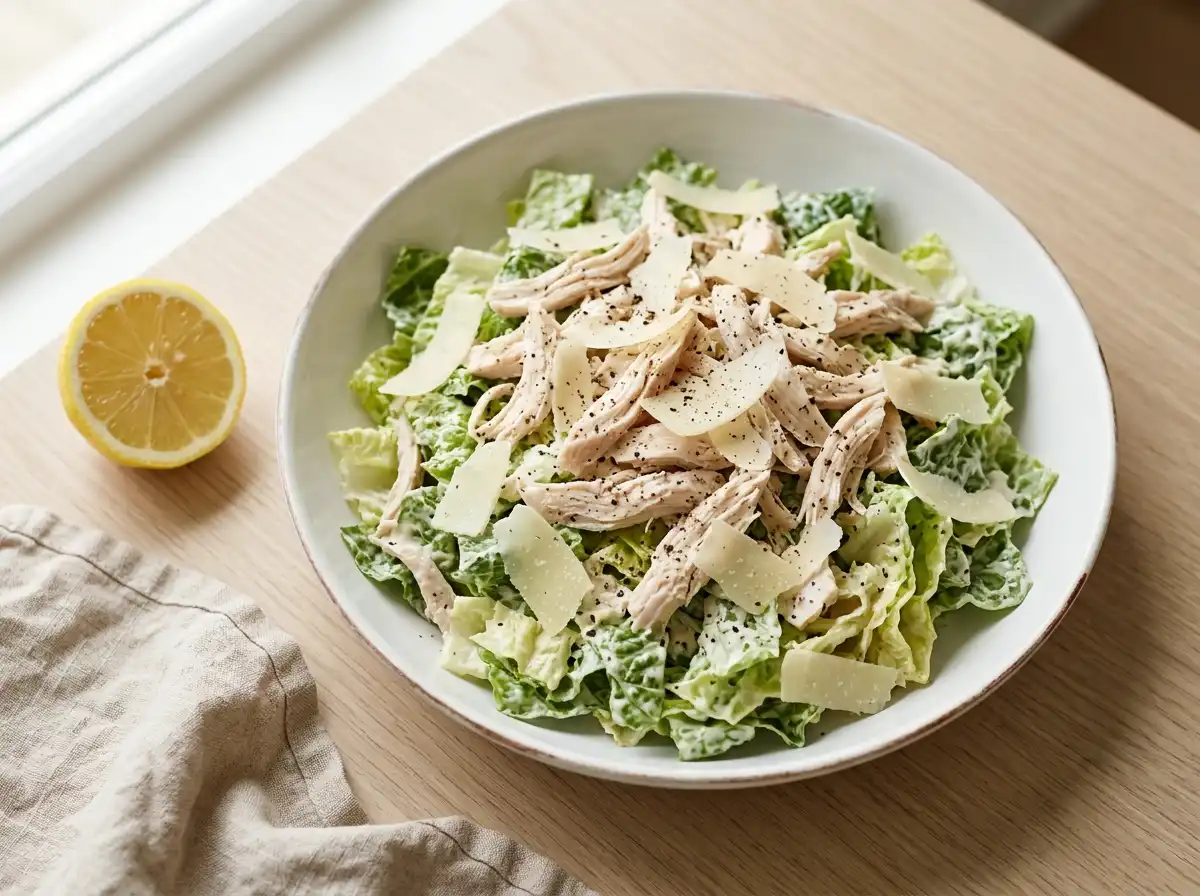

High Protein Rotisserie Chicken Caesar Salad
Ingredients
Method
- Whisk the Greek yogurt, Parmesan, olive oil, lemon juice, Dijon, anchovy paste, grated garlic and black pepper together until smooth.
- Taste and adjust with lemon. Do not add salt — the Parmesan, anchovy and Dijon season it fully. Thin with a tablespoon of water if it’s too thick to coat.
- Shred the chicken into rough strips along the grain, working while it’s still slightly warm if possible.
- Chop the romaine into wide ribbons, wash it, and dry it thoroughly.
- Toss the romaine with two-thirds of the dressing until evenly coated, then add the chicken and the remaining dressing and toss again.
- Finish with extra Parmesan and serve immediately.
Notes
Nutrition
Per serving (recipe makes 2):
| Calories | 370 |
| Protein | 44 g |
| Carbohydrates | 10 g |
| Fiber | 4 g |
| Fat | 17 g |
| Sodium | 515 mg |
These figures are calculated ingredient by ingredient from a USDA-sourced nutrition database and divided by the serving count. They are calculated values, not laboratory-tested ones, and they’ll shift with your brands and how much dressing ends up in the bowl. Chicken is a cooked weight. Carbohydrates include fiber, following the US convention, so net carbs here are about 6 grams.
Frequently Asked Questions
How much protein is in this chicken caesar salad?
44 grams per serving, with two servings per recipe. About 31 grams come from the chicken and roughly 10 more from the Parmesan and Greek yogurt in the dressing, which is why halving the dressing also cuts the protein.
Can I use store-bought rotisserie chicken?
Yes, and it’s the fastest option. Be aware that rotisserie chickens are brined before roasting, so they carry considerably more sodium than the plain cooked chicken breast these figures are based on. The amount varies by store. If sodium matters to you, use poached or roasted plain chicken breast instead.
Does this caesar dressing contain raw egg?
No. Traditional caesar dressing is emulsified with raw egg yolk, but this one uses Greek yogurt and Dijon mustard to hold the emulsion together. There’s no raw egg and no mayonnaise in it.
Can I make it without anchovies?
Yes — use 2 teaspoons of Worcestershire sauce in place of the anchovy paste. It won’t make the recipe vegetarian, since Worcestershire contains anchovy, and standard Parmesan is made with animal rennet.
Can I make this ahead of time?
Not assembled — dressed romaine softens within an hour. Prepare the components instead: shredded chicken, dressing, and washed and dried romaine all keep for 3 days in separate containers. The dressing thickens in the fridge, so loosen it with a little water before tossing.
More High Protein Salads
This is one of fifteen recipes in the high protein salad collection, which groups them by no-cook, low carb, vegetarian and meal prep, and compares protein and calories across all fifteen.
Made this? Leave a rating and tell me how it went in the comments — especially if you changed something that worked.
The yogurt-based Caesar dressing was my favorite part. It still had that familiar Caesar flavor but felt a little lighter. Using leftover chicken made this really quick to put together.