
Quick answer: This Korean-style tuna rice bowl has about 33 grams of protein and 375 calories per serving, and takes about 25 minutes. It borrows the bibimbap format — sautéed vegetables, a fried egg, and a gochujang sauce — but swaps the usual beef for tuna. Serves 4. Sodium runs high, about 560 mg per serving, mostly from the tuna and gochujang together.
Every other rice bowl in this collection leans Japanese in flavor. This one goes a different direction entirely — gochujang’s sweet heat, sesame-sautéed vegetables, and a fried egg on top, styled after bibimbap.
Why This Recipe Has About 33 Grams of Protein
| Source | Per serving |
| Canned tuna, drained (110 g) | 21.3 g |
| Egg, fried, 1 large (50 g) | 6.3 g |
| Cooked rice (120 g) | 3.2 g |
| Everything else | 2.1 g |
| Total | 32.9 g |
The fried egg pulls real weight here, alongside a standard tuna and rice base.
A Note on Sodium
About 560 mg per serving, roughly 24% of the WHO’s 2,300 mg daily limit.
- Canned tuna: ~275 mg
- Gochujang: ~150 mg
- Egg: ~62 mg
- Everything else: ~73 mg
What helps: using gochujang OR soy sauce, not both at full strength, is the clearest way to bring this down without losing the Korean flavor entirely.
What You Need
Makes 4 servings
- 4 cans (5 oz / 142 g each) light tuna in water, drained (about 440 g drained total)
- 2 tbsp gochujang
- 1 tsp low-sodium soy sauce
- 1 tsp sesame oil
- 4 cups cooked rice (480 g)
- 2 cups spinach, sautéed
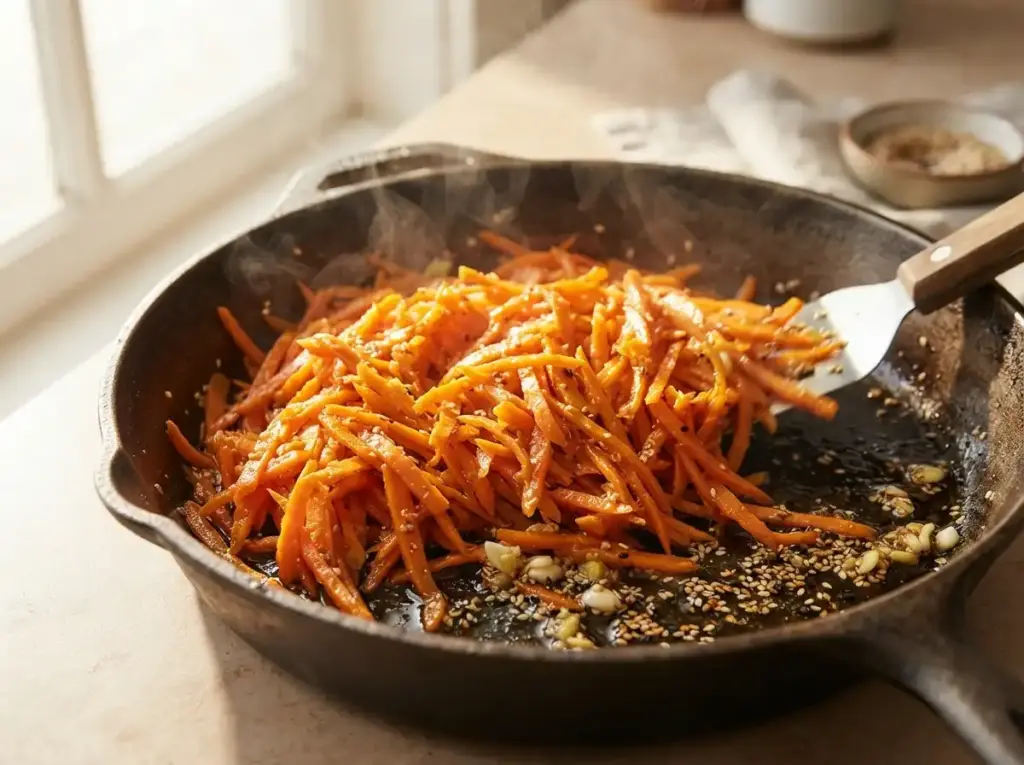
- 1 cup shredded carrots, sautéed
- 1 cup bean sprouts, blanched
- 4 eggs, fried
- Sesame seeds, to serve
How to Make It
- Sauté the vegetables separately, each briefly with a little sesame oil, keeping them distinct rather than mixed.
- Mix the tuna with gochujang, soy sauce and sesame oil.
- Fry the eggs to your preference — a runny yolk is traditional.
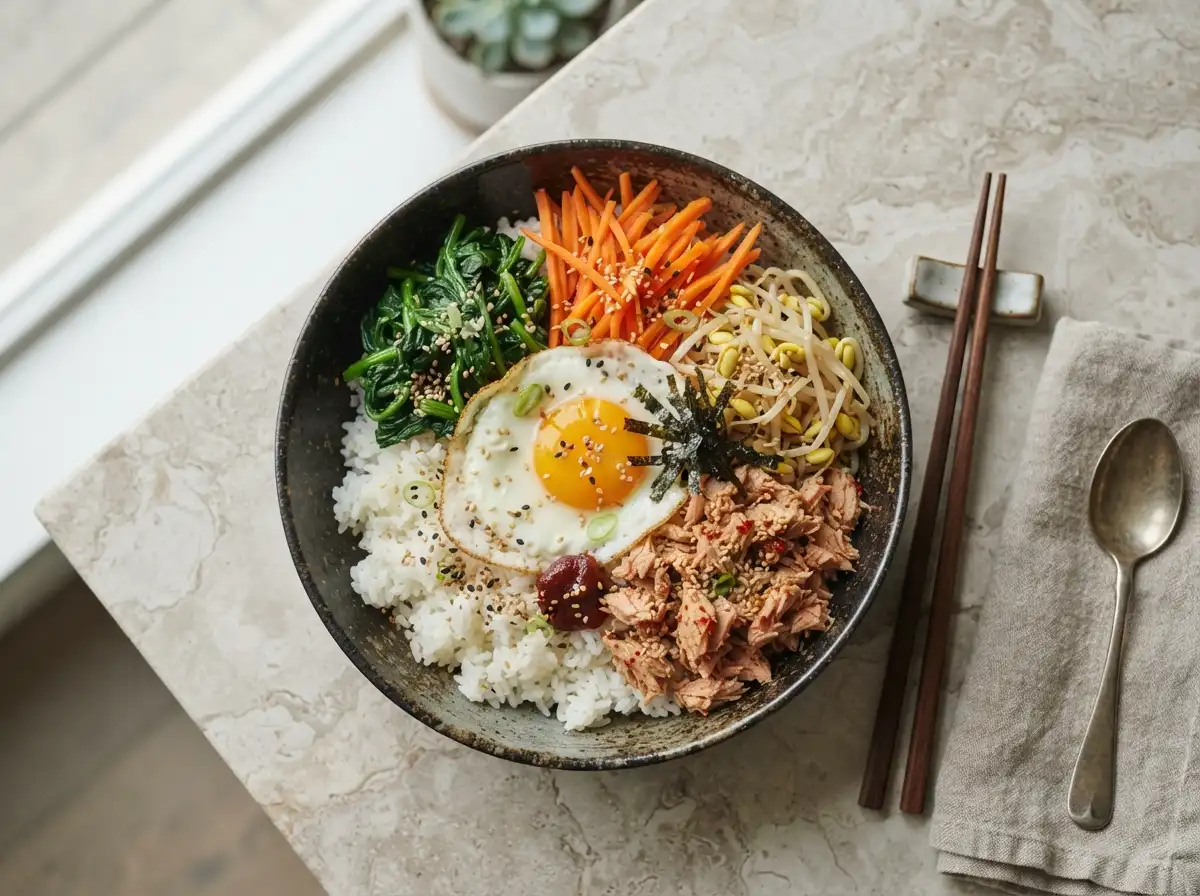
- Assemble: rice on the bottom, vegetables arranged around the edge, tuna in the center, egg on top.
- Finish with sesame seeds. Mix everything together just before eating.
Tips
Keep the vegetables in separate piles when assembling, bibimbap-style — it looks better and lets everyone mix their own bowl to taste.
A runny egg yolk acts as a sauce once you mix the bowl — don’t skip it for a fully cooked one if you can help it.
Substitutions
Gochujang: sriracha with a little brown sugar approximates the sweet heat, though the flavor isn’t identical.
Storage
Tuna mixture and vegetables keep 2 days refrigerated, separately. Fry the egg fresh each time.

Korean Tuna Rice Bowl
Ingredients
Method
- Sauté the vegetables separately.
- Mix the tuna with gochujang, soy sauce and sesame oil.
- Fry the eggs.
- Assemble rice, vegetables, tuna and egg.
- Top with sesame seeds and mix before eating.
Notes
- Using gochujang or soy sauce, not both at full strength, lowers the sodium.
- Store components separately; fry the egg fresh.
Nutrition
Per serving (recipe makes 4):
| Calories | 375 |
| Protein | 33 g |
| Sodium | 560 mg |
Verified against the Tuna nutrition workbook, calculated ingredient-by-ingredient from USDA FoodData Central reference values.
Frequently Asked Questions
What is gochujang?
A fermented Korean red chili paste — sweet, savory and spicy, sold in most well-stocked grocery stores or Asian markets.
Can I make this less spicy?
Yes — reduce the gochujang to 1 tablespoon, or use a mild version if your store carries one.
Do I have to fry the egg?
A soft-boiled or poached egg works too, though the traditional bibimbap-style fried egg with a runny yolk is the classic pairing.
How do I lower the sodium?
Use gochujang or soy sauce, not both at full strength — that’s the single biggest lever here.
More High Protein Tuna Recipes
Part of the 🍚 Tuna Rice Bowls collection, alongside Tuna Egg Rice Bowl.
Made this? Leave a rating and a comment below.